The Complete Guide to Buying a Weight Bench and Strength Equipment
Un banc de musculation se choisit sur la charge maximale admissible, l'amplitude de réglage et la stabilité au sol. Ces paramètres priment sur le nombre d'accessoires proposés. Associé à une barre, des disques et un rack, il couvre la majorité des mouvements de musculation.

A weight bench is the cheapest piece of equipment on a strength floor and one of the most heavily used. If you are building or upgrading a training area, getting the bench right is what makes everything around it work. A bench is chosen on maximum rated load, adjustment range and floor stability – those three points matter far more than the number of accessories a supplier lists.
Why the bench comes first
A bench is a versatile station that supports a wide range of exercises. Three reasons put it near the top of any equipment list:
- Versatility. A bench supports work for every muscle group: chest, abdominals, lower back, arms and legs.
- Comfort and safety. Exercises performed on a bench are more comfortable and better controlled than the same movements done on the floor.
- Space efficiency. Folding and stackable models free floor area between sessions, which matters in multi-use rooms and studios that also run classes.
Paired with a barbell, plates and a rack, a bench covers the majority of strength movements a facility needs to offer.
Types of bench
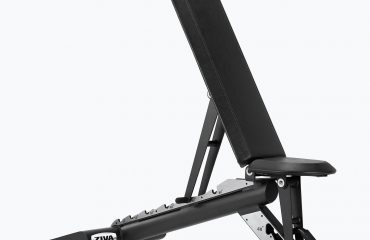
- Complete bench. For varied training. Often includes bar supports, adjustable load and options for leg and abdominal work.
- Folding bench. Suited to constrained rooms. Easy to store and to deploy, with the same robustness as a fixed frame when specified properly.
- Multifunction bench. Adds features such as pulleys, leg presses and supports for a wider exercise list on one footprint.
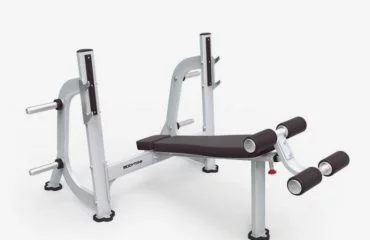
- Back extension bench. Designed to strengthen and mobilise the lower back, which is central to injury prevention and posture work.
- Abdominal bench. Built for trunk work, with incline settings to change the difficulty of the exercise.
Models and adjustment ranges are shown under weight benches.
The rest of the strength inventory
Multi-station machines put several exercises into a single frame, which is the efficient answer for a small room or a residential and hotel facility where one station has to cover a whole programme. See multi-station gyms.
Lower-body machines – leg presses through to glute machines – target the lower body under a guided path, which makes them usable without supervision.
Back and shoulder machines include pulldowns, cable stations and shoulder presses for complete upper-body work. The full family sits under strength training machines.
Treadmills and cross trainers complete the offer with the cardio side of the programme, and they are what keeps a strength-led site accessible to beginners.
How to compare offers
- Rated load. The figure has to cover the user plus the loaded bar, with margin. In a facility, a bench that is used at its limit every day deforms slowly and silently.
- Adjustment range and mechanism. Count the usable positions, then check how fast a change takes. A bench that is awkward to adjust ends up used in one position only.
- Floor stability. Wide feet, non-marking pads and a frame that does not rock under an uneven load.
- Upholstery. A wear part, not a fixed feature. Check that pads are a stocked spare, because replacing upholstery costs a fraction of replacing a bench.
- Usage class. Indoor equipment in a facility open to third parties is specified to EN ISO 20957-1 class S. Class I is the professional class for inclusive access, not a level above class S.
Frequently asked questions
How many benches does a training area need?
Enough that the flat bench is never the bottleneck at peak hour. In practice, sites usually pair each rack with a bench and add free benches for dumbbell work.
Flat or adjustable?
Both. An adjustable incline and decline bench covers the widest range of exercises, while the flat bench remains essential for the bench press.
Is a folding bench robust enough for a gym?
It can be, provided the rated load and the locking mechanism are specified for professional use. The folding function is what makes multi-use rooms possible.
Is second-hand equipment worth considering?
Only where the usage class is documented and spare parts, upholstery included, are still supplied. A frame without a parts channel has an unpredictable remaining life.
Specifying your strength area
Investing in the right bench and the right surrounding equipment is what turns a room into a training floor. Whether the need is a complete, folding or multifunction bench, there is a configuration for every space and budget. Light In Fitness manufactures and supplies professional strength equipment for gyms, clubs, hotels, local authorities, schools and rehabilitation centres. Send us your floor plan and your intended use and we will return a configuration and a costed proposal – request a quote.