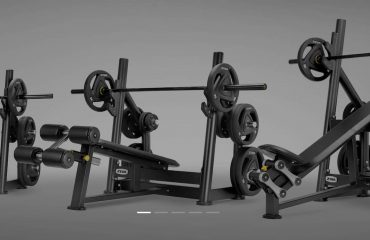
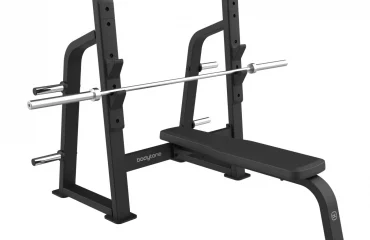
Professional Weight Benches from Light In Fitness
Un banc professionnel se distingue par la densité de sa sellerie, la rigidité de son châssis et la fiabilité de son verrouillage de réglage. Ces trois points déterminent sa tenue sous charge et sa durée de vie en usage collectif. Light In Fitness propose les formats plat, inclinable, déclinable et multiposition, livrés et installés.

The bench is the most used and the most abused piece of equipment on any strength floor. It carries the load of a bench press, it gets dragged across the floor between sets, it takes the sweat of every member who sits on it, and it is expected to lock reliably at every angle for years. That is why a bench specified for a facility open to the public has almost nothing in common with one built for occasional use.
Three things separate a professional bench from the rest: the density of the upholstery, the rigidity of the frame, and the reliability of the adjustment locking mechanism. Those three points determine how the bench behaves under load and how long it lasts in shared use. Everything else is finish.
What makes a bench professional
Frame rigidity. A professional bench uses heavy-gauge steel with welded joints, and it does not flex or creak under a loaded barbell. Flex in a bench is not just uncomfortable, it moves the shoulder blades and undermines the lift.
Upholstery density. Padding on a commercial bench has to support without bottoming out, keep its shape after thousands of sessions, and stand up to daily cleaning products. Dense foam with a durable, wipeable cover is what makes the difference between a bench that still looks right after three years and one that is replaced.
Adjustment locking. On adjustable models, the locking mechanism is the part that decides whether members trust the bench. It has to be operable one-handed, index positively at every angle, and hold without slipping under a heavy load. It is also the mechanism that wears, so it should be serviceable rather than sealed.
The formats to have on the floor
Flat bench. The reference format for pressing and dumbbell work. Simple, stable, and the format the floor runs out of first.
Incline and decline. Fixed or adjustable, for pressing at different angles and shifting the load between the upper and the lower chest.
Multi-position bench. One frame covering flat, incline and decline, which is the right answer where floor area is short. The Bodytone EB03 multiposition bench is a typical example.
Specialised benches. Preacher curl, hyperextension, abdominal and seated calf benches complete the area and take pressure off the general benches. A hyperextension bench in particular covers a pattern that nothing else on the floor addresses.
The rule of thumb for planning is simple: count the flat and adjustable benches against the number of racks and dumbbell stations, not against the total floor area. A bench shortage shows up as queuing long before anything else does.
What a professional bench brings to the facility
Effective strength work. A stable bench opens up a wide range of exercises across every muscle group, from presses and curls to dips and leg raises, on a single piece of equipment.
Safety and support. A rigid frame and a correctly shaped pad keep the member in a correct position, which is the practical way of reducing injury risk on heavy work.
Versatility. Members move between exercises without changing station, which raises the throughput of the area at peak hours.
Adaptability. Adjustable models fit members of very different sizes and let a coach set an angle precisely rather than approximately.
Specifying benches for a facility
Indoor equipment installed in a facility open to the public should be built and certified to EN ISO 20957-1 class S, the class written for supervised professional installations. Class I is the professional class covering inclusive access, a different scope rather than a level above class S.
Beyond the class, ask for the rated load capacity of the bench including the user, check the footprint in both the flat and the fully inclined position, confirm that the upholstery can be reordered separately, and check how the bench moves: rear wheels and a front handle sound like a detail until the cleaning team has to move twenty of them every night.
Our professional weight benches cover flat, incline, decline, multi-position and specialised formats in ranges built for continuous commercial use.
Frequently asked questions
How many benches should a strength area have?
Size the bench count against the number of racks, pressing stations and dumbbell positions rather than against the floor area. Benches are the first thing members queue for.
Fixed or adjustable?
Both. Fixed flat benches are more rigid and cheaper per unit; adjustable benches cover more exercises in the same footprint. A balanced area has more of the first and enough of the second.
What load capacity should we look for?
Ask the manufacturer for the rated capacity of the specific reference, including the user weight, and match it to the heaviest loading the area will actually see. Do not extrapolate from another model in the same range.
How long does the upholstery last?
It depends on traffic and on the cleaning products used. What matters commercially is whether the pad can be reordered and replaced on its own, which is why upholstery availability belongs in the purchase decision rather than in the maintenance budget three years later.
In short
A professional bench is judged on frame rigidity, upholstery density and the reliability of its locking mechanism. Specify to EN ISO 20957-1 class S, cover flat, adjustable and specialised formats, and plan the count against the stations that need them. Request a quote and our team will size the bench area for your facility.