Are Gym Machines Worth It? Machines vs Free Weights
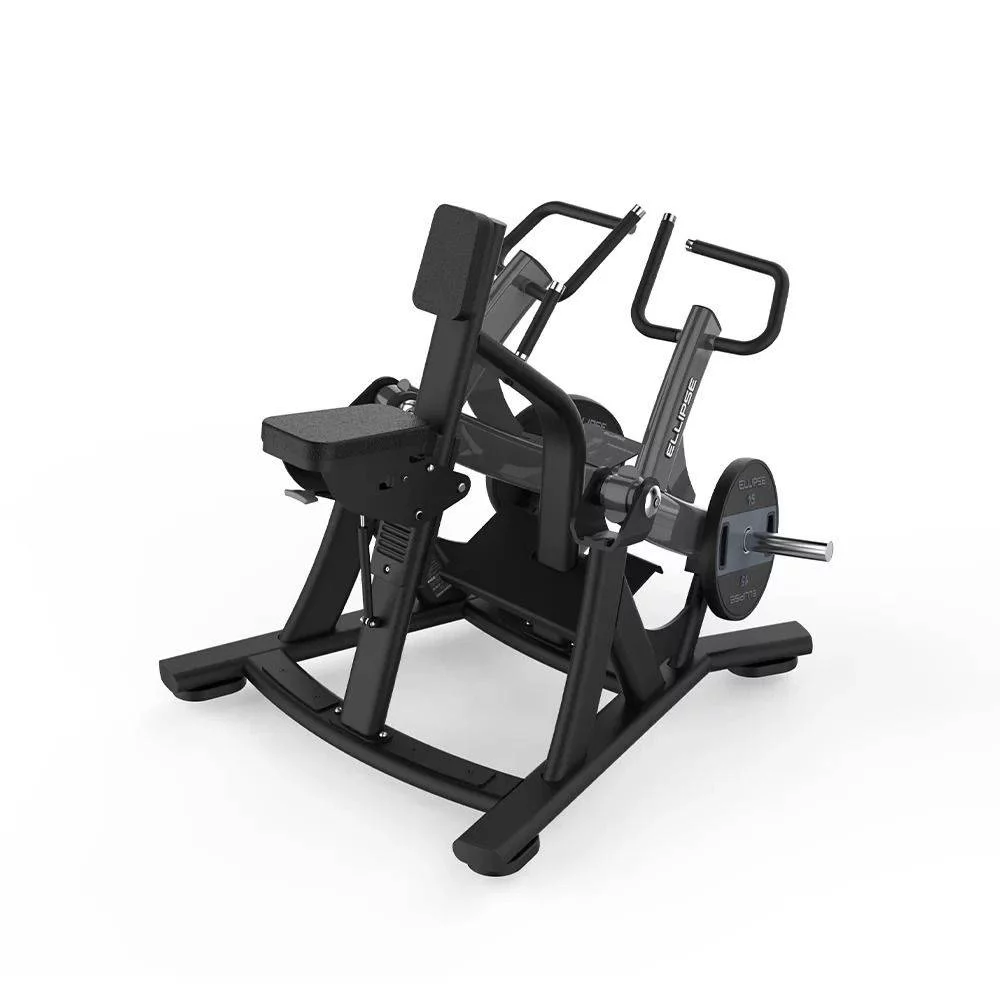
Selectorised machines are the easiest equipment in any facility to use, and that is precisely why they end up over-represented on the training floor. Imagine for a moment that the human body were a robot: a set of parts, bolted together, but each one working on its own. If that were true, the fastest way to train would indeed be to sit down at a machine that isolates one part at a time.
The body is not built that way. It is a myofascial structure in which every element interacts with every other, and it needs to produce and control movement in three planes. So is machine training worth it? For anyone equipping a gym, the honest answer is yes, but only as part of a mix. Here are the real advantages, the real limits, and what a balanced equipment list looks like.
Why machines feel like the safe choice
Members gravitate to machines because they are easy to use. A large, solid frame communicates safety and professionalism before anyone has touched it. Each machine carries a placard showing the exercise and the muscle group it loads, so a newcomer can start without an induction and without asking anyone for help. For an operator, that means low supervision cost and a floor that never looks intimidating.
That is the whole list of advantages. It is a genuinely useful list, and it explains why selectorised strength machines remain the backbone of most commercial gyms. But it is a short list, and it is worth knowing exactly where it stops.
Where isolation only training runs out of road
Every machine on the floor isolates the work of one muscle group. Isolation is not harmful in itself. The real question is whether a member has enough time to give at least ten minutes to each muscle group scheduled for that day, or whether they would be better served by exercises that recruit several groups at once.
There is also the question of transfer. Very little of daily life is a single muscle movement, and training is supposed to improve the quality of the movements people actually perform every day. Most machines, in addition, put the user in a seated position. For a member who is on their feet all day, sitting down for a session may be welcome. For someone who already spends eight hours at a desk or behind a wheel, another hour and a half seated at machines can do more harm than good.
Machine geometry deserves attention too. A manufacturer designs a frame for a target user of standard dimensions, so a very short or a very tall member will struggle to set it up properly. Even inside that range, being a few centimetres away from the correct setting changes the exercise. Think of a deadlift performed with the bar five centimetres further forward than it should be: the movement is immediately a different one. The precision of the load relative to the body matters. Finally, training exclusively on machines never asks the muscles to work across different planes, leaves the stabilising and synergistic muscles idle, and builds less muscle mass than free weight work.
Who machines are genuinely right for
Machines are used in strength training to place emphasis on a specific muscle group, which is why competitive bodybuilders lean on them heavily in the pre competition period. They also work well for members coming back from a serious injury or contusion: when a limb has been immobilised and a muscle has visibly weakened, a machine rebuilds it without loading the joints and ligaments the way free weights do.
For beginners, and for members carrying a lot of extra weight, starting on machines is often what convinces them to keep coming back. That case is a starting option, not a destination. There are plenty of free weight and bodyweight exercises a beginner can perform successfully from the outset, and a good programme moves them there. This is the argument for pairing your machine line with Olympic barbells and enough free weight space to make that transition possible on the same floor.
Five machines and what to replace them with
1. Torso rotation machine. It forces a great deal of rotation through the lumbar region, which is more likely to contribute to back pain than to strengthen the abdominal obliques. Replace it with the side plank, supported on the forearm. Keep the abdominals and glutes braced to hold a stable position; the exercise also brings the shoulder girdle into the work.
2. Back extension machine. It switches off precisely the muscles that ought to be working, the abdominals, the glutes and the hamstrings, and it does so in a seated position. Replace it with the deadlift, performed with a barbell, dumbbells or kettlebells. Done correctly, it strengthens the lumbar region, the glutes and the hamstrings.
3. Seated abdominal machine. It tires the lower back. If a member has a sedentary job, ask whether more time seated is really going to improve their health. Replace it with any of the many abdominal exercises available; the dead bug is a good starting point, and performed correctly it strengthens the abdominal muscles while improving motor coordination.
4. Smith machine. The load can be locked at any point of the movement, which is undeniably an advantage because it increases the sense of safety. The trade off is that the bar travels in a straight line, which is not a natural path, so fewer muscle groups are recruited and the training effect is weaker. Replace it with squats or the bench press using free weights, which are far more effective than the same exercises performed on a Smith frame.
5. Leg extension machine. Training on this machine targets the quadriceps, and the machine isolates that work for the user. Everyday life, however, asks for compound movements that involve the abdominals and the glutes as well. Replace it with barbell squats, goblet squats, lunges and box step ups, all of which are more functional movements that bring the whole body into the work.
There are of course many other examples. Members should ask their coach which substitutions make the most sense for them.
What this means when you specify a gym
None of this is an argument for removing machines from a commercial floor. It is an argument against a floor made only of machines. A room built entirely around seated stations gives members an easy entry point and then nothing to progress into, which is precisely the profile of a facility with high acquisition and high churn.
A workable mix keeps a machine line for accessibility, supervision free use and rehabilitation work, adds plate loaded machines as a bridge to heavier and more natural loading patterns, and reserves floor space for barbells, racks and open functional training. Whatever the balance, equipment installed in a supervised commercial facility should be specified to EN ISO 20957-1 class S, the class intended for professional use.
Frequently asked questions
Why should we not train only on machines?
Each machine isolates a single muscle group. Isolation is not harmful, but it takes time your members may not have, it transfers poorly to everyday movement, it usually keeps them seated, and it leaves the stabilising and synergistic muscles out of the work. The result is less muscle mass than the same effort spent on free weights.
Who can or should use machines?
Competitors emphasising a specific muscle group before a contest, members rebuilding a muscle after an injury or a period of immobilisation, and beginners or heavier members who need a confident way into training. Machines put less pressure on joints and ligaments than free weights, which is what makes them useful in those cases.
Does a professional gym still need a full machine line?
Yes, for most operators. The machine line is what makes an unsupervised session possible for a beginner and what supports return to training work. The mistake is to stop there rather than giving those members somewhere to progress to.
Planning your equipment mix
The right ratio of machines to free weights depends on your members, your floor area and how your sessions are supervised. If you are fitting out a new facility or rebalancing an existing one, send us your floor plan and your member profile and we will put a specification together. Request a quote and we will come back with a costed proposal.