Artificial Turf Tracks for CrossFit and Hyrox Boxes: How to Choose
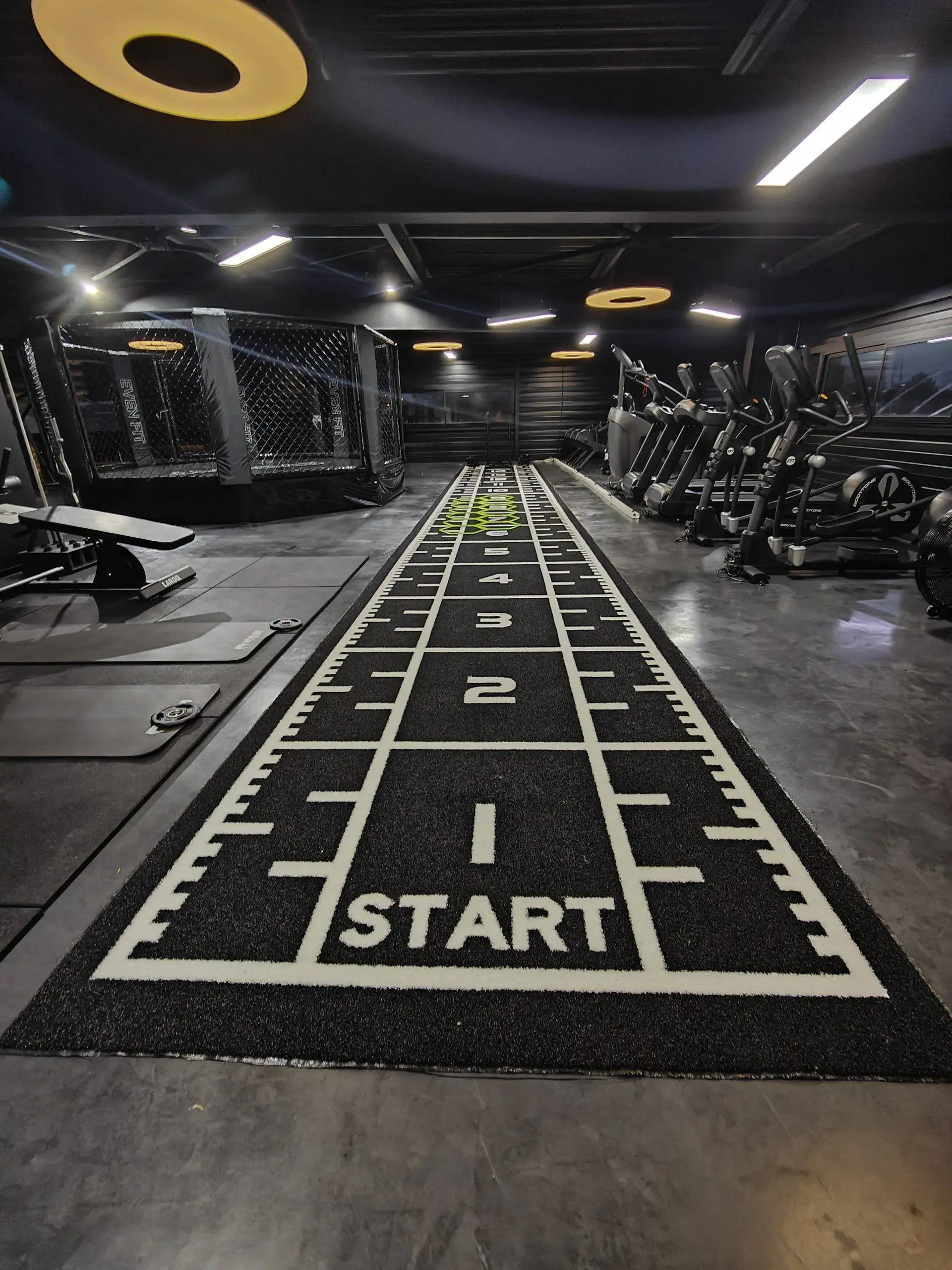
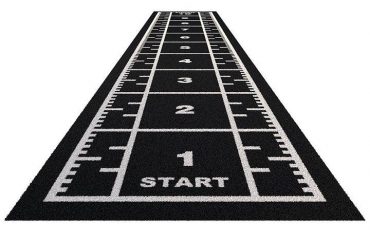
In a CrossFit or Hyrox box, the floor is the only piece of equipment that every single member uses, in every single session. An artificial turf track sits at the centre of that floor: it carries the sprints, the sled pushes, the tyre flips and the loaded carries that a rubber tile alone is not designed to absorb. Choosing it well is a purchasing decision, not a decorating one. This guide covers what a professional turf track has to deliver, the formats and colours available at Light In Fitness, and how to size a lane for the space you actually have.
Why the training surface is a technical choice
High-intensity functional training concentrates load in two ways. Vertically, through repeated landings: box jumps, burpees, dropped barbells. Horizontally, through friction: sleds, prowlers, tyres and bodies dragged across the same three metres of floor several hundred times a week. Bare concrete handles neither. A polished screed transmits every landing straight into ankles and knees, and it wears athletes down long before it wears itself down. A long-pile decorative turf, on the other hand, flattens under a loaded sled within a season.
A purpose-built functional turf track solves both problems at once. It gives a controlled amount of cushioning underfoot, a stable and predictable grip for direction changes, and a wear layer that takes the abrasion instead of your primary rubber gym flooring. It also does something less obvious but commercially important: it marks out a lane. Members see where the sprint zone starts and stops, coaches run heats without traffic management, and the box reads as an organised facility rather than a warehouse with equipment in it.
Curled short pile against classic long pile
The single most important specification on a functional turf track is the pile. Light In Fitness supplies a Curled turf, with short curled fibres, precisely because functional training punishes anything longer.
Short curled fibres do not lie flat under load. A sled loaded for a strength session compresses them and they recover, session after session, instead of matting into a shiny track that turns slippery. The denser structure also gives a consistent coefficient of friction along the whole lane, which matters more than most buyers expect: an athlete who feels the sled get lighter halfway down the track is feeling the surface degrade, not their own technique improve.
Classic long-pile turf, designed for landscaping or five-a-side pitches, behaves in the opposite way. It looks impressive on opening day and it is the wrong product for a box. If a supplier offers you the same roll for a garden and for a training lane, that is the answer to your question.
Colours, dimensions and branding
Four colours are available: green, blue, red and black. The choice is a branding decision more than a technical one, and it is worth treating it that way. Green reads as classic and neutral and photographs well. Blue and black suit facilities with a strong visual identity and a darker interior scheme. Red is frequently used to mark a high-intensity zone inside a wider training floor, so that the sprint lane is legible from the door.
Tracks can be supplied in standard dimensions or made to measure. Light In Fitness also prints your logo directly into the turf, which is the cheapest branding a box will ever buy: it appears in every photograph, every competition livestream and every member video posted from your floor, without any recurring cost.
| Standard format | Typical use |
|---|---|
| 10 m x 1 m | Single-lane sled or prowler track in a compact box |
| 10 m x 2 m | Functional work zone: tyre flips, deadlifts, loaded carries |
| 15 m x 1 m | Sprint lane where length matters more than width |
| 20 m x 2 m | Full sprint and sled corridor, two athletes side by side |
| Made to measure | Non-standard rooms, alcoves, mezzanines and outdoor terraces |
How to size the lane for your box
Start from the movement, not from the floor plan. If the track is mainly a sprint and sled corridor, length is the constraint and the 15 m and 20 m formats are the ones to look at. If it is a functional work zone where athletes flip a tyre, set down a loaded bar and rotate around a station, width matters more and the 10 m x 2 m format is usually the right answer.
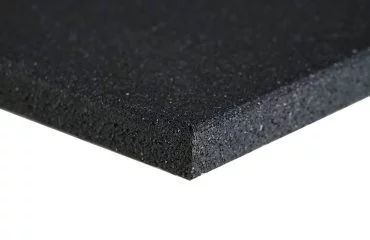
Two practical points come up on almost every project. First, allow run-off at both ends of a sprint lane; an athlete does not stop on the line. Second, decide early whether the turf sits alongside your tile floor or inside it, because that determines whether you order a full-width track or a narrower insert. If the surrounding zone takes dropped barbells, pair the track with 40 mm tiles such as the CrossFit rubber tile 40 mm, which absorbs the impact the turf is not there to take.
Made-to-measure production removes most of the compromises here. A room with a structural column, a narrowing at one end or an unusual ceiling height does not have to be equipped with a standard rectangle simply because that is what is in stock.
Indoor and outdoor installation
The turf is UV resistant and weather resistant, so it can be installed outdoors as well as inside. Outdoor lanes have become common as boxes extend onto terraces, car parks and container units, and as Hyrox-style training pushes conditioning work outside the building. The surface does not fade or break down under sun and rain, and it drains rather than holding water on the fibres.
Indoors, the practical benefits are acoustic and visual. A turf lane absorbs some of the noise of sled work, which matters in shared buildings, and it visually separates the conditioning zone from the rig and cage area without a physical barrier.
Maintenance is deliberately minimal. Sweeping or vacuuming removes dust, chalk and debris, and that is essentially the whole routine. There is no infill to top up on these tracks and no seasonal treatment. For facilities that also run outdoor sessions, the full range of artificial turf tracks covers both applications with the same specification.
FAQ
Why use artificial turf for CrossFit rather than a standard floor?
Artificial turf provides a cushioned surface that reduces joint impact during high-intensity work such as burpees, box jumps and sprints. Unlike concrete or a sprung wooden floor, it gives reliable grip for functional movements such as tyre flips and sled pushes while protecting the athlete. It is also UV and weather resistant, which makes it suitable for indoor and outdoor installations alike.
Which track dimensions should I choose for my box?
Light In Fitness offers several formats: 10 m x 1 m, 10 m x 2 m, 15 m x 1 m and 20 m x 2 m. For a functional sprint corridor, choose the 15 m or 20 m lengths. For functional work zones such as tyre flips and deadlifts, the 10 m x 2 m track is particularly well suited. Made-to-measure dimensions are also available to match the configuration of your space.
Which colour should I choose?
Four colours are available: green (classic and natural), blue (modern visual identity), red (high-intensity zones) and black (premium, understated look). The choice depends on the visual identity of your box. Light In Fitness also offers logo personalisation to reinforce your brand.
Does the turf stand up to heavy loads and tyre flips?
Yes. This turf is designed for heavy loads and repeated friction. The Curled models, with short fibres, offer higher density and resistance, suited to intense work such as tyre flipping, sled pushing and dropped bars. For complete floor protection you can combine the track with 40 mm rubber shock-absorbing tiles.
Can the track be installed both indoors and outdoors?
Yes. The turf is UV and weather resistant, so outdoor installations do not fade or degrade. Indoors, it defines the conditioning zone and dampens some of the noise of sled and tyre work. Maintenance is minimal: sweeping or vacuuming is enough to remove dust and debris.
What is the difference between Curled turf and classic turf?
Curled turf, with short curled fibres, is designed specifically for functional training. It offers a denser and more stable surface than classic long-pile turf. It does not flatten under load, allows rapid changes of direction during sprints and provides better grip for dynamic movements. It is the appropriate choice for professional boxes.
Specifying your track
An artificial turf track is a long-life investment that shapes how your floor is used every day, so it is worth specifying properly: pile type, format, colour, branding and the interface with the surrounding flooring. Send us your floor plan and your training programme and we will come back with a configuration and a costed proposal. Request a quote and tell us the room dimensions, whether the lane is indoor or outdoor, and whether you want your logo printed into the surface.