Ziva Weight Benches: Commercial-Grade Design for Gym Floors
A weight bench is the least glamorous item on a gym floor and one of the hardest working. It carries the pressing station, it takes the traffic of every member who walks past the free-weight area, and it is judged instantly on how it looks and how solid it feels. The Ziva bench range was designed for exactly that brief: commercial-grade construction with a finish that holds up in a modern facility. This article looks at what the range offers an operator specifying benches for a club, a hotel gym, a corporate facility or a training studio.
Ergonomics that survive a full timetable
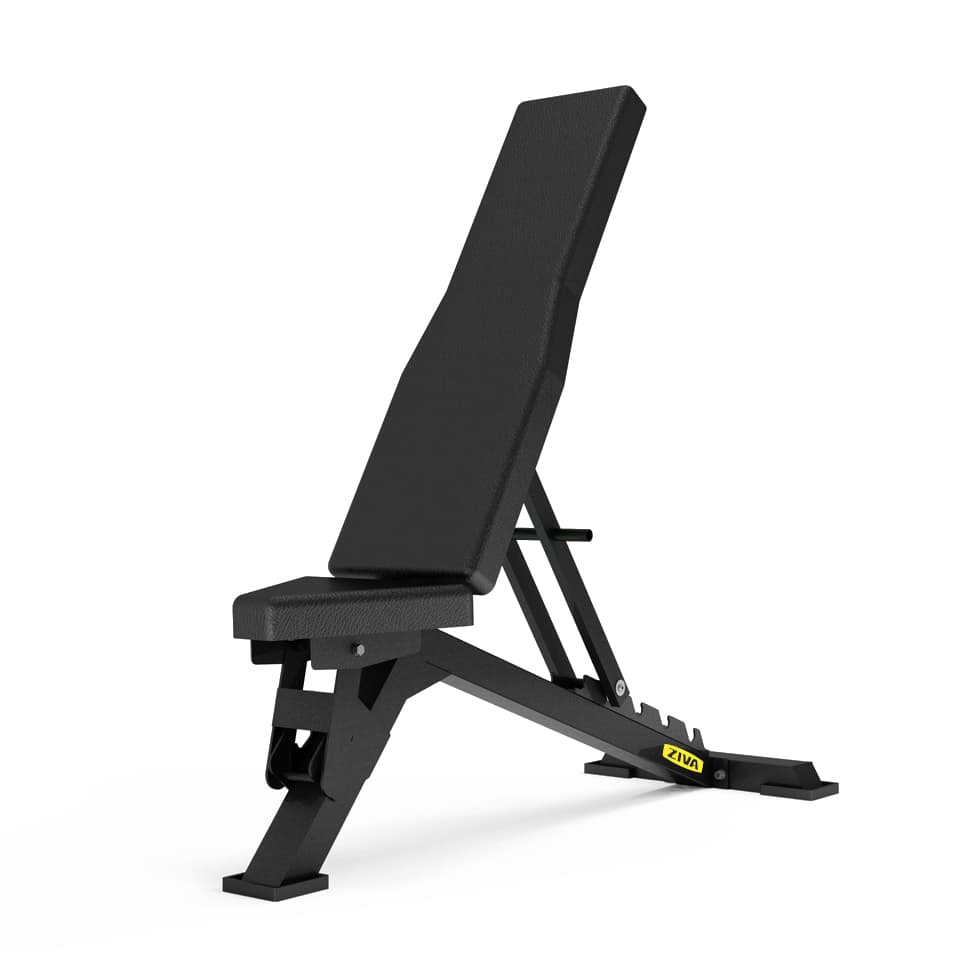
Ziva benches are built around adjustable, contoured upholstery that supports the user through the full range of a press. The pad profile and the density of the foam matter more in a commercial setting than in any other: a pad that bottoms out under load transfers pressure into the shoulder blades and puts members off the station entirely.
The backrest angle adjusts through a simple locking mechanism, so a member can move from flat to incline without calling a member of staff. Seat height adjustment lets users of very different statures find a correct set-up, which is what makes a single bench workable for a mixed membership. Correct posture on a flat or incline press is not a comfort issue but a safety one, and adjustability is what delivers it.
A stabilising bar holds the frame in position through the working set. The practical effect is a bench that does not shift under an uneven press, which is what members notice first and what determines whether they trust the station.
One bench, a broad exercise catalogue
An adjustable bench is the highest-utilisation item you can put in a free-weight zone. From the same station a member can work:
- Chest, with flat and incline presses and dumbbell flyes.
- Arms, with seated and inclined curls and overhead triceps extensions.
- Legs, using the bench as a support for split squats and step work with dumbbells.
- Back, with single-arm rows and supported dumbbell work.
That range is why bench count, not machine count, is usually the bottleneck in a busy free-weight area. Adjusting backrest angle and seat height also lets a coach scale the same movement across beginners and advanced members, so the station keeps working through every part of the day.
Design, footprint and floor presentation
The Ziva range uses a high-grade synthetic leather covering and clean structural lines. In a commercial context that is not a cosmetic detail: upholstery is the surface members touch, it is what your cleaning routine works on daily, and a covering that cracks after two seasons makes an otherwise sound facility look tired.
The benches are compact and designed to sit in a tight layout without wasting circulation space, and transport wheels let staff reposition them for classes or cleaning without lifting. Frame and covering are specified for durability under sustained use, which is the only meaningful measure of value on a piece of equipment that will be used thousands of times a year.
Structural performance
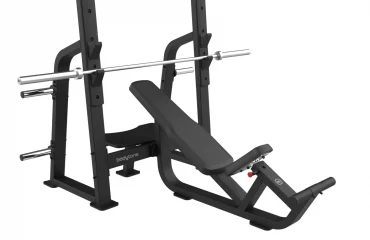
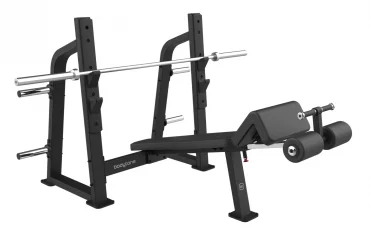
Stability under load is the core requirement. A commercial bench has to stay planted when a member presses unevenly, when a dumbbell is set down hard on one side, and when a heavier user shifts position mid-set. The Ziva frames are built for that, and the flat and incline Olympic benches in the range are designed to work directly with an Olympic bar and integrated plate storage: see the Ziva Olympic flat bench with plate storage and the Ziva Olympic incline bench.
The adjustment mechanism should be checked as part of your routine equipment inspection: locking pins, pad fixings, frame bolts and the condition of the upholstery seams. Benches are inspected far less often than they should be precisely because they have no moving load path, and a failed adjustment pin is a genuine injury risk.
Specifying benches for a commercial facility
A few points make the difference between a bench that lasts and one that is replaced in three years:
- Adjustment range. Decline, flat, several incline positions and an upright setting cover almost every programme you will run.
- Upholstery and stitching. Specify a covering rated for commercial cleaning products; disinfectant is what destroys most gym upholstery, not use.
- Footprint and stacking. Check the space each bench needs with a user lying on it and dumbbells at their sides, not just the bench dimensions.
- Consistency of range. Benches from one family look coherent on the floor and share spare parts. Mixed ranges rarely do either.
- Spare parts. Ask about pad and pin availability before you order, not after.
The full selection is in the weight benches category, and the wider Ziva structures are grouped under Ziva rigs and racks.
How many benches does a commercial free-weight area need?
It depends on peak occupancy and on how your dumbbell racks are laid out. Count the pressing stations you want available at your busiest hour and work back from there; benches are the item members queue for.
Are these benches suitable for a hotel or corporate facility?
Yes. An adjustable bench paired with a dumbbell rack is the most space-efficient strength offer available for a small facility, and the finish suits a front-of-house environment.
What maintenance does a bench need?
Daily cleaning with a product compatible with the upholstery, and a periodic mechanical check of pins, bolts and pad fixings. Record the checks alongside your other equipment inspections.
Planning your free-weight area
Benches are bought in sets, not one at a time, and they should be specified together with your racks, dumbbells and flooring so the zone works as a whole. Send us your floor plan and your peak attendance, and we will propose a bench count, a layout and a costed configuration. Start with a request a quote.