Which Gym Machine for Which Muscle? An Equipment Guide for Facility Operators
Equipping a training room is not a shopping list, it is a coverage exercise. Every muscle group your members expect to train has to be served by at least one station, and the machines you choose determine how many people can train at once and how safely they can do it unsupervised. This guide maps the main muscle groups to the equipment categories that serve them.
Core and abdominals
Abdominal benches and guided abdominal machines cover this group. Guided machines are the safer choice in rooms without an instructor on the floor, because they hold the spine in position and remove the temptation to pull on the neck. Free floor work such as crunches and sit-ups still has its place, and it costs you nothing but mat space.
Glutes, quadriceps and hamstrings
The squat remains the reference movement, which is why a rack or a cage belongs in almost every specification. Alongside it, leg press and quadriceps machines let a beginner load the legs heavily without needing technique or a spotter. Benches and steps cover glute work for group and small-studio formats.
Chest, back and arms
Bench press stations, pull-up bars and dumbbells form the free-weight side. On the guided side, adjustable incline benches and pulldown stations give you the same coverage with a much lower supervision requirement. For a facility with limited floor area, one multi-station frame covers most of this list at once.
Strength and muscle mass
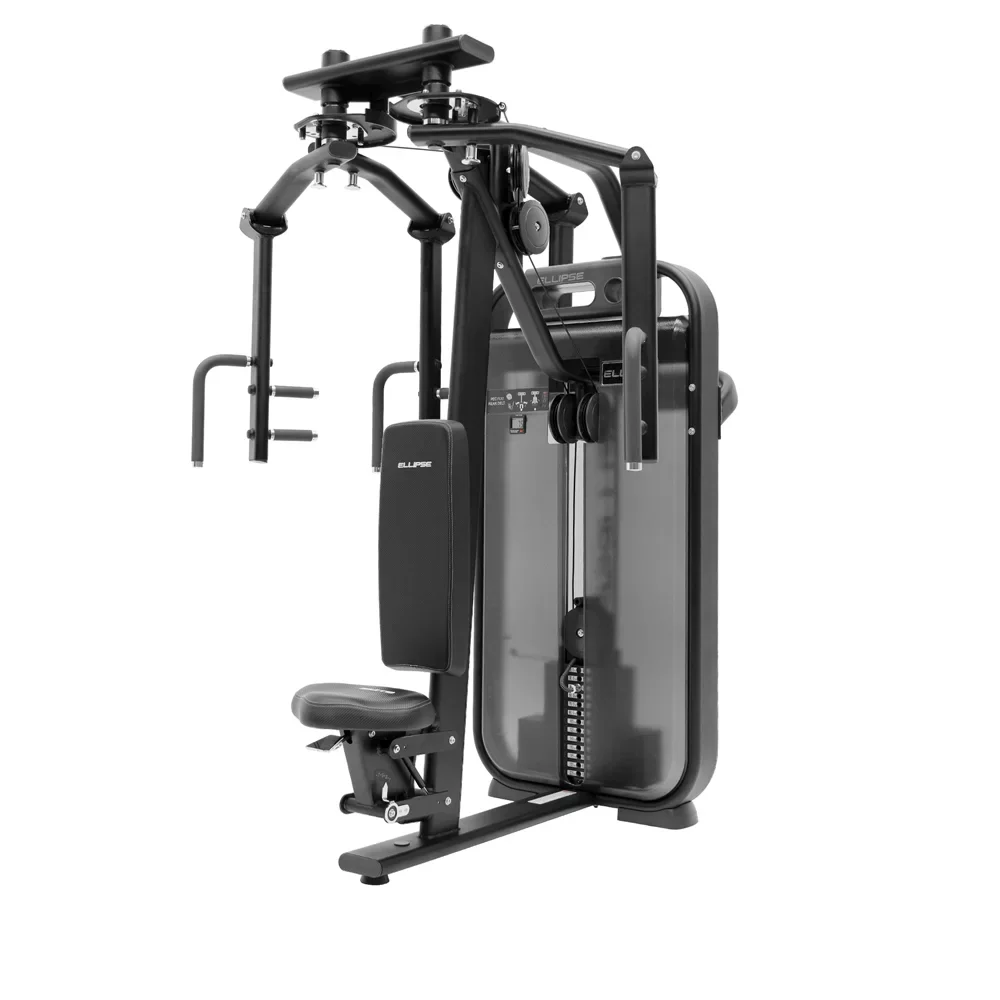
If your members are training for size and strength rather than general fitness, dumbbells and selectorised machines are the working tools. Heavier loading is what recruits the muscle fibres, and a stack-loaded machine lets a user reach that loading without a training partner. The Gold Line selectorised range is built for that kind of daily heavy use.
Cardiovascular conditioning
Treadmills, cross trainers, rowing machines and stair climbers improve aerobic capacity and calorie expenditure. They train the cardiovascular system and general endurance rather than any one muscle group, which is why they are counted separately when you plan a room. The full professional cardio range covers the four formats.
Full-body and functional training
Cross-training formats combine strength and conditioning in one session. Roman chairs, rigs and multi-station frames are the equipment that makes those formats possible in a fixed room.
Frequently asked questions
How many stations do I need to cover every muscle group?
That depends on your floor area and on how many members train at peak hour. A single multi-station frame covers most groups at low occupancy; a busy club needs individual machines so that several people can train different groups at the same time.
Guided machines or free weights?
Both, in a proportion set by your supervision level. Rooms without permanent staff, such as hotel and residential gyms, lean heavily towards guided machines. Clubs with instructors on the floor can put more of the budget into racks and free weights.
Does every member need an induction?
Beginners get more from a machine when someone has set it up for them once. Building an induction into your membership process reduces both injuries and equipment damage.
Building your equipment list
Send us your floor plan, your ceiling height, your peak attendance and the member profile you are serving, and we will map the muscle-group coverage against a costed equipment list: request a quote.