What Matters Most in Strength Training — and What It Means for Your Gym

Strength training is physical activity aimed at developing muscle mass and force production. For a gym operator, a club or a rehabilitation centre, the question behind the training is a commercial one: which factors actually determine whether members get results, and what does each of them mean for the equipment you put on the floor.
Four factors carry most of the weight: nutrition, programming, recovery and consistency. Only one of them is bought from an equipment supplier, but all four shape what your facility needs to hold.
Nutrition sets the ceiling
Nutrition plays a decisive role in building muscle. Calorie intake, protein, carbohydrates, fats and micronutrients all need to be accounted for, and protein in particular supports muscle development and protein synthesis. Amino acids and other supplements are widely used to support recovery after intense sessions.
For an operator this is a coaching and communication matter rather than an equipment one, but it is worth stating clearly to members: the training stimulus you provide on the floor sets the demand, and nutrition determines whether the body can answer it. Facilities that address nutrition alongside programming see better retention, because members who see results stay.
Balanced programming across every muscle group
Effective strength programming works every muscle group rather than the visible ones. Varying the exercises and the repetition ranges is what stimulates the different muscle fibres and drives hypertrophy over time.
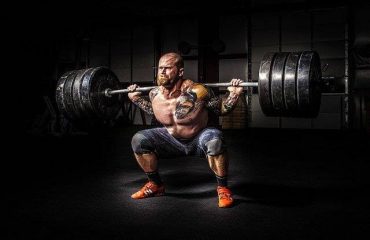
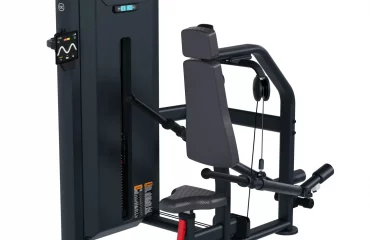
This is where equipment specification becomes decisive. A floor that only holds pressing stations produces unbalanced members and repetitive queues. Covering the full range means combining selectorised machines for guided isolation work, plate-loaded and free-weight stations for compound lifting, and enough accessory equipment for bodyweight and functional patterns. Compound movements such as the squat, the pull-up and the bench press remain the backbone of any programme, so the stations that support them should be sized for peak-hour demand, not average use.
Recovery is part of the plan
Rest between sessions is not optional. Muscle adapts and grows during recovery, not during the session itself, and a member training the same pattern every day will plateau or get injured. Programming that rotates muscle groups across the week only works if the floor can support it: if the only leg station is permanently occupied, members will train what is free rather than what their programme calls for.
Cardiovascular work belongs in the same conversation. Combining cardio with resistance training supports body-composition goals and general work capacity, and a well-specified cardio zone takes pressure off the strength floor at peak times.
Technique, motivation and consistency
Results in strength training appear over the long term. Motivation, regularity and patience are what separate members who progress from members who cancel, and a training programme matched to the individual’s goals and current condition is what makes regularity possible.
Beginners in particular need to focus on correct execution to avoid injury and to get the most from each session. Equipment plays a direct role here: guided machines with clear adjustment ranges and legible instruction panels let a newcomer train safely without constant supervision, which is exactly what a facility needs during unstaffed hours.
What this means for your equipment plan
For indoor professional installations, specify equipment built to EN ISO 20957-1 class S, the class for supervised professional use with unrestricted access. Class I is a separate professional class covering inclusive-access equipment, not a grade above class S. Anything described as intended for unsupervised private use does not belong on a commercial floor, whatever its price.
Build the floor around the four factors above: guided stations for safe beginner progression, free-weight and compound stations for the lifts that drive most of the adaptation, cardio capacity to support conditioning and recovery, and enough duplication of the busiest stations that a member never has to abandon their programme because the machine is taken.
Frequently asked questions
Do members need machines or free weights?
Both. Machines let beginners load safely and let advanced members isolate; free weights build the stabilisation and coordination that machines cannot. Most commercial floors run roughly balanced provision and adjust from usage data after the first season.
How much cardio equipment should a strength-focused gym hold?
Enough to serve warm-ups and conditioning without members queueing before their session starts. Cardio is often under-specified in strength-led facilities, and it is the cheapest way to smooth peak-hour congestion.
What standard should the equipment meet?
EN ISO 20957-1 class S for indoor professional use. Ask your supplier for the declaration in writing.
Equipping for results
The factors that determine whether your members progress are mostly outside your control; the one that is fully inside it is the equipment. Explore our strength training machines, our professional cardio equipment and our fitness accessories, and tell us your member profile, opening hours and floor area. Request a quote and we will propose a balanced configuration.