What Is the New Trend in Strength Training Equipment?
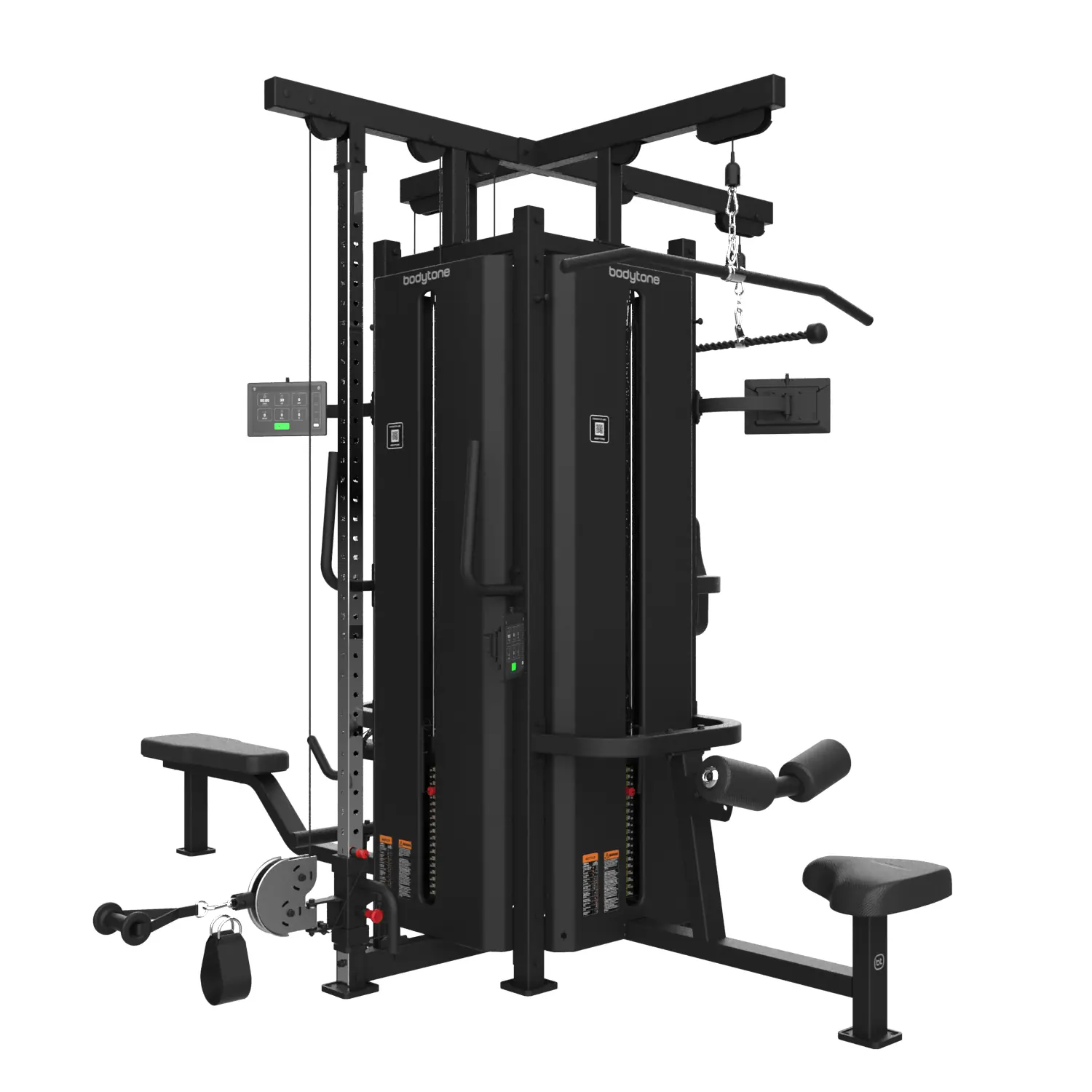
Ask any equipment buyer what has changed on the strength floor in recent years and the answer is rarely a single machine. The direction of travel is multifunction stations, equipment that suits every level from first-timer to competitive athlete, and layouts that deliver more exercises per square metre. For an operator specifying a room, that shift changes what to buy and how much space to allow.
Multifunction before single-purpose
The clearest trend is equipment that trains several muscle groups from one footprint. Multi-purpose benches and multi-station gyms now cover a wide exercise range, from bench press for the chest to pull-ups for the upper body, often on a single frame. Pulley systems and adjustable weights make the same station work for a member on their first induction and for an experienced lifter.
The commercial logic is straightforward. A station that delivers eight exercises instead of one reduces queueing at peak hours and frees floor area for the movements that genuinely need dedicated equipment. It also simplifies the induction: fewer machines to explain, fewer ways to get it wrong.
Cardio stays central to the mix
Alongside strength, cardio equipment continues to draw traffic. Treadmills, cross trainers and rowing machines burn calories and build endurance, and they complete a strength programme by loading the lower body: glutes, thighs and calves. A floor plan that treats the two families as one circuit, rather than two separate rooms, tends to get better use out of both.
Sensors and measurement
The second shift is measurement. Guided-load machines fitted with sensors, and instrumented free weights, let users follow their progress in real time. For an operator the value is less about the individual member and more about what the data enables: programme follow-up, retention, and evidence of use when a facility has to justify its equipment budget.
Recovery becomes part of the specification
Electrostimulation and vibrating massage devices have moved from the fringe into the recovery area of many facilities. Recovery is now treated as part of a complete strength programme rather than an optional extra, and rooms are increasingly designed with a dedicated zone for it.
Compact formats and space discipline
Folding benches and adjustable dumbbells answer a demand that is not limited to small rooms: hotels, residences, offices and clubs all need effective strength work in a constrained area. These formats let a facility cover the abdominals, biceps, triceps and back muscles without dedicating a machine to each. The trade-off is inspection: every folding mechanism is a moving part on the maintenance schedule.
Bodyweight and cross-training
Bodyweight training has not been displaced by any of this. Squats and push-ups, parallel bars and the Roman chair remain fundamental for muscle definition and joint robustness, and resistance bands and skipping ropes widen the exercise repertoire at very low cost per user. The rise of cross-training, which combines cardio and strength in a single session, is drawing a broader audience and is the reason many operators now specify a rig alongside the machine line.
Frequently asked questions
Does multifunction equipment replace dedicated machines?
Not entirely. It covers the general programme efficiently; dedicated stations still earn their place where a movement is heavily used or needs a specific line of pull.
Is sensor-equipped equipment worth the premium?
It depends on whether you will use the data. If programme follow-up and retention reporting are part of your service, yes. If nobody reads the output, the money is better spent on frame quality.
What should be checked whatever the trend?
The class declared under EN ISO 20957-1. Equipment for a facility open to users must be class S, whatever features it carries.
Specifying with the trend, not the hype
The direction is towards integrated, configurable solutions that train every muscle group while respecting the space and time available. Translate that into a specification: strength training machines sized for your attendance, a cardio line planned as part of the same circuit, and a functional training rig where cross-training is part of the offer. Brands such as Bodytone and Light In Fitness cover the range. Send us your room and your expected attendance and we will propose a configuration: request a quote.