How to Build Strength: Methods, Programming and Equipment
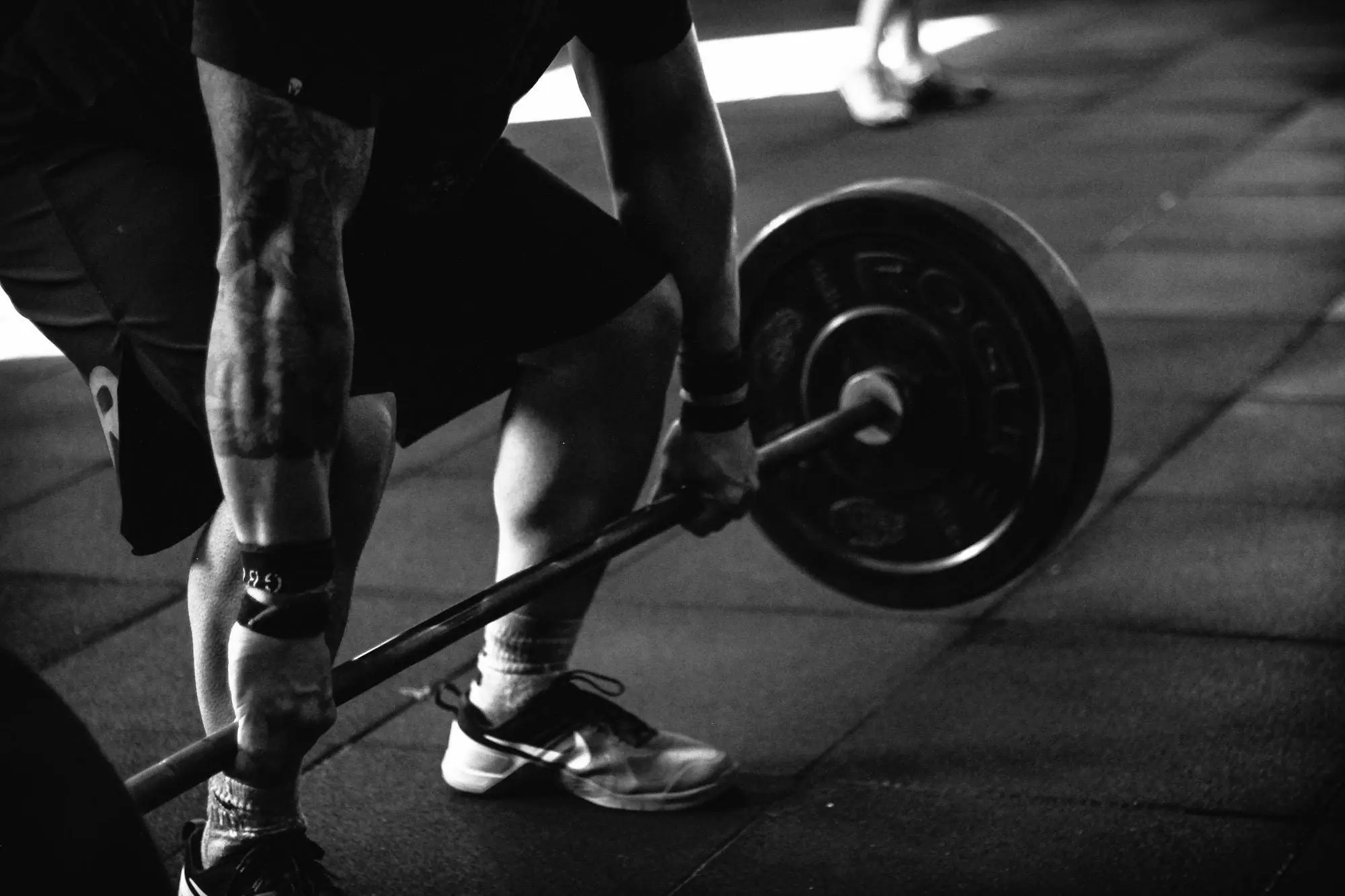
Strength is the single most requested outcome in a commercial gym, and it is also the one that most often stalls. Members plateau, drop out and blame themselves, when the real limit is usually the programme they are following or the equipment available to follow it on. This guide sets out the principles that actually drive strength adaptation, the advanced methods that extend it, and what each of them requires on the floor – because a strength offer that cannot be delivered with the equipment in the room is a marketing promise, not a service.
The four foundations of strength development
Before any advanced method, four principles decide whether a member gets stronger. They are not negotiable, and every one of them has an equipment consequence.
1. Resistance training
Strength is built against resistance: free weights, plate-loaded machines, selectorised stacks, body weight. The compound patterns – squat, hinge, horizontal and vertical press, horizontal and vertical pull – remain the backbone of any strength programme because they load the most muscle mass per unit of time. A facility that wants to sell strength needs at least one rack, a bar, plates and a stable platform. Everything else is refinement.
2. Progressive overload
Muscle adapts to a demand it has already met. Getting stronger therefore means raising load, volume or intensity in a planned way over weeks and months. In practice this is an equipment question as much as a coaching one: if the smallest increment available on a stack is too large, or if the plate inventory stops at a round number, progression stops with it. Fractional plates and a properly stocked rack of discs are cheap compared with the churn caused by members who stop progressing.
3. Rest and recovery
Adaptation happens between sessions, not during them. Programmes need scheduled rest days, adequate sleep and hydration. For an operator this translates into floor design: if the strength area has no room to sit, no water point nearby and no space to move between sets, sessions get compressed and quality drops.
4. Balanced nutrition
Sufficient protein supports repair; carbohydrates and healthy fats supply the energy for the work itself. Specific dietary plans belong to a qualified professional, not to the equipment supplier or the floor staff – and that boundary should be explicit in your service offer.
Advanced methods, and what they need on the floor
| Method | Principle | Equipment required |
|---|---|---|
| Maximal strength work | Very heavy loads, low repetitions | Power rack with safety spotters, Olympic bar, calibrated plates, lifting platform |
| Descending sets | Load reduced set after set | Selectorised stack or a well-stocked plate rack for fast changes |
| Supersets and trisets | Exercises chained without rest | Two or three adjacent stations, or a rig with several work zones |
| Eccentric training | Deliberately slowed lowering phase | Machines with a controlled return, or a rack with a spotter |
| Plyometrics | Explosive jumping and bounding | Plyo boxes and shock-absorbing flooring |
Maximal strength
Working close to maximum recruits the largest number of motor units and develops raw force. It is also the method with the highest safety requirement: heavy squats, deadlifts and overhead presses need a rack with adjustable safety arms, a bar rated for the load and a floor that can take a dropped barbell. Our squat racks and power racks and Olympic barbells are specified for exactly this use.
Descending sets
The load is reduced from one set to the next – for example squats at 100 kg, then 80 kg, then 60 kg – so the muscle keeps working past the point where the initial load could no longer be moved. The practical constraint is changeover time: on a barbell this needs a second pair of hands, which is why the method sits more naturally on a selectorised station in a busy room.
Supersets and trisets
Chaining two or three exercises without rest raises training density and the metabolic cost of a session. In a commercial room the limiting factor is station availability at peak hours: a member cannot hold three machines at once without blocking the floor. This is where a rig with several independent work zones earns its footprint.
Eccentric training
Slowing the lowering phase increases time under tension and the mechanical demand on the muscle. It also increases the need for supervision, since the failure point is harder to predict. Guided machines make the method usable by members who would not be safe attempting it under a free bar.
Plyometrics
Box jumps, jump lunges and bounding develop explosive strength and power. The requirement here is almost entirely floor-related: a surface able to absorb repeated impact, with enough clear space around the landing zone. Impact flooring is not an accessory in this context, it is the safety measure.
Turning the principles into a working strength area
- Cover the movement patterns before adding variety. One rack, one bench, one vertical pull, one horizontal pull, one leg press or squat station: that covers the majority of member programmes. Specialised stations come afterwards.
- Specify to EN ISO 20957-1 class S. For indoor equipment in a supervised facility this is the reference class. Equipment positioned below it will not survive commercial traffic and does not belong in the room.
- Plan the flooring with the equipment. Free-weight zones need weightlifting rubber tiles or an equivalent impact surface. Retrofitting a floor after the racks are installed always costs more.
- Leave circulation space. Density looks good on a plan and fails at peak hours. Allow room to load, unload and coach around every free-weight station.
- Match increments to your members. Beginners progress in small steps. A stack with 5 kg increments and no add-on weights will stall a large part of your membership within months.
The full strength training machine range covers selectorised, plate-loaded and free-weight configurations for facilities of every size.
Frequently asked questions
How is strength progress measured?
The usual reference is the one-repetition maximum on key lifts such as the bench press, the squat and the deadlift. In a commercial setting, tracking performance on the same exercises over time – load, repetitions, quality of execution – is safer and more useful than repeated maximal testing.
How long before members see significant strength gains?
It depends on training age, consistency and nutrition. Several months of regular training is a realistic expectation for meaningful gains, and setting that expectation honestly at sign-up reduces early drop-out more than any promotional offer.
Can strength be developed without external load?
Yes. Push-ups, pull-ups, dips and squats build real strength, and resistance bands extend the range. This is why calisthenics rigs and cages work as a complement to a machine circuit, particularly for outdoor and public installations.
Is strength training only for men?
No. Strength work benefits members of both sexes and every age group, and supports posture, bone health and general robustness. In practice, a strength area that is well lit, clearly signposted and not confined to a back corner is what makes it accessible in the first place.
How much floor area does a strength zone need?
It depends on the mix of racks, machines and free-weight space and on your expected traffic at peak hours. We size the area from your floor plan rather than from a rule of thumb, because the same equipment list behaves very differently in a long narrow room and in an open square one.
Equipping for strength
Programming and equipment are two halves of the same answer: the best written strength plan will not survive a room where members queue for the only rack, and the best equipped room will not deliver results without progression built into the programme. Send us your floor plan, your membership profile and your peak-hour attendance, and we will return a configured proposal – request a quote.