Glute Training Machines: What to Put in a Commercial Gym
Glute training has gone from an afterthought at the end of a leg session to one of the most requested areas in a commercial gym. For an operator that is a specification question long before it is a training question: which machines earn their floor space, how many stations a glute area really needs, and what happens to the queue at seven in the evening if you get the mix wrong. This guide covers how to choose glute training equipment for a professional facility, and the exercises your instructors will be coaching on it.
Why the glutes justify dedicated equipment
The gluteal group is one of the most important muscle groups in the human body. It contributes to balanced posture and overall stability, and it drives the everyday movements members rely on: walking, running and climbing stairs. Training it regularly builds functional strength that shows up well beyond the gym.
Alongside the functional case there is an aesthetic one, and there is no point pretending otherwise when specifying a floor. A well-developed posterior chain is what a large share of members are actually asking for, and a facility that cannot service that demand loses them to one that can. A dedicated glute area is now a competitive feature rather than a nice-to-have, in the same way a squat rack row became one fifteen years ago.
How to choose glute training machines
With a crowded market to choose from, four criteria decide most specifications.
1. Define the goal the equipment serves. Machines that load a hip extension heavily, such as a dedicated hip thrust station, serve members looking to add size and strength. Cable and pendulum-style stations that isolate at lower load serve members who want tone and control. Most floors need both, and the ratio should follow the membership you actually have, not the membership in the brochure.
2. Match the machine to the experience level in the room. Beginners need stations that provide support and a fixed path, so the movement can be learned safely without supervision on every rep. More advanced users need equipment that takes real load and allows the resistance to be pushed, which usually means plate-loaded or heavy selectorised stations. A floor with only one of the two either intimidates newcomers or bores the people who train hardest.
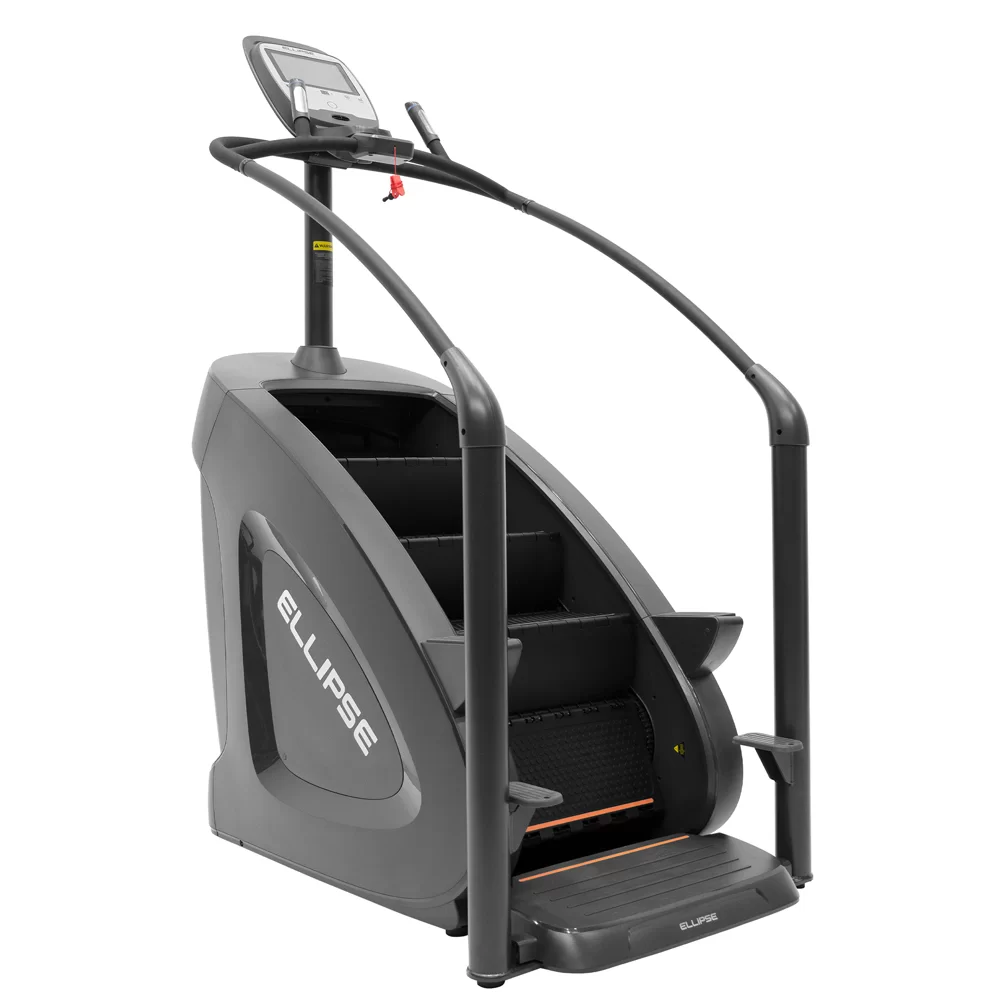
3. Test before committing. Nothing on a datasheet tells you how a machine fits a range of body sizes. Try the models under consideration with users of different heights and limb lengths, and check the adjustment range at both extremes. Machines with a genuinely wide adjustment range keep more of your members on them, which is the whole point of the capital spend. A stair climber is a good example of a station that trains the glutes hard while reading as cardio equipment: the MAX 10 professional stair climber is the sort of unit that quietly absorbs demand from the glute queue while sitting in the cardio zone.
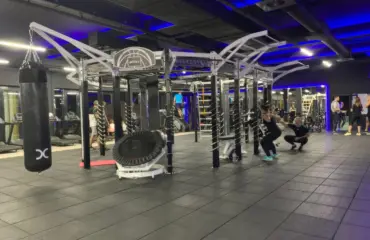
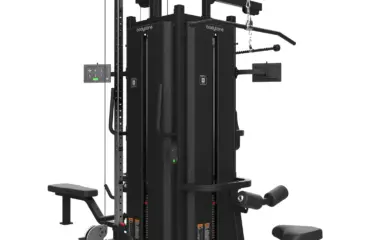
4. Take professional advice on the mix. A qualified trainer or a supplier who has laid out comparable floors can tell you where the bottleneck will form. Our dedicated glute training area range is built around that logic, grouping the stations that members use in sequence so that a small footprint still supports a full session.
Getting more out of every session
The equipment only pays back if it is programmed properly. Four principles do most of the work.
Progress the load gradually. Muscle growth needs progressive overload. Starting light and adding weight over time lets the tissue adapt and strengthen, which is also what keeps injury rates and complaints down on a busy floor.
Vary angles and positions. The gluteal group is not trained completely by any single movement. Rotating between squats, lunges, hip thrusts and kickbacks loads the muscles from different directions and prevents the plateau that sends members looking elsewhere.
Use intensification methods where appropriate. Drop sets, supersets and circuit formats keep intensity high through the session and support both hypertrophy and energy expenditure. In a commercial setting they also increase station occupancy time, which is worth knowing before you specify only one of anything.
Do not skip the warm-up or the cool-down. Preparing the muscles before load and stretching afterwards supports recovery and reduces soreness. Space for this is part of the layout, not an afterthought: mat area next to the glute stations is what stops people warming up in the walkway.
The exercises that actually build the area
These are the movements your instructors will coach, and the ones the equipment list has to support.
Squats are among the most versatile and effective glute exercises, and they also recruit the quadriceps, hamstrings and trunk. Variations such as sumo squats or dumbbell squats shift the emphasis further towards the glutes.
Lunges tone the glutes while training balance and stability. Forward, lateral and reverse lunges can all be performed with bodyweight or loaded.
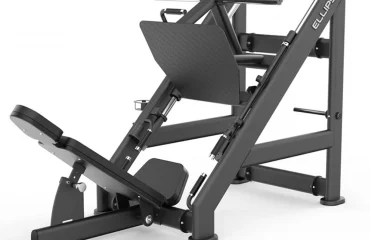
Hip thrusts are designed specifically to target the gluteus maximus, which makes them the cornerstone movement of the area. Performed from a bench or a stable platform with load across the hips, they take heavy weight, which is exactly why a purpose-built station beats improvising with a bench and a barbell on a busy floor.
Kickbacks isolate the gluteus maximus. From a four-point position, the leg is lifted backwards with the knee bent at 90 degrees, driving the heel towards the ceiling before returning under control. Cable and lever versions make this loadable and repeatable.
Glute bridges are the simple, unloaded entry point: lying supine with knees bent and feet flat, lifting the hips by contracting the glutes and lowering slowly. They cost nothing in equipment and are what beginners should start with.
Programming for beginners
Members new to glute training should start slowly and progress gradually, and your floor staff should be steering them accordingly. Start with simple bodyweight squats and lunges so technique is mastered before load is added. Warm up properly before every session, which also reduces injury risk. Be patient, since strength training takes consistent effort over time and nobody should be promised instant results. And route beginners to a qualified professional who can correct execution and build an appropriate programme, which is one of the strongest retention tools a facility has.
Frequently asked questions
How many glute stations does a mid-sized gym need?
Enough that the busiest hour does not produce a queue at a single station. In practice that means at least one loaded hip extension station, one cable or lever isolation station and free-weight space, before you consider duplicating anything.
Is a dedicated hip thrust machine worth it over a bench and barbell?
On a commercial floor, usually yes. A purpose-built station is faster to set up, safer to load and unload without a spotter, and takes far less floor area than the space a bench-and-barbell setup occupies once the plates are laid out.
Do cardio machines contribute to glute development?
Stair climbers in particular load hip extension repeatedly and are popular precisely for that reason. A stair climber in the cardio zone takes real pressure off the strength stations at peak times.
What should be specified around the machines?
Mat space for warm-up, bridges and floor work, mirrors for technique feedback, and flooring that takes dropped plates. The stations are only part of the area.
Specifying your glute area
Whether you are opening a new site, converting under-used floor space or replacing equipment that no longer matches demand, the glute area should be specified as a zone rather than as a shopping list of machines: stations, free-weight space, mat area, mirrors and flooring together. Request a quote with your floor plan and member profile, and our team will work through the layout and the equipment list with you.