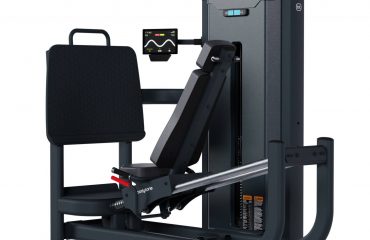
Strength Training: The Complete Guide for Gym Operators

Strength training is the backbone of almost every commercial fitness offer. Whether you run a members club, a hotel gym, a municipal facility or a rehabilitation centre, the strength area is what your users judge you on and what determines how much of your floor space earns its keep. This guide covers what strength training actually is, what it delivers for your users, the principles that make a programme work, and how those principles translate into the equipment you should be specifying.
What strength training is
Strength training is exercise that loads the muscles against external resistance in order to build strength, muscle mass and muscular endurance. The resistance can come from free weights, from selectorised or plate-loaded machines, or from body weight. It is a broad training method, not a single sport: bodybuilding is one application of it, but so are athletic preparation, injury prevention, rehabilitation and general health maintenance. A commercial facility usually has to serve several of those at once.
What it delivers for your users
- Muscular strength and endurance. The primary and most visible outcome, and the one most members come for.
- Body composition. Resistance work supports fat loss by raising resting metabolic demand alongside a controlled diet.
- Posture. Loading the back, trunk and shoulder girdle improves posture and reduces the risk of pain and injury, which matters particularly for a corporate or municipal user base.
- Bone density. Loading stimulates bone formation and helps prevent osteoporosis and fractures. This is the argument that opens senior programmes and rehabilitation partnerships.
- General health. Regular resistance training is associated with reduced risk of cardiovascular disease, type 2 diabetes and other chronic conditions.
The four principles that drive equipment choice
Progressive overload
Muscles adapt only when the demand on them increases over time, through added load or added repetitions. For an operator this is a specification question: your weight stacks and plate loading need enough range and small enough increments that a beginner and an advanced user can both progress on the same machine. Stacks that jump too coarsely stall progression for lighter users.
Intensity and volume
Intensity is the relative load used; volume is the total number of sets and repetitions performed. Different members sit at different points on that curve at the same hour of the day, which is why a floor built entirely around heavy compound stations serves only part of your membership.
Recovery
Muscles rebuild between sessions, not during them. Rest days are part of the programme. In practice this shapes your timetable and your capacity planning more than your equipment list.
Nutrition
A balanced intake with sufficient protein, carbohydrate and healthy fats supports growth and recovery. It sits outside your equipment scope but inside your coaching offer.
Training methods you need to accommodate
Straight strength work
Heavy loads for relatively few repetitions, built on compound movements: squat, deadlift, bench press. This needs racks, benches, bars and a floor that tolerates loaded work.
Circuit training
Cardiovascular and resistance exercises alternated within one session. Circuits need machines that can be adjusted in seconds and laid out in a logical loop, which is where selectorised machines earn their place: no plate handling between stations.
Supersets
Two exercises for the same muscle group performed back to back without rest. This increases the training density and it also increases station occupancy, so it affects how many duplicate stations you need at peak hours.
Isolation work
Single muscle or muscle group, typically to correct imbalances or to finish a session. Isolation stations are the ones most often under-provided in a new fit-out and most often requested afterwards.
Programme types and what each one needs on the floor
| Programme | Load and repetitions | Equipment focus |
|---|---|---|
| Strength | Heavy loads, low repetitions | Racks, benches, olympic bars, heavy-duty flooring |
| Muscular endurance | Light to moderate loads, high repetitions | Selectorised stations, cable work, fast adjustment |
| Hypertrophy | Moderate loads, medium to high repetitions | Full muscle-group coverage, plate-loaded and selectorised mixed |
| Strength and hypertrophy combined | Mixed | Compound stations plus isolation machines in the same circuit |
Specifying equipment for professional use
Equipment installed in a facility open to users must be built for supervised commercial use. For indoor equipment the relevant reference is EN ISO 20957-1 class S. Do not accept equipment offered for domestic use in a commercial room: the duty cycle, the frame construction and the guarding are not comparable, and neither is the liability position if something fails.
Beyond the standard, three practical criteria decide whether a strength floor works: adjustment speed, biomechanical range and durability of contact surfaces. Our strength training machines cover the selectorised and converging ranges, our plate-loaded machines serve heavier and more athletic use, and weight benches anchor the free-weight zone.
Frequently asked questions
How often should users train?
It depends on their goals and current condition. As a general guide, two to four sessions per week produces good results. For an operator this is the number that drives your capacity model.
How long before users see results?
It varies from person to person. Visible change usually begins after a few weeks of regular training, while significant results take several months. Setting that expectation at induction reduces early churn.
Are supplements necessary?
No. Supplements are not required for strength training, though they can complement a balanced diet. Any user with a health question should be directed to a healthcare professional rather than to gym staff.
Is strength training appropriate for women?
Entirely. Strength training benefits women of all ages and fitness levels, improving muscle tone, strength and bone density. A strength floor that is uncomfortable for half your potential membership is a commercial problem, not a training one, and layout and equipment mix are what fix it.
How does strength training compare with cardio?
Strength training builds muscle, improves posture and raises resting metabolic demand. Cardiovascular work develops aerobic capacity. The two are complementary, and a facility that offers only one of them limits both its results and its retention.
Can users with health conditions train?
They should consult a healthcare professional before starting. Your role as an operator is to have a clear screening procedure at sign-up and a documented escalation route, not to give medical advice.
Planning your strength area
The right equipment mix depends on your membership, your opening hours and the floor area you have. Send us your plan and your user profile and we will propose a zoned layout with the corresponding machine list. Start on our quotation request page.