Lexco LPS-102 lat pulldown machine: technique, muscles and specification
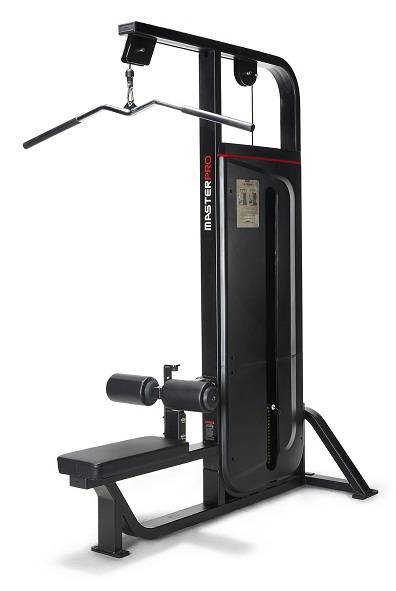
The Lexco LPS-102 is a selectorised lat pulldown machine built for commercial floors: gyms, clubs, hotels, schools and rehabilitation centres. It is one of the few stations that a brand new member and an experienced lifter can both use productively on the same afternoon, which is why it earns its footprint in almost every layout. This guide covers what it trains, how it should be used, how to programme it, and what to check before it goes on an order.
What the LPS-102 is
It is a seated pulldown station with a selectorised weight stack: the user sets the load with a pin, sits, secures the thighs under the pad and pulls a bar down towards the chest. The movement path is fixed, the load is adjustable in defined increments, and the seat and thigh pad are adjustable to the user rather than the other way round.
That combination is what makes it a commercial machine rather than a piece of equipment that happens to be large. On a busy floor a station is used by dozens of people a day with no two of them the same height, and the time it takes to change the setting between users is a real operating cost. A pin and a seat adjustment take seconds; loading and unloading plates does not.
Which muscles it trains
The LPS-102 works the back, the arms and the shoulders in a single movement.
- Back: latissimus dorsi, rhomboids, trapezius and the erector spinae group. These are the muscles that hold an upright posture, and they are the ones most often underworked in a general membership.
- Arms: biceps brachii and brachialis, both recruited as the bar comes down to the chest. They are the elbow flexors, and they carry a large part of the load at the end of the pull.
- Shoulders: posterior deltoids, trapezius and rhomboids stabilise the shoulder through the pull and contribute to arm mobility.
For an operator, that coverage is the point: one station addresses the pulling side of the body, which balances a floor that otherwise tends to fill up with pressing movements.
How to use it correctly
- Set the resistance with the adjustment provided, matching the load to the user rather than to the previous person on the machine.
- Sit with an upright posture, feet flat and firmly planted on the floor.
- Take the bar with a firm grip, hands slightly wider than shoulder width.
- Pull the bar towards the chest, driving the movement with the back and the arms.
- Return slowly to the starting position, controlling the bar rather than letting it pull the arms up.
- Repeat for the intended number of repetitions.
Good technique across the whole set is what produces the result and what keeps the injury risk low. A member who is unsure should ask a member of staff or a coach rather than guessing, which is one more argument for placing the machine within sight of the floor team.
Grip variations
Three grips give three distinct training effects on the same station, which is a large part of the value of the machine on a floor where space is limited.
Pronated pulldown: palms facing down. This puts the emphasis on the back musculature.
Supinated pulldown: palms facing up. This shifts more of the work onto the arms.
Neutral pulldown: palms facing each other. This gives a balanced recruitment of back and arms.
Varying the grip changes the angle of pull and therefore which fibres do the work. It is also the simplest way for a coach to keep a returning member progressing without moving them to a different station.
Programming it into a session
Warm up first. Mobility work and stretching before the session prepare the muscles for load and reduce injury risk.
One or two sessions a week on the pulldown is a reasonable frequency, used as the main movement for back, arms and shoulders in those sessions.
Alternate the variations rather than repeating the same grip indefinitely. Different grips recruit different muscles and keep progress from stalling.
Allow recovery between sessions. Muscle is rebuilt during rest, not during the set.
Why it belongs on a professional floor
Indoor equipment intended for a commercial facility is specified to EN ISO 20957-1 class S, the studio class, which covers frame strength, stability and the durability of moving parts under continuous, unsupervised use. That is the relevant question for a buyer, not whether a machine looks solid in a photograph.
The practical arguments for the LPS-102 on a professional floor are consistent with that:
- Adjustable stack: the load changes in seconds, so the station does not bottleneck at peak times.
- Ergonomics: an adjustable seat and shaped handles hold the user in a correct position through the movement, which matters most for the members who have had the least coaching.
- Build: durable materials and a solid frame, because the cost of a machine on a commercial floor is measured in years of service, not in the purchase price alone.
- Versatility: pulldowns and rowing-style pulls from one station, covering back, arms and shoulders.
The machine sits in the Lexco selectorised range, alongside the wider selectorised machines category if you are specifying a full circuit rather than a single station.
What to check before ordering
Budget. The Lexco LPS-102 lat pulldown machine is listed at 4,250.00 EUR excluding VAT. Set the budget for the whole pulling area before choosing the station, not after.
Space. Measure the available floor area and the working envelope around the seat before ordering. The dimensions and the stack weight are on the product technical sheet, and they are the numbers to design the layout around.
Warranty. Confirm what the warranty covers and for how long. On a commercial floor the cables, the pads and the bearings are the parts that define the real service life.
Flooring. A selectorised station needs a stable, level base. Rubber tiles protect the slab and cut noise transmission; see rubber gym flooring tiles.
Frequently asked questions
Is the LPS-102 suitable for members who have never trained?
Yes. The path is guided and the load is set with a pin, so a first-time user can start safely without an induction on every movement. That is precisely what a selectorised station is for.
Can experienced lifters use the same machine?
Yes. The stack, the grip variations and the tempo give enough range for an experienced member to train hard on it. The station is not a beginner machine, it is a machine that is safe for beginners.
What exercises can be done on it?
Pulldowns in pronated, supinated and neutral grips, and rowing-style pulls. All of them target the back, the arms and the shoulders from different angles.
What are the dimensions and the stack weight?
Those figures are on the product technical sheet rather than in this article, because they are the numbers a layout depends on and they should be read from the source. Ask for the sheet with the quotation.
Specifying it for your site
Send the floor plan, the available area and the profile of your members, and the pulldown station is specified in the context of the rest of the floor rather than on its own. Request a quote for a line by line proposal including dimensions, stack weight, flooring and installation.