Professional gym equipment: inside the Light In Fitness range
Un équipement fitness professionnel se distingue par sa classe d'usage, sa structure et la disponibilité de ses pièces détachées. Ces éléments déterminent la durée de vie réelle en usage collectif. Light In Fitness fournit ces gammes avec devis, livraison, installation et SAV depuis Tours.
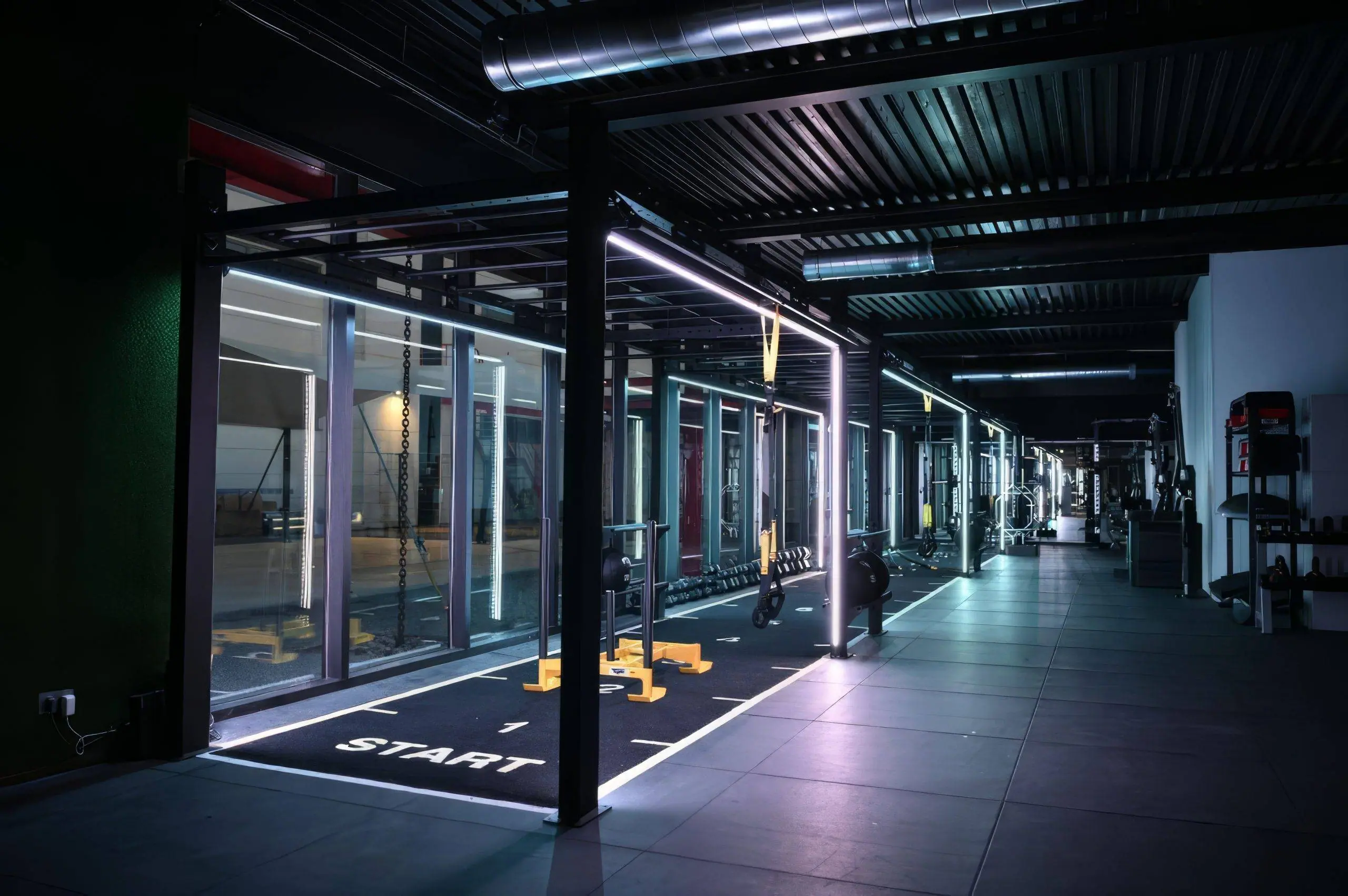
Specifying equipment for a commercial facility has almost nothing in common with buying a machine for a spare room. The buyer is choosing a usage class, a frame construction and a spare parts supply chain that has to hold for years of shared, uninterrupted use. This article walks through the Light In Fitness range family by family, explains what makes a machine genuinely professional, and sets out the questions worth asking before an order is placed.
What professional actually means
Professional equipment is distinguished by three things: its usage class, its structure and the availability of its spare parts. Together they determine real service life under collective use. Indoor equipment installed in a space open to multiple users falls under EN ISO 20957-1 class S, the class written for facilities where machines are used continuously by people the operator has never met. Class I covers professional equipment designed for inclusive access; it is a different professional category, not a level above class S. Anything specified below the professional classes will fail commercially long before it fails mechanically, because downtime, not breakage, is what costs an operator money.
Structure is the second filter. Frame gauge, weld quality, bearing and bushing choices and the finish applied to the steel decide whether a machine still runs smoothly in year five. The third filter is the least glamorous and the most important: can you still get a cable, a pad, a roller or a pulley in three years without replacing the whole machine? A supplier who cannot answer that question is selling you a consumable.
Exploring the range
The catalogue is organised around four families. Strength training machines cover selectorised ranges such as Lexco and Bodytone Forza alongside plate loaded lines including Solid Rock, so a floor can be built around either loading principle or around both. Selectorised machines suit mixed memberships and supervised environments; plate loaded lines suit strength focused clubs and give a lower cost per station.
Cardio equipment covers treadmills, exercise bikes, indoor cycling bikes, cross trainers and rowing machines. This is where usage class matters most, because a cardio machine in a commercial club runs for hours a day with no rest between users. Crossfit and Hyrox cages bring functional training onto the floor, from wall mounted rigs to freestanding cages, along with the accessories that go with them, and the range extends to floor level and podium MMA cages for combat sports clubs. Finally, the outdoor families cover street workout, calisthenics and parkour structures for sites that train in the open air, whether that is a campsite, a municipal park, a school or a barracks.
Engineering and performance
The machines are designed by biomechanics engineers, and the point of that work is not marketing. A machine whose axis of rotation matches the joint it is loading allows a natural movement path, keeps the resistance curve where it should be through the range of motion, and reduces the risk of injury that comes from users contorting themselves around a badly placed pad. Ergonomics is the same argument applied to comfort: adjustment ranges wide enough for a 1.55 m member and a 2 m member to use the same station without a fight.
Bespoke configuration is available where the standard catalogue does not fit. Outdoor structures in particular are routinely configured to the site rather than the other way round, and a layout that has been designed around an awkward courtyard will always outperform a standard package squeezed into it.
Quality your members can feel
Reliability is not an abstract virtue on a gym floor. A cable that fails mid set or a treadmill deck that cups after a season is a safety issue first and a reputation issue immediately afterwards. Professional equipment is tested to withstand the load cycles that collective use imposes, and it is backed by warranty terms that reflect that testing. What operators should compare is not the headline warranty length but what it covers: frames, moving parts, upholstery and electronics are usually covered for different periods, and the difference between suppliers is normally in the second and third of those.
Equipping your facility
Fitting out a gym is a strategic decision, not a shopping task. The productive way to approach it is to start from the member journey rather than from a wish list of machines: how many people are on the floor at peak, what proportion are training strength against cardio, what supervision is available, and what the space allows in terms of circulation. From there the equipment mix follows logically, and the temptation to buy one of everything disappears.
Floor surface deserves the same attention as the machines standing on it. Impact zones, free weight areas and cardio rows have different requirements, and the surfacing decision also carries the acoustic performance of the room and, in shared buildings, the fire classification. Where a fire class is specified in a project, reproduce it exactly as it appears in the technical documentation, including the smoke index, because a partial reference is not a specification.
International shipping and delivery
Equipment is shipped internationally through freight partners. Lead times depend on the range, on whether the configuration is standard or bespoke, and on the destination, so they are confirmed on the quotation rather than promised in advance. Delivery costs, access constraints at the site and whether installation is included are all worth settling at the quotation stage, because they are the items most often discovered late in a fit out. After sales support continues once the equipment is in place: this is where the spare parts question from the beginning of this article stops being theoretical.
Frequently asked questions
How do I know an item is genuinely professional?
Ask for the usage class in writing. For indoor equipment the answer should be EN ISO 20957-1 class S. Then ask what the frame is made of and how long spare parts remain available. Three clear answers are a good sign; three vague ones tell you everything.
Selectorised or plate loaded?
Selectorised machines are faster to use and safer for unsupervised beginners, which suits mixed memberships. Plate loaded machines give a stronger training stimulus for experienced users, cost less per station and have fewer parts to fail. Most commercial floors end up with both.
Can equipment be configured to my space?
Yes. Bespoke configuration is standard practice for outdoor structures and rigs, and floor layouts are designed around the actual room. Send the plan and the constraints and the configuration comes back around them.
What about equipment for children?
Children equipment is governed by a separate framework, EN 1176-1 for the equipment and EN 1177 for the impact attenuating surfacing. It is never specified under the adult outdoor standard, and adult stations are not made suitable for children by resizing them.
Talk to us about your project
Equipping a facility well is an investment with a measurable return: better retention, fewer machines out of service, and a floor that still looks credible in year five. Tell us the surface area, the audience and the training mix you want to offer, and you will get a configuration and a costed proposal rather than a catalogue. Request a quote and our team will take it from your floor plan.