Effective Lat Pulldown Machine Variations: How to Maximise Results
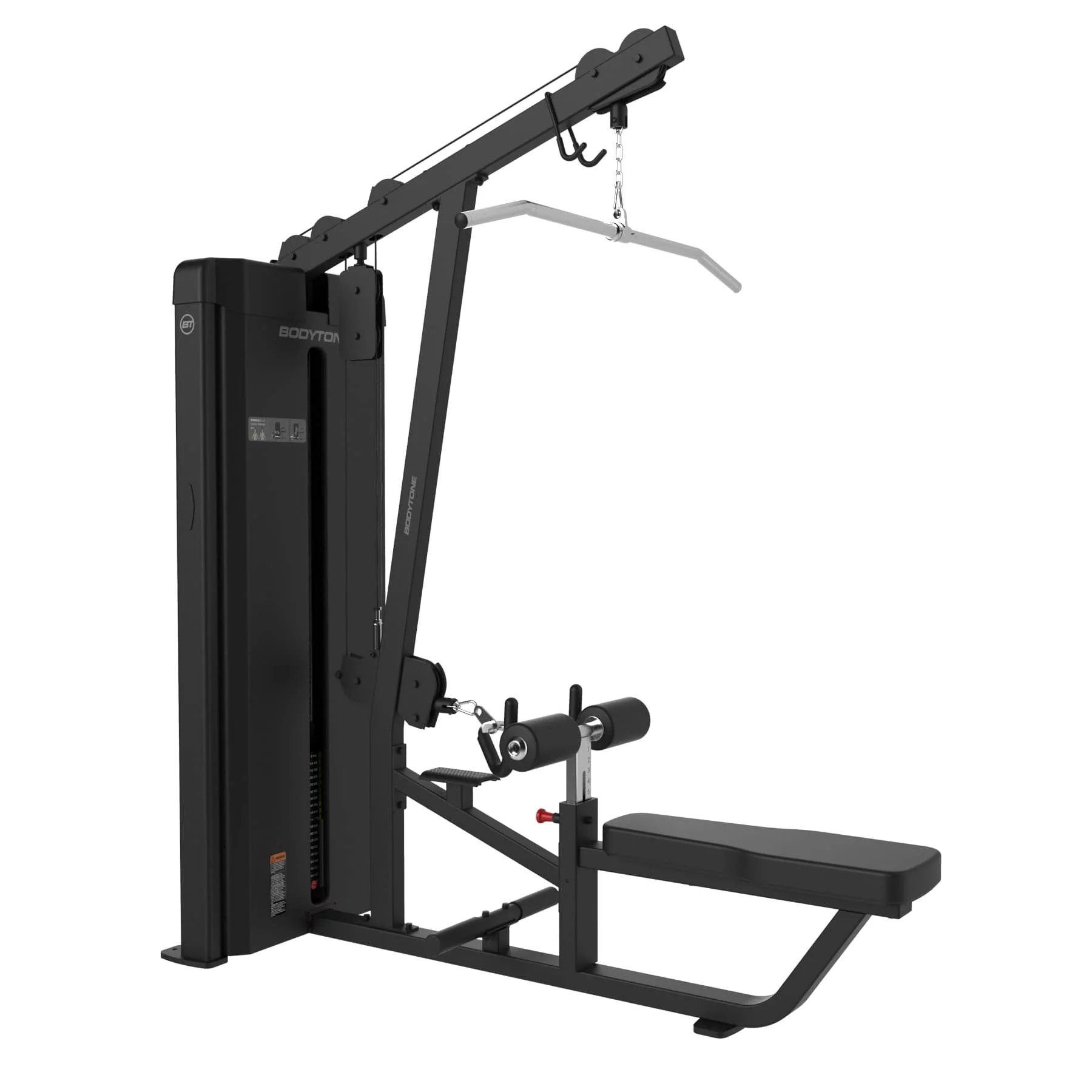
When it comes to building a strong, well-defined back, the lat pulldown machine remains one of the best tools on the gym floor. This classic station, used by beginners and experienced lifters alike, provides a direct way to load the latissimus dorsi, the muscles that create the V-shape so many members are training for. Beyond the standard execution, however, there are several variations that take the work to another level.
This article looks at the main lat pulldown variations, at what each one changes, and at what they imply when you are specifying equipment for a gym floor. From the close grip to the single-arm pulldown, each version brings its own benefits and its own demands, offering a fresh stimulus and breaking the monotony of a repetitive programme. Small adjustments in execution produce large differences in outcome, and they also determine which handles, attachments and machine configurations your facility actually needs.
Lat pulldown fundamentals
Before the variations, the basics. The machine primarily targets the latissimus dorsi, the large back muscles that contribute to trunk strength and to the shape of the upper body. Used properly, the lat pulldown does more than build a stronger, better defined back: it supports posture and helps reduce injury risk, which is exactly why it belongs in a general-membership facility and not only in a strength-focused one.
Why form and technique come first
The key to getting anything out of a lat pulldown is attention to form. Poor technique not only reduces the effectiveness of the exercise, it can lead to muscle strain and joint irritation. The main points to keep in mind:
- Body position: sit with the back straight and the feet flat on the floor, thighs secured under the pad. The torso leans back very slightly, with the shoulders square.
- Grip: the bar is taken slightly wider than shoulder width. The hands are positioned so that the wrists stay straight throughout the movement.
- Movement: start with the arms fully extended, then pull the bar down until it reaches the upper chest. Focus on driving the movement with the back muscles rather than relying on the arms.
- Breathing: breathe out as you pull the bar down, which is the effort phase, and breathe in as you let it rise back under control. Breathing with the effort rather than against it is what keeps the trunk stable at the point of maximum load.
These basics are the foundation from which more advanced and more specific variations can be explored. Training safety and training effectiveness both start with correct execution.
Variation 1: close grip
One of the most effective variations is the close grip. It shifts the stimulus slightly, placing more emphasis on the inner and lower portions of the back musculature and on the trapezius.
How the close grip differs
The close grip differs from the standard execution mainly in the distance between the hands on the bar. Instead of a shoulder-width position, the hands are placed much closer together, sometimes only a few centimetres apart. That change in hand spacing alters how the back muscles are recruited through the pull.
Specific benefits
- More work for the inner back: the narrow hand position allows greater activation of the inner back muscles, giving a more complete and varied session.
- More involvement of the trapezius: alongside the lats, this variation brings the traps into play, contributing to a stronger and more balanced back.
- Suits every level: it works for beginners and for advanced users, since the intensity can be scaled to the individual.
Coaching points
- Stable form: the body stays in a stable, controlled position throughout. Avoid swinging or using momentum to move the load.
- Controlled tempo: work slowly and under control, particularly on the way back up, so that the target muscles are actually loaded.
- Do not overload: start lighter, and make sure form holds for the whole set before adding weight.
The close grip is a straightforward addition to a lat pulldown routine. It provides a new stimulus and helps members work through training plateaus.
Variation 2: reverse grip
An interesting and frequently overlooked option is the reverse, or supinated, grip. It not only introduces a different pattern of muscle recruitment, it can also reduce stress on the wrists and elbows.
How the reverse grip works
Instead of gripping the bar with the palms facing forward, the hands are turned so the palms face the user. That apparently minor change in hand orientation produces a different activation of the back and of the biceps.
Benefits
- More biceps involvement: the supinated grip increases biceps activation, giving fuller work to the whole pulling chain.
- A different pulling angle: the grip changes the angle at which the back is loaded, emphasising the lower and middle portions of the latissimus dorsi.
- Less joint stress: for members with wrist or elbow issues, the reverse grip is often more comfortable than the traditional one.
Technique and precautions
- Body position: keep the posture upright and avoid leaning the torso too far back during the pull.
- Controlled movement: smooth, controlled repetitions matter here, especially when returning the load to the start position.
- Sensible loading: start with a moderate weight so that form can be held for the whole set.
Adding the reverse grip brings variety, and it also delivers real gains in strength and muscular development. Combined with the other techniques, it makes for balanced, complete back training.
Variation 3: single-arm pulldown
The unilateral pulldown works one side of the body at a time, which allows greater focus and greater isolation of the back muscles.
Benefits of working one side at a time
- Better isolation: concentrating on one side lets the back muscles be worked more specifically and reduces compensation by the dominant side.
- Muscular balance: unilateral work reveals and corrects side-to-side imbalances, supporting more symmetrical development.
- Flexible execution: it can be performed seated or standing, depending on preference and on training goals.
Getting the most from it
- Form and posture: hold a stable, controlled position and avoid rotating the torso excessively to move the load.
- Movement control: perform the repetition slowly and deliberately, concentrating on the contraction of the back.
- Matched repetitions: complete the same number of repetitions on both sides to maintain balance.
Reducing injury risk
- Mind the load: start lighter than the weight used for two-arm pulldowns, so control and form are preserved.
- Listen to the body: watch for any sign of overload or pain. Unilateral pulling demands a lot of stability and control, so it should not be pushed too far too soon.
Bringing single-arm work into a programme raises the intensity of a session and improves the balance and symmetry of the back. It is particularly useful for members trying to break a plateau or to correct an imbalance.
Programming the variations
Having explored the variations, the question is how to fit them into a routine. Used correctly, they lead to a clear improvement in results and prevent stagnation.
- Read the day: choose the variation according to how the session feels. If a muscle group is already fatigued, a variation that puts less pressure on that area is the better choice.
- Rotate: do not always run the same variation. Alternating keeps the body in a constant state of adaptation, which is what drives strength and muscular growth.
- Match the goal: if the objective is strength, favour variations that allow heavier loads. If the objective is hypertrophy, variations that isolate better are usually more productive.
Balancing variations against the basic movement
- Do not drop the standard version: useful as the variations are, the standard lat pulldown remains the core movement. Keep the balance between the two.
- Introduce gradually: add one variation at a time, so the response can be judged and the programme adjusted accordingly.
A sample week
- Monday: standard lat pulldown to warm up, followed by close grip.
- Wednesday: reverse grip, to change the working angle.
- Friday: single-arm pulldown, focusing on isolation and balance.
That layout works the muscles from several angles and with several stimuli, which is what makes the most of the station.
What the variations mean for your equipment specification
For a gym operator, the practical consequence of all this is straightforward: a single lat pulldown station only delivers these variations if it is specified for them. Three points decide it.
Attachments. Close grip, reverse grip and single-arm work each call for a different handle. A station supplied with a long bar only will be used one way. Budget for a straight bar, a close-grip or V-handle and a pair of single handles from the outset, along with somewhere to store them at the station.
Weight increments. Unilateral work uses a lighter load than two-arm pulling, so a stack with coarse increments makes progression awkward for exactly the members who benefit most from it. Check the increment, not only the maximum load, when comparing selectorised machines.
Adjustability and throughput. A thigh pad that adjusts quickly and a seat that suits a wide range of heights keep queue time down at a busy station. Where floor space is tight, an adjustable cable station covers the pulldown and its variations along with a great deal else, and a multi-station gym does the same job for a small facility or a hotel or corporate gym.
Frequently asked questions
Is a lat pulldown machine worth it if the gym already has a pull-up rig?
Yes, and they serve different populations. The pulldown lets a member work the same pattern at a load below body weight, which is what makes the movement accessible to beginners, to older members and to anyone returning from injury. Most facilities need both.
How much space does a lat pulldown station need?
It depends on the model and on the circulation you want around it. Work from the manufacturer footprint plus access space for the seat, rather than from a generic figure. Send us the floor plan and we will lay the station out in context.
Should a facility buy a dedicated pulldown or a cable station?
A dedicated machine is simpler and faster for high-traffic floors where members follow a fixed programme. A cable station is more versatile per square metre and better suited to personal training and small-group work. Traffic level, not preference, usually settles it.
Which handles should be ordered with the machine?
At minimum a long bar, a close-grip handle and single handles. Those three cover every variation described above and cost far less ordered with the machine than added later.
Conclusion
Across these variations, small changes in execution lead to large differences in results. Each one, from the close grip to the single-arm pulldown, offers a distinct way of loading the back and helps build strength, symmetry and endurance. Their real value is that they break the monotony, challenge the body in new ways and keep members off a plateau.
The key, however, is not variety alone but consistency and correct execution. For a facility, it is also specification: the right attachments, sensible weight increments and a station that adjusts quickly are what turn a machine into a station members keep coming back to.
If you are equipping or renewing a strength area, tell us the size of the floor, the membership profile and the budget, and we will propose a configuration. Request a quote to get started.