Professional Lying Leg Curl Machine: Specification Guide
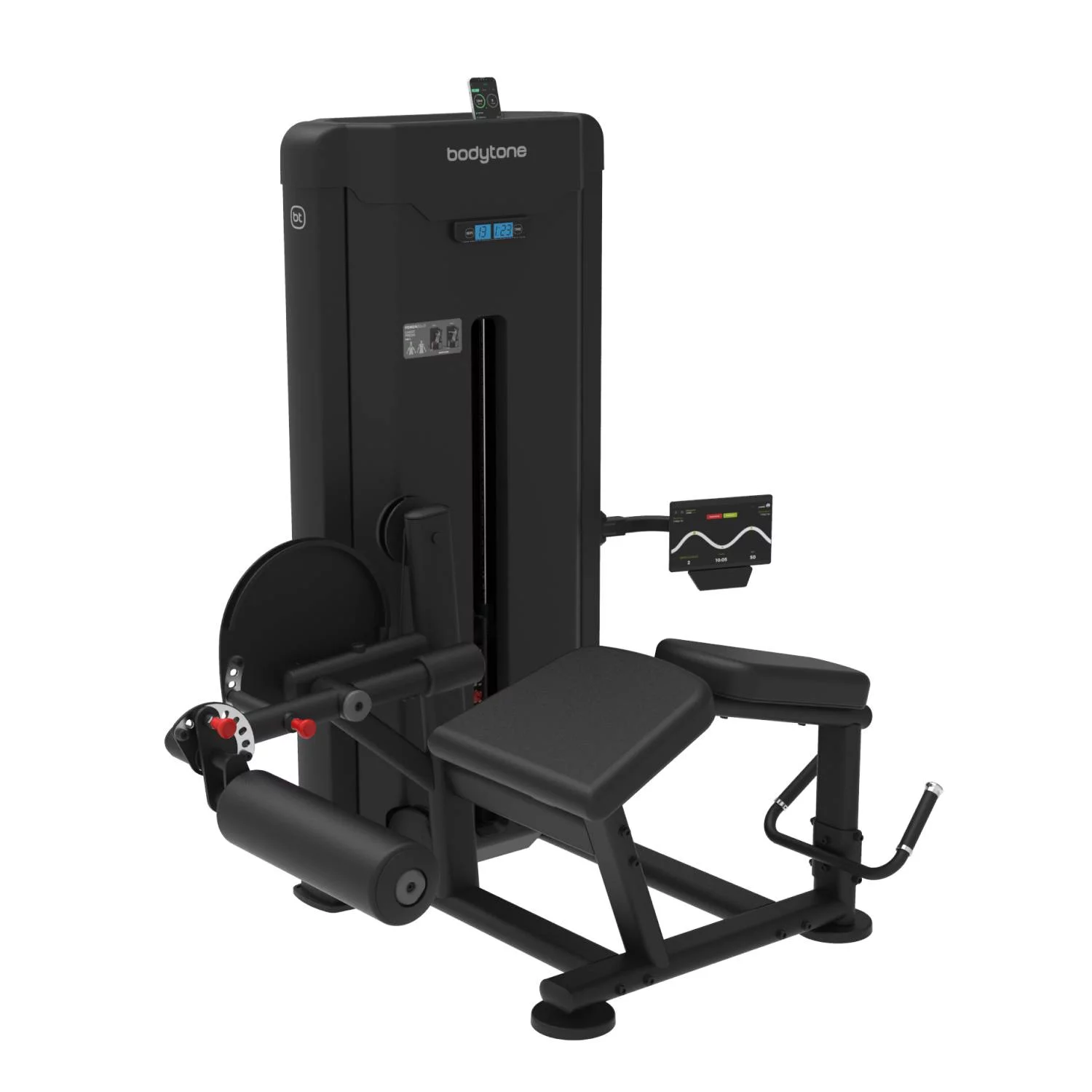
In short: the lying leg curl is the station that isolates the hamstrings better than any other machine on a commercial floor. Prone position, hips fixed, knees flexing against an adjustable resistance: nothing else on the floor removes the hip from the movement so completely. For an operator, it is the counterweight to a leg area that is otherwise all quadriceps.
Why the hamstrings deserve a dedicated station
Walk most gym floors and count the stations: leg press, hack squat, leg extension, squat rack. Every one of them is quadriceps-dominant. The posterior chain gets whatever is left over, which in practice is one machine or none. That imbalance is visible in the injury pattern: hamstring strains and knee complaints cluster in members whose front-to-back ratio has drifted.
A lying leg curl fixes that cheaply. It occupies a small footprint, needs no supervision beyond the induction, and is immediately understood by beginners. It is also one of the stations that a physiotherapy or return-to-sport partner will ask for by name if you share a building with one.
What the machine does
The user lies prone on the pad, hips against the frame, and flexes the knees against a padded roller positioned above the achilles. Because the torso is supported along its full length and the hips cannot rise, the hamstrings work without help from the glutes or the lower back. That is the whole point of the prone position, and it is why the lying leg curl isolates more strictly than the seated or standing variants.
The adjustable resistance system lets each member progress at their own rate, which is what makes the station work for a mixed membership: the same frame serves the deconditioned member on the lightest setting and the loaded athlete at the top of the stack.
Commercial units are built around a rigid frame with non-slip feet, a padded support surface and an adjustable restraint strap. Those three items look like detail on a spec sheet and are the difference between a station members use correctly and one they fight.
Lying, seated or standing: which to specify
| Variant | Position | What it changes | Best fit |
|---|---|---|---|
| Lying leg curl | Prone, hips fixed | Strictest isolation, best movement control | Core hamstring station for any strength area |
| Seated leg curl | Seated, hips flexed | Different hamstring length, easier entry and exit | Clubs with older members or accessibility priorities |
| Standing leg curl | Upright, one leg at a time | Unilateral by design, small footprint | Correcting side-to-side imbalance, tight floor plans |
The lying and seated variants are complementary rather than interchangeable, because the hip angle changes the length at which the hamstrings work. A well-specified leg area carries both if the floor allows it; if it only allows one, the lying version is the one to take. See the full range of selectorised strength machines for the surrounding stations.
What to check before you specify
Class marking. Indoor equipment for a commercial facility must be built to EN ISO 20957-1 class S, the professional class for equipment installed in commercial premises, supervised or unsupervised. The class must appear on the frame plate. Class I is the professional class for inclusive access, which is a separate requirement and not a higher intensity tier.
Roller adjustment range. The roller has to sit just above the achilles for a short member and for a tall one. A frame with too few adjustment positions turns the exercise into a calf stretch for half your membership.
Pad geometry. A slight break in the pad at hip level keeps the pelvis from rising. A flat pad is cheaper and lets the movement leak into the lower back.
Handles. The user needs something to hold to keep the torso down. Check that they are within reach of a short arm, not only a long one.
Upholstery and cleaning. Prone stations take face and forearm contact. Specify upholstery your cleaning protocol can actually handle at your traffic level.
Getting it used properly
Four points cover almost every induction:
- Start at a load that allows full range. Progress the load as strength builds, not before.
- Keep the hips on the pad. If the pelvis lifts, the load is too heavy and the hamstrings are no longer the ones doing the work.
- Control the eccentric. Slow, controlled lowering is where most of the training effect sits. Jerking the roller up and dropping it is the fastest route to a strain.
- Use the unilateral variation. Working one leg at a time is how a side-to-side difference gets corrected rather than reinforced.
Members with existing knee problems should be referred to a health professional before being programmed onto the station. That is standard practice, and it is worth having it written into your induction script rather than left to the instructor on shift.
Where it fits in your leg area
Place the lying leg curl adjacent to the quadriceps stations, not across the room. Members who train legs move between them inside one session, and a layout that separates them produces exactly the front-to-back imbalance the station exists to prevent. If you run a Bodytone line, the Bodytone Forza FH range covers the surrounding leg stations on the same design language and footprint logic.
Frequently asked questions
What is the difference between a lying and a standing leg curl?
A lying leg curl is performed prone, a standing one upright. Both target the hamstrings, but the lying version isolates them more strictly and gives better control of the movement because the hips are fixed against the pad.
How often should a member train on it?
That depends on their overall programme and goals. As a general rule, hamstring work is programmed two to three times per week with a rest day between sessions.
Is it suitable for beginners?
Yes. It is one of the easiest stations to teach. Start light, confirm the technique, and progress the load from there.
Can a member with knee problems use it?
Anyone with knee pain or a knee condition should consult a health professional first. They can assess the case and give individual advice; that is not a decision for the induction.
Is it a commercial machine?
The stations we supply are specified for commercial installation and built to EN ISO 20957-1 class S. Specifying a machine to that class is what allows continuous, unsupervised use by a paying membership.
Specifying your leg area
A hamstring station is not an optional extra in a professional leg area, it is what keeps the rest of it safe. The questions worth settling before you order are the variant, the adjustment range for your membership, and where the station sits relative to the quadriceps machines.
Browse the full range of professional strength training machines, or send us your floor plan and membership profile: request a quote.