Leg Curl: A Complete Guide to Hamstring Training
The leg curl is the reference exercise for the hamstrings, and it is one of the machines a gym cannot really do without. Squats, lunges and presses all load the front of the thigh; without a dedicated knee flexion station, the back of the thigh is systematically under-trained, and that imbalance is behind a large share of the hamstring and knee complaints coaches see. This guide covers what the leg curl is, the machine variations found on commercial floors, what the exercise actually delivers, how to execute it correctly, and how to programme it.
What is a leg curl?
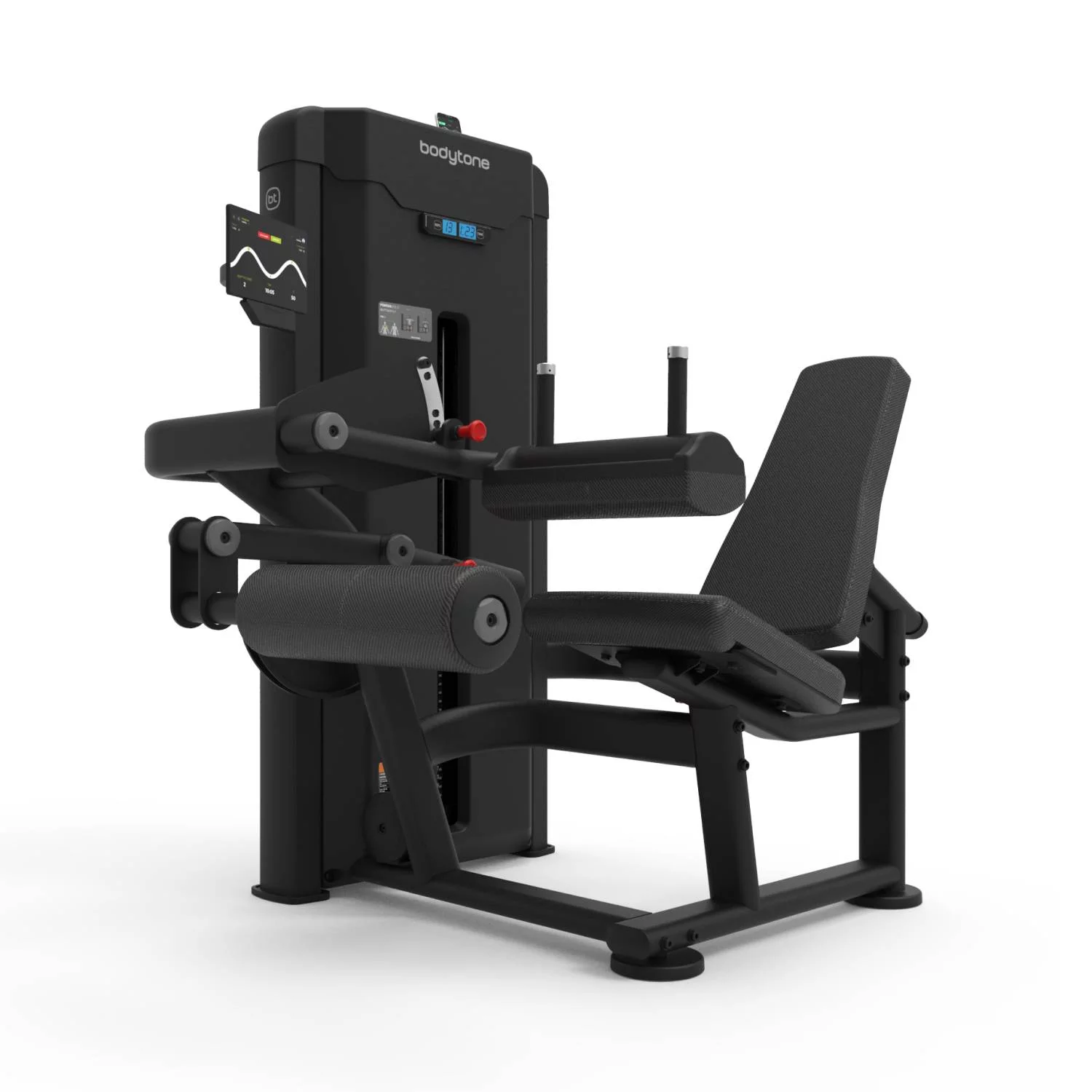
The leg curl is a strength exercise that works mainly the hamstrings, the muscle group at the back of the thigh. The movement is knee flexion against resistance, performed on a dedicated machine with a padded roller at the ankle, an adjustable pivot and a weight stack or plate loading.
Three machine formats are found on professional floors, and each puts the hip in a different position, which changes how the hamstrings are loaded.
Prone or lying leg curl
Performed face down on a bench with the legs extended. The member flexes the knees against the roller by contracting the hamstrings. The hip is extended, which gives a long lever and a strong stretch at the start of the movement. This variation works the hamstrings and also recruits the glutes. The Bodytone FH55 prone leg curl is a typical selectorised example.
Seated leg curl
Performed sitting, with the hips flexed and a thigh pad holding the legs down. This is the format most often installed in general-membership gyms because it is easy to get into, easy to adjust and comfortable for members who do not want to lie face down. The Bodytone FH53 seated leg curl is a representative reference.
Standing leg curl
Performed standing, one leg at a time, on a dedicated unilateral machine such as the Etenon R5502 standing leg curl. Because it is unilateral, it is the format coaches reach for when there is a left-right asymmetry to correct, and it places the emphasis firmly on the hamstrings rather than on the glutes.
What the leg curl delivers
Hamstring strength. The leg curl targets the hamstrings specifically. These muscles are central to the stability and the control of the leg, and strengthening them reduces injury risk and supports performance in other activities.
Glute involvement. The hamstrings are the primary target, but the prone variation also involves the glutes. Strong glutes contribute to better posture and better pelvic stability.
Knee stability. The leg curl strengthens the musculature around the knee, which supports the stability of the joint. That matters for members playing sports that load the knee heavily, such as football or basketball.
Overall leg strength. Working the hamstrings regularly raises overall leg strength, which carries over into squats and lunges.
Injury prevention. Strengthening the hamstrings helps guard against the common strains and muscle tears that come from a front-loaded, quadriceps-dominant training history.
Balanced leg development. Working the hamstrings and the glutes gives firmer, better-balanced legs, which is what a large part of any membership is actually training for.
How to perform a leg curl correctly
- Set the machine up. Adjust the height and the angle of the bench, and the position of the ankle roller, to the member. The knee joint has to line up with the pivot of the machine. The member should be able to flex the knees without feeling excessive tension in the hamstrings at the start position.
- Get into position. Lie down, sit or stand according to the variation. Check that the legs are correctly placed and that the feet are properly seated against the rollers, and that the thigh pad or the handles keep the body stable.
- Flex the legs. Contract the hamstrings to flex the knees and lift the load. The movement stays slow and controlled, with no jerking and no sudden acceleration.
- Hold the contraction. At the top of the movement, hold the contraction for around a second before returning slowly to the start position.
- Control the return. The eccentric phase matters as much as the concentric one. Do not let gravity do the work: use the hamstrings to slow the load down on the way back.
- Breathe with the effort. Breathe out during the effort, as the knees flex and the load rises, and breathe in on the controlled return to the start position.
Programming the leg curl
For most members, the leg curl fits two to three times a week, with at least one rest day between sessions. The exact frequency depends on the training goal and the member conditioning level. Pair it with squats, lunges, deadlifts and leg extensions to cover the whole leg rather than a single group, and keep the volume on knee flexion roughly in line with the volume on knee extension.
In a commercial facility, that argument matters for equipment planning as much as for programming: a leg extension station without a leg curl station is an incomplete leg area, and members will simply skip the muscle group they have no machine for.
Frequently asked questions
What is the difference between the prone, seated and standing leg curl?
The hip position. The prone version keeps the hip extended and brings the glutes into the movement. The seated version flexes the hip and is the easiest to get into for a general membership. The standing version is unilateral and puts the emphasis on the hamstrings alone.
Is the leg curl an exercise for men only?
No. The leg curl is used by men and women alike. Strengthening the hamstrings and the glutes is useful regardless of gender, and in most facilities the station is used at least as much by women as by men.
How often should the leg curl be trained?
Frequency depends on goals and conditioning. As a general rule, two to three sessions per week with at least one rest day between them suits most members.
Does the leg curl help prevent knee injuries?
It strengthens the musculature around the knee, which supports joint stability and helps guard against the common strains and tears. It is one element of a balanced programme, not a guarantee on its own.
Does it improve posture?
Strengthening the hamstrings and the glutes contributes to better posture by stabilising the pelvis and supporting the spine.
What should be combined with the leg curl?
Squats, lunges, deadlifts and leg extensions. Varying the exercises is what loads every muscle of the leg in a balanced way.
Specifying the station for a facility
Indoor strength equipment for a facility open to the public should be built and certified to EN ISO 20957-1 class S, the class written for supervised professional installations. Class I is the professional class covering inclusive access, a different scope rather than a level above class S. Beyond the class, check the adjustment range of the roller and the pivot, since that is what makes the station usable across a mixed membership, and confirm parts and upholstery availability before purchase.
Our selectorised strength machines cover the prone, seated and standing formats, and our team can advise which combination fits your floor area and your membership. Request a quote and we will build a leg area configuration for your site.
In short
The leg curl is the exercise that keeps the back of the thigh in the programme. Choose the variation that fits the membership, set the pivot correctly, control the eccentric phase, and pair it with the rest of the leg work. Anyone with a medical history affecting the knee or the hamstrings should have the exercise reviewed by a clinician or a qualified coach before it is loaded.
À lire aussi sur le même thème
- Découvrez le Leg Curl Allongé : La Clé pour des Ischio-jambiers Puissants et en Bonne Santé
- Renforcer et sculpter vos jambes : maîtriser la presse à cuisses inclinée
- Leg Extension Machine: Setup, Technique and Quadriceps Training
- Dépassez le Surentraînement : Stratégies Efficaces pour une Meilleure Récupération Musculaire
- Optimisation de la Récupération Post Entraînement : Les Meilleures Techniques pour Maximiser Vos Performances