Chest Training Equipment: The Professional Buyer Guide
The chest zone is one of the busiest corners of any commercial gym, and one of the easiest to get wrong. Operators tend to buy the pieces members ask for by name, end up with three machines that train the same angle, and still have a queue at the flat bench every evening. This guide sets out how to specify a chest area that covers every training angle, serves beginners and advanced lifters from the same footprint, and stands up to full-time commercial use.
The core machines: what a chest zone actually needs
Start from the movement patterns rather than from the product names. A complete chest area covers a horizontal press, an inclined press, a decline or low-to-high angle, an adduction movement under constant tension, and a bodyweight pressing option. Five patterns, which in practice map onto four or five pieces of equipment.
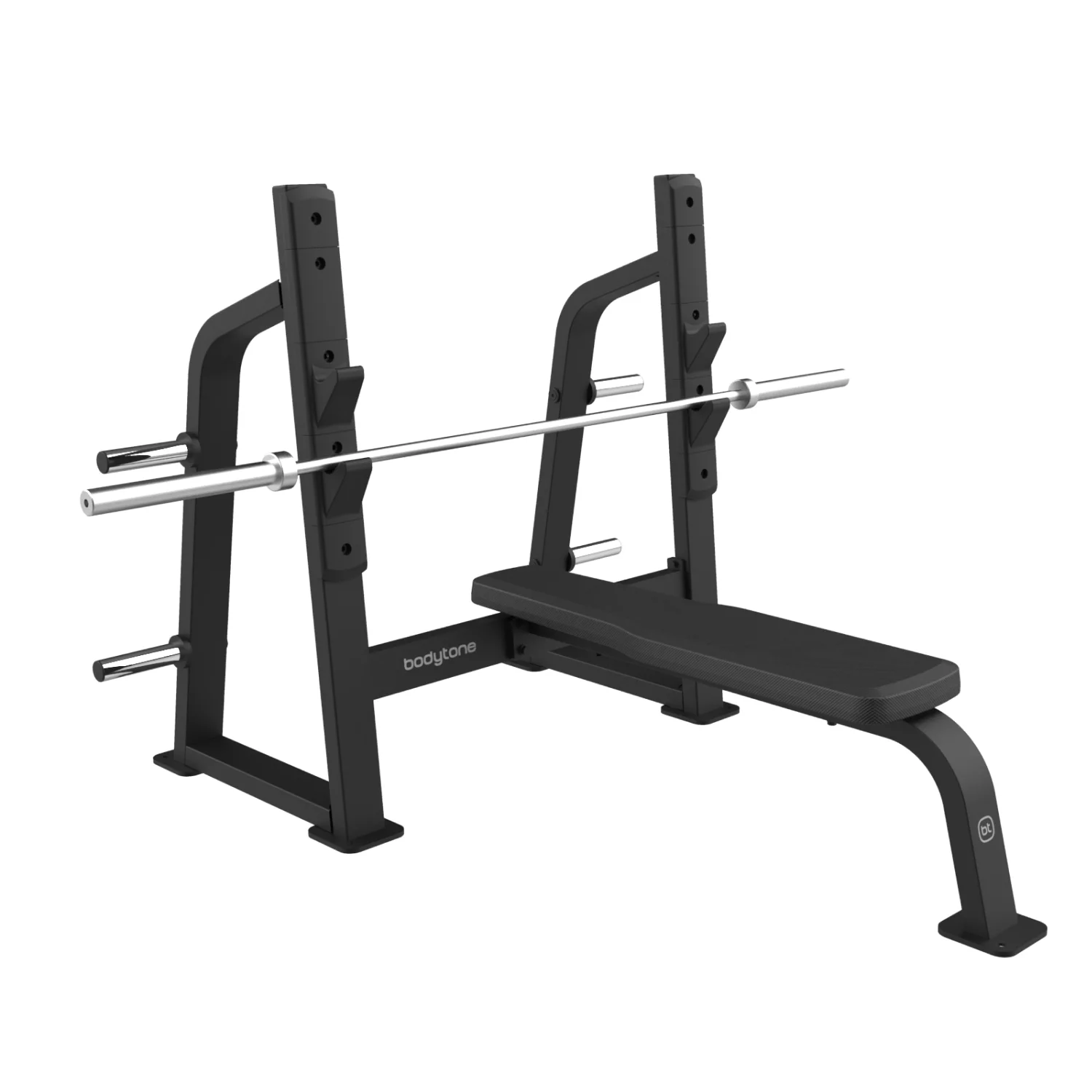
The flat bench press remains the anchor of the zone. It is the movement most members come for, so it is also the one that dictates queueing: one bench for a small studio is rarely enough once membership passes a few hundred. The incline press covers the clavicular head of the pectoralis major, the part most members are actually missing, and it is significantly easier to coach safely than a heavy flat press.
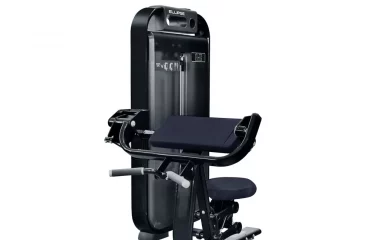
A selectorised or plate-loaded chest press machine earns its place for a different reason: it lets a new member train the pattern under a guided path with no spotter, which is exactly the population that fills a commercial floor. It is not a substitute for the bench; it is what keeps the bench free.
The cable crossover completes the zone. It puts the pectorals under tension through the whole range instead of only at the sticking point, and a single dual-column unit covers high, mid and low angles for two users at once. Our cable crossover stations are built for that continuous multi-user duty. Finally, a dip station or a dip attachment on an existing rig trains chest and triceps together and costs almost nothing in floor space.
Dumbbells and adjustable benches: the most flexible euro you will spend
If a budget forces a choice, a well-stocked dumbbell rack plus two or three adjustable benches will serve more members per square metre than any single machine. Dumbbell pressing allows an independent path for each arm, which suits members returning from a shoulder issue and members whose two sides are simply not equally strong. The same pair of dumbbells covers flat press, incline press and flyes without any changeover.
Specify the bench first and the dumbbells second. An adjustable bench that locks cleanly at flat, at a low incline and at a steep incline will be in use all day; one with a vague, slow adjustment mechanism becomes a flat bench that nobody bothers to change. Look at pad width at the shoulder, the gap between back pad and seat pad, and how the bench behaves when a member sits on the end of it rather than in the middle. Our professional weight benches and commercial dumbbell sets are matched for exactly this pairing.
On the dumbbell rack itself, the practical question is increment size at the light end. A gym whose lightest dumbbells jump in large steps effectively has no incline pressing progression for a beginner, and the machine queue gets longer as a result.
Barbells, racks and safety on the floor
Free-weight pressing is where the strongest members train and where the supervision burden sits. Two decisions do most of the work. First, put the bench inside a rack with adjustable safety arms rather than on an open flat bench, so an unspotted member can fail a rep without incident. Second, set the rack out so that a spotter can stand behind the bench without stepping into the walkway.
Flooring matters more here than anywhere else on the floor. Dropped dumbbells around a pressing station are routine, so the surface under the bench should be specified for impact rather than for appearance, and it should extend far enough on each side to cover where a member will actually set the weights down.
Where cardio really fits into chest development
It is worth being blunt here, because the opposite is repeated constantly. Running does not build the pectorals. There is no mechanism by which the movement of the torso while running produces a training stimulus in the chest, and no amount of mileage will change the shape of a pectoral. Rowing is a horizontal pulling pattern: it trains the back, the rear shoulder and the arms, and its effect on the chest is limited to the stabilising work of holding the trunk in place.
That does not make cardio irrelevant to a chest programme. It has two genuine roles. It supports the recovery capacity that lets a member press hard two or three times a week, and it manages the body composition that determines whether developed pectorals are visible at all. Position rowing machines and the rest of the cardio floor on that argument, and members will use them consistently instead of abandoning them after six weeks. Selling a rower as a chest builder produces disappointed members and cancelled memberships.
High-intensity interval work is a similar case. Circuits built around pressing movements do generate real chest work, but the stimulus comes from the pressing, not from the interval format. A HIIT class is a delivery method, not a separate training effect.
Bodyweight work: useful, and not a plan on its own
Press-ups are the most accessible chest exercise there is, and they belong in any beginner pathway and any small-group class. Their limit is load. Once a member can complete a long set with clean form, the exercise stops driving strength gains unless the load is increased with elevation, tempo or added resistance. Prescribing an arbitrary daily quota of press-ups is not a training programme, and for an unconditioned member it is a straightforward route to a shoulder or elbow complaint.
Yoga and Pilates deserve a place on a timetable, but their contribution here is postural rather than hypertrophic. Better thoracic position and better scapular control make pressing safer and more effective; they do not replace progressive loading. Presenting them accurately to members is far better commercially than overselling them.
Specifying for commercial duty
Every piece described above must be specified as professional indoor equipment to EN ISO 20957-1 class S. Ask for the class in writing, per item, before ordering: the difference between a class S frame and a lighter build shows up within a year on a chest press that takes several hundred repetitions a day.
Beyond the standard, four points decide the real cost of ownership. Upholstery quality and, above all, whether pads can be reordered individually years later. Cable and pulley specification on the crossover, since that is the first wear item. Weight-stack guide rods and their noise under load, which drives member complaints more often than anything else. And the footprint including the working envelope, not the frame dimensions alone. A crossover measured only by its columns will not fit the space you planned for it. Browse the full professional strength training machines range to compare configurations.
Frequently asked questions
How many chest stations does a commercial gym need?
There is no universal ratio: it depends on membership, opening hours and peak concentration. The practical method is to count how many members are in the building at the busiest hour and how long a set plus rest takes, then plan so that no pattern has a single point of access.
Machine or free weights for the chest area?
Both, and for different populations. Machines carry the unsupervised beginner and the high-volume hours; free weights carry the experienced members and the personal training business. A floor with only one of the two loses one of those groups.
Which standard applies to indoor chest training equipment?
EN ISO 20957-1 class S, the professional class for equipment used in a supervised commercial facility. Confirm it item by item, including benches and racks, not only the selectorised machines.
Does cardio training build the chest?
No. Cardio supports recovery and body composition, both of which matter to a chest programme, but the pectorals are developed by pressing and adduction work against progressive resistance.
What is the minimum viable chest zone for a small studio?
An adjustable bench, a dumbbell rack with useful small increments, a rack with safety arms and a dip station cover every pattern in a very small footprint. A chest press machine and a crossover are the first two additions once space allows.
Planning your chest zone
Specify by movement pattern, size the zone against your real peak hour, insist on EN ISO 20957-1 class S for every item, and be honest with members about what each piece does. Send us your floor plan and your membership profile and we will come back with a layout, an equipment list and a costed proposal. Request a quote.