How to use a converging chest press machine correctly

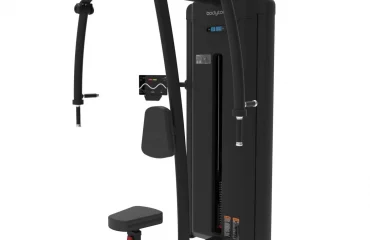
The chest press is one of the most used movements on any strength floor. It builds the muscles of the upper body, principally the pectorals, the shoulders and the triceps. Performing it on a converging machine brings real advantages over the free-weight version: better stability and an even distribution of load across the target muscles. This article explains how to set up and use a converging chest press properly, and what an operator should brief coaching staff to check at induction.
Why a converging machine
Before getting into the detail of the movement, it is worth understanding what this machine offers over other chest press variants.
- Stability. The converging machine provides a stable platform for the press. That removes the injury risk associated with an unstable path or a loss of balance, which is the single biggest argument for putting one on an unsupervised floor.
- Even load distribution. Unlike dumbbells or a barbell, the converging machine distributes the load evenly across the target muscles, so the pectorals, shoulders and triceps are recruited in a balanced way rather than compensating for each other.
- Comfort. These machines are generally fitted with padded, adjustable supports for comfort throughout the set. That lets the user concentrate on executing the movement correctly instead of being distracted by pressure points or discomfort.
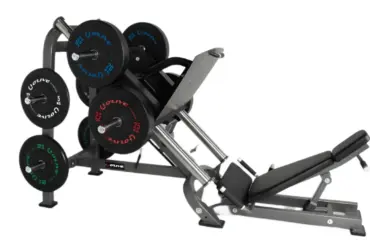
Our chest press machines cover both plate-loaded and selectorised versions of this station, which matters because the loading system decides how quickly a member can change weight between sets.
Correct positioning
Correct set-up is what separates a productive set from a wasted one. Work through these steps every time.
- Adjust the seat height. Start by setting the seat so the feet rest firmly on the floor. Knees should be slightly flexed and the feet stable.
- Settle into the seat. Sit with the back properly supported against the backrest. The position should feel stable and comfortable before any load moves.
- Set the handles. The handles should be positioned so that the arms line up with the shoulders when the user is holding them. That gives a solid, balanced grip and keeps the press path where it belongs.
Executing the movement
With the set-up correct, the movement itself is straightforward.
- Take the handles. Grip firmly but without tension. Palms face forward and the arms start slightly flexed.
- Press. Driving principally through the pectorals, push the handles forward until the arms are almost fully extended. Keep control of the movement throughout and avoid locking the elbows out.
- Return under control. Bring the handles back slowly, flexing the elbows. Stop when the arms are slightly bent and repeat.
Getting more out of the station
- Control the tempo. Movement speed matters. Avoid fast, jerky repetitions and work to a slow, controlled execution in both directions.
- Breathe properly. Do not hold the breath. Exhale as you press the handles forward, through the effort, and inhale as you return to the starting position.
- Add load progressively. Start light and increase the weight gradually as strength and endurance improve. That is what produces steady progress and avoids injury.
- Vary the angle. Converging machines often allow the press angle to be varied. Exploring different positions targets the musculature differently and keeps the stimulus fresh.
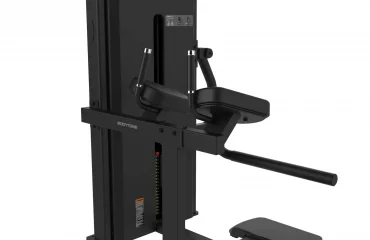
For a facility specifying this station, the choice usually comes down to loading system and range. The Gold Line converging plate-loaded machines suit floors where members prefer to load discs, while the Titan converging machines cover the same movement family across a full strength range. Indoor equipment for a supervised facility open to the public must be built to EN ISO 20957-1 class S.
Frequently asked questions
How does a converging chest press differ from dumbbells or a barbell?
The main difference is stability and load distribution. The converging machine offers increased stability and distributes the load evenly across the target muscles, where free weights ask the user to stabilise the path themselves.
How many sets and repetitions should be performed?
That depends on the individual goal and fitness level. Members should work with a qualified professional to build a programme suited to their needs rather than copying a generic scheme.
What exercises complement the converging chest press?
Push-ups, lying flyes and dips also target the upper-body musculature and fit naturally into the same training block.
Can a member be injured on this machine?
As with any exercise, injury is possible if execution is incorrect or the load is too heavy. Safety instructions should be followed and professional guidance sought where needed. This is exactly why the station belongs in the induction circuit.
Is the converging chest press suitable for beginners?
Yes. It adapts to beginners by adjusting the load and concentrating on correct execution of the movement, which is what makes it a good entry point on an unsupervised floor.
How often should it be trained?
Training frequency depends on the goal and the fitness level. Leaving at least 48 hours of rest between sessions working the same muscles allows them to recover.
Specifying the station for your floor
The converging chest press is an effective station for upper-body strength and one of the highest-traffic machines in a commercial gym, which makes build quality and adjustment range worth paying for. If you are choosing between plate-loaded and selectorised versions, or working out how many press stations a floor of your size needs, send us the plan and the member profile. Start with a request for a quotation.