Professional strength equipment versus consumer machines: what really differs
Professional strength equipment and consumer strength equipment are not the same product at two price points; they are two different categories, designed against different standards, for different duty cycles and different legal responsibilities. For anyone equipping a facility that the public pays to use, only one of those categories is a real option. This is what the difference consists of, item by item, and why it shows up in your operating accounts rather than only in the purchase invoice.
Duty cycle is the whole argument
A consumer machine is engineered around a handful of sessions a week by one or two people of similar build. A machine on a commercial floor may be used continuously through opening hours by dozens of users of very different weights, techniques and levels of care. Frames, welds, bearings, cable runs, pulleys, guide rods and upholstery are all dimensioned for that difference. This is why a consumer machine put into a staffed facility does not degrade gracefully: it survives the first months, then fails in the components that were never sized for the load, usually the bearings and the cable terminations, and it fails while a paying member is on it.
The standard that applies
Indoor equipment for a supervised, publicly accessible facility is specified to EN ISO 20957-1 class S. That class is written for exactly this context: equipment in service all day, used by people the operator does not train individually, under supervision. It sets requirements on stability, on trapping and shearing points, on the strength of load bearing parts and on markings. It is also the reference an insurer or an inspection body will ask about after an incident. Class I within the same standard is a professional class for inclusive access, not a step above class S in intensity; the two answer different questions and are not interchangeable.
Range of movement, not range of products
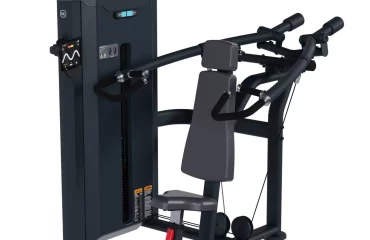
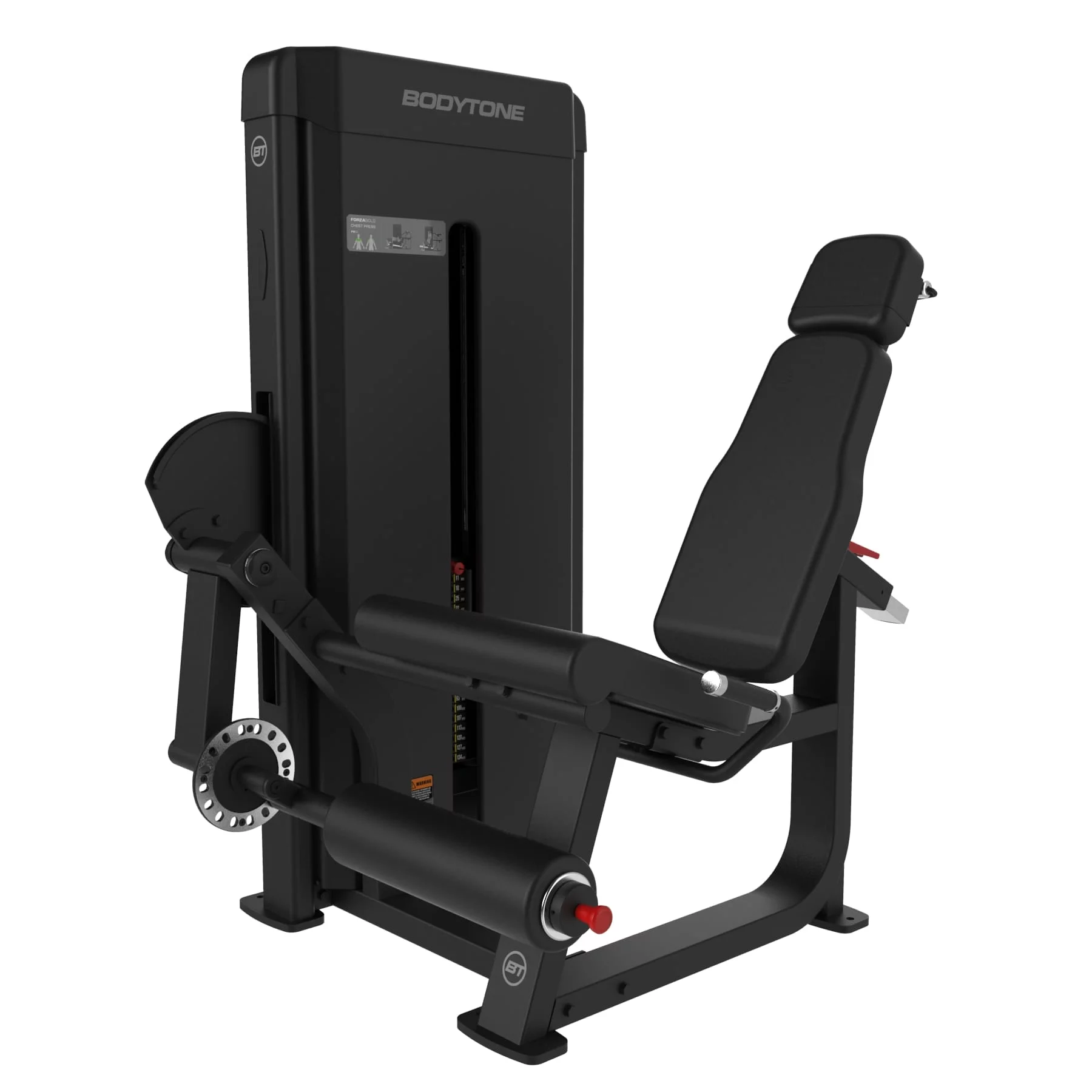
The commercial argument that a professional floor gives access to more exercises is true, but it is worth stating precisely. What a professional range actually gives you is a full coverage of movement patterns, with a dedicated station for each rather than one compromise frame that does several things badly. Pressing, pulling, hip hinge, knee dominant work, abduction and adduction, trunk work, and cable work at every angle each get equipment designed for that path. Our professional strength training machines and selectorised machines are built around that coverage, and the professional cardio range completes it on the conditioning side.
Adjustability and who can actually use the machine
A consumer machine is adjusted for the household that bought it. A commercial machine has to fit everyone who walks in. Seat height range, back pad travel, start position adjustment, handle spacing and the increment on the weight stack are what decide whether a short user and a tall user can both train correctly on the same station. Where a machine cannot be adjusted to the user, the user adjusts to the machine, and that is where poor positions and injuries come from.
Supervision changes what equipment has to do
A member with a back problem, an older member, or someone returning from injury can be programmed around on a professional floor because the coach has stations that isolate cleanly and load progressively. That is an equipment capability as much as a coaching one: the machine has to allow a restricted range, a light starting load and a stable supported position. It is also the practical reason facilities keep both machines and free weights rather than choosing between them.
Cost over the life of the asset
The comparison that matters is not purchase price but cost per year in service, including downtime, spare parts availability, and the commercial cost of a station being out of use. Professional equipment is supported: parts stay available, wear items are replaceable, upholstery can be recovered, and the frame outlives several sets of consumables. Consumer equipment is generally not repairable at that level, so its end of life is the end of the asset.
Frequently asked questions
Can we equip a small facility with consumer machines to start?
Not for a space the public pays to use. Beyond the reliability problem, the equipment will not meet the class expected for that setting, which is a problem the day something goes wrong.
Does professional always mean heavier and larger?
Usually heavier, not always larger. Compact professional stations exist and are designed for constrained footprints; the mass is in the frame and counterweighting, which is what gives stability under load.
How do we choose between selectorised and plate loaded?
Selectorised for throughput, fast load changes and general membership. Plate loaded for heavy training, strength focused clientele and lower maintenance per station. Most floors use both, in a ratio set by the member profile.
What about the flooring under the machines?
It is part of the same specification. Load spreading, noise and vibration control and cleaning all depend on the surface, and retrofitting a floor under installed equipment is far more expensive than specifying it at the start.
Specifying your floor
Send us the surface area, the ceiling height, the member profile and the budget, and we will return a zoned layout with a costed equipment list matched to how the space will actually be used. Request a quote and we will work through it with you.