What Types of Professional Strength Training Machines Are Available?
When you are specifying a commercial gym floor, the question is never simply which machine is best. It is which families of machine you need, how many of each, and how they combine to cover every major muscle group without wasting square metres. Professional strength equipment falls into a small number of well-defined families, and once you know what each one does, building a balanced floor becomes a layout exercise rather than a guessing game. All the equipment described below is intended for supervised commercial use and is built to EN ISO 20957-1 class S.
Selectorised machines: the backbone of the floor
Selectorised stations use a weight stack and a pin. They are the most accessible category for members, because the load changes in seconds and the movement path is guided, which limits technique errors during busy periods when staff cannot watch every user. A typical circuit covers chest press, lat pulldown, seated row, shoulder press, leg extension, leg curl and abdominal work. If you are equipping a facility with a mixed membership, selectorised machines are where the largest share of the budget usually goes.
Plate-loaded machines
Plate-loaded units replace the stack with Olympic discs. They cost less per station, take heavier loads, and give a more natural resistance curve, which is why they dominate in performance-oriented clubs and strength-focused boxes. The trade-off is throughput: changing plates takes longer than moving a pin, and you need disc storage next to every station. Plate-loaded machines pair well with a selectorised circuit rather than replacing it.
Leg presses and lower-body stations
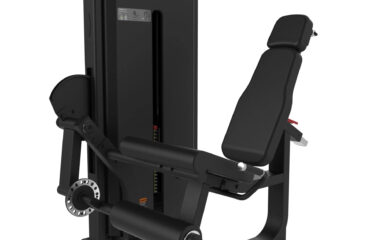
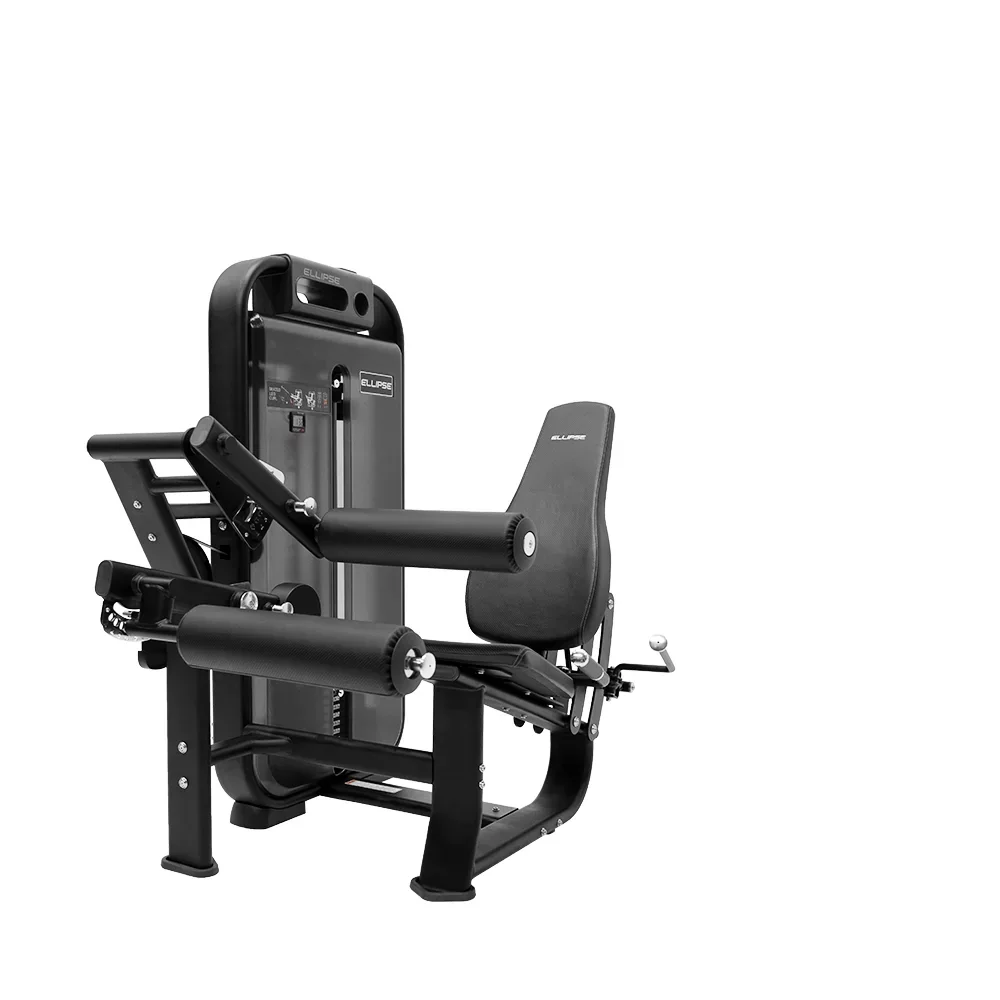
The leg press is the reference machine for the lower body. It loads the quadriceps and the hamstrings under a supported back position, which makes heavy lower-body work available to members who cannot squat safely. Alongside it, leg extension machines isolate the quadriceps and leg curl machines isolate the hamstrings. A vertical or 45-degree press, one extension and one curl station will cover the lower body for most facilities.
Cable and pulley stations
Cable stations are the most versatile equipment on any floor. Adjustable pulley heights and a wide range of handles let one footprint serve dozens of exercises across the back, chest, shoulders, arms and core, which is exactly what you want in a facility short on space. They are also the workhorse of rehabilitation and small-group coaching, because the resistance is smooth and can be dialled down to very low loads.
Benches and racks
Flat, incline and decline benches remain essential. They target the pectorals, deltoids and triceps under free weight, and no machine circuit fully replaces them. Paired with a rack, a bench also anchors the free-weight zone, which is what a growing share of members now come for. Budget for adjustable benches rather than fixed ones wherever the floor allows it.
Core and abdominal machines
Dedicated abdominal machines support the trunk and guide the movement, which lets members load the abdominal wall progressively instead of relying on floor work alone. In a commercial setting their real value is accessibility: they give less experienced users a way into core training that does not depend on coaching being available.
Building a balanced selection
The practical method is to list the muscle groups you must cover, then assign the cheapest reliable station to each one before adding duplicates for the busiest movements. A single Power Line lat pulldown covers back work for a small facility; a 400-square-metre club will need two. Light In Fitness has equipped more than 2,500 customers since 2013 and warrants up to 20 years on its steel structures, with a lifetime warranty on stainless steel.
Frequently asked questions
How many strength stations does a commercial gym need?
It depends on peak attendance rather than floor area. Count the number of members you expect on the floor at the busiest hour, then make sure no station has more than three or four people queuing for it. Duplicating the two or three most popular movements usually solves congestion more cheaply than adding new machine families.
Selectorised or plate-loaded for a mixed membership?
Selectorised for the core circuit, plate-loaded for the heavy compound movements. A mixed membership rewards both, and splitting the floor into a guided zone and a loaded zone keeps beginners and experienced lifters out of each other’s way.
Do professional machines need different flooring?
Yes. Machine feet concentrate load on small contact points, and plate-loaded stations see discs dropped nearby. Rubber tiles or rolls under the strength zone protect the slab, cut noise transmission and keep the machines level over time.
Specifying your floor
Send us the surface area, your expected peak attendance and the member profile you are targeting, and we will come back with a zoned proposal and an itemised price for each family of machine. Request a quote and we will work through the layout with you.