The Benefits of Training on Professional Gym Machines
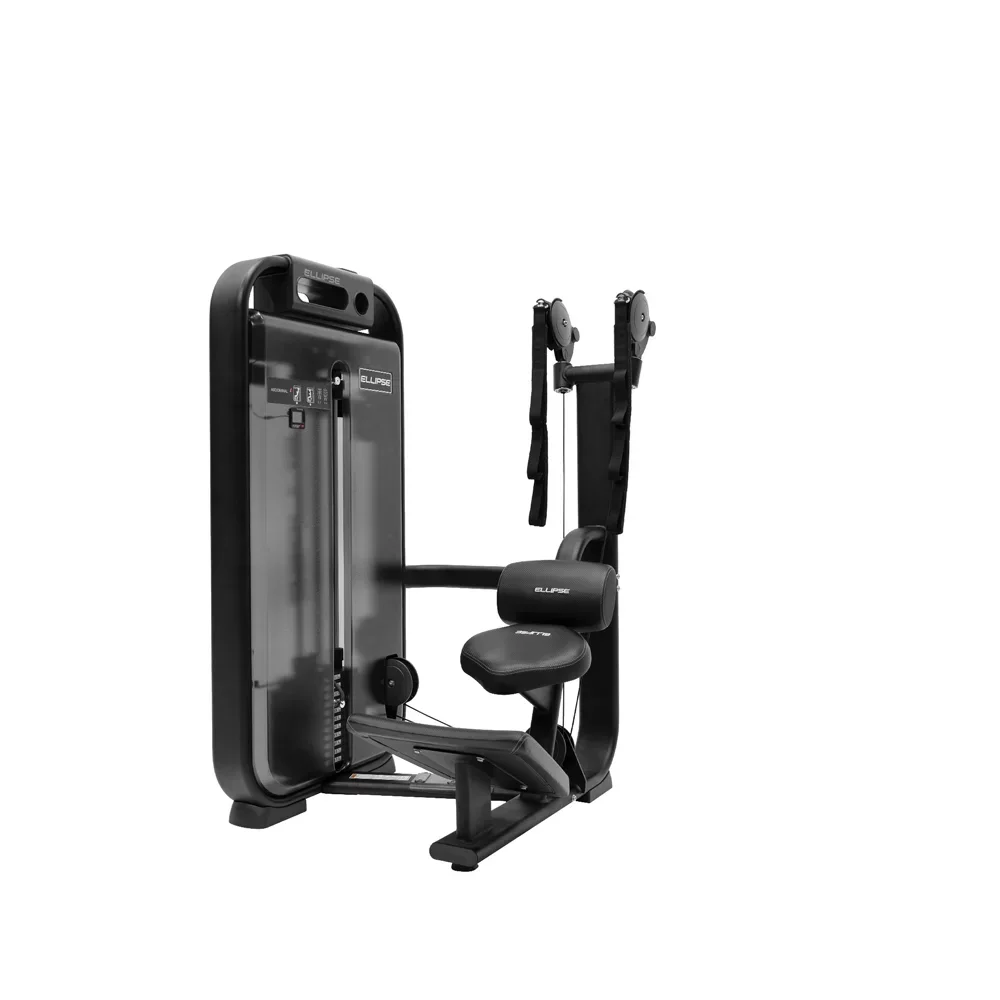
Professional strength machines are specified for a reason that goes beyond durability. On a commercial floor they deliver a controlled, repeatable resistance that free weights cannot guarantee across a mixed membership, and they let an operator serve beginners, experienced lifters and rehabilitation users on the same equipment without constant supervision.
Controlled resistance and a guided movement path
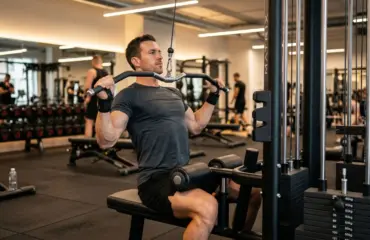
A selectorised or plate-loaded machine constrains the movement to a defined path. The load stays aligned with the working muscle group through the whole range, so the user does not have to stabilise the weight before they can train. For an operator this means shorter onboarding for new members and fewer technique corrections during peak hours.
Lower injury risk on a busy floor
Because the path is guided and the load is captive, the failure mode of a professional machine is far less severe than a dropped barbell. Adjustable seats, back pads and range limiters let each user work within their own comfortable amplitude. Equipment built to EN ISO 20957-1 class S is dimensioned for this continuous multi-user duty, which is the reason class S is the reference for any facility open to the public.
Targeted work on specific muscle groups
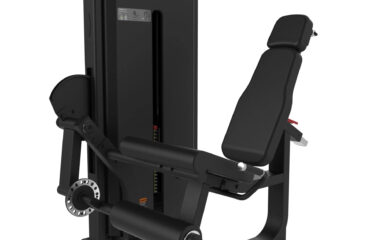
Machine work isolates. A leg curl loads the hamstrings without the lower back joining in, a chest press loads the pectorals without the shoulder girdle compensating. That precision is what makes machines useful in three very different contexts: hypertrophy programming, return-to-activity work after injury, and circuit training where each station has one clear job.
Programme variety from a compact floor plan
A coherent line of professional strength machines covers every major movement pattern in a predictable footprint. Combining selectorised machines for high-turnover circuits with plate-loaded machines for the strength area gives you a full programme offer without over-occupying the floor, and it keeps the member journey readable.
FAQ
Do machines replace free weights in a commercial gym? No. They cover different needs. Machines secure volume work and beginner progression; free weights develop coordination and stabilisation. Most commercial floors need both.
Are machines suitable for experienced lifters? Yes, particularly for accessory volume close to failure, where the guided path removes the stabilisation limit that would otherwise cut the set short.
What class of equipment does a club need? EN ISO 20957-1 class S, the professional class for facilities with unsupervised multi-user access.
Specify your strength line
For a fuller treatment of the subject, see our reference article on the benefits of professional strength equipment. If you already have a floor plan, request a quote and we will propose a line that matches your surface area and your membership profile.