Professional Strength Training Machines: the Real Benefits for Operators
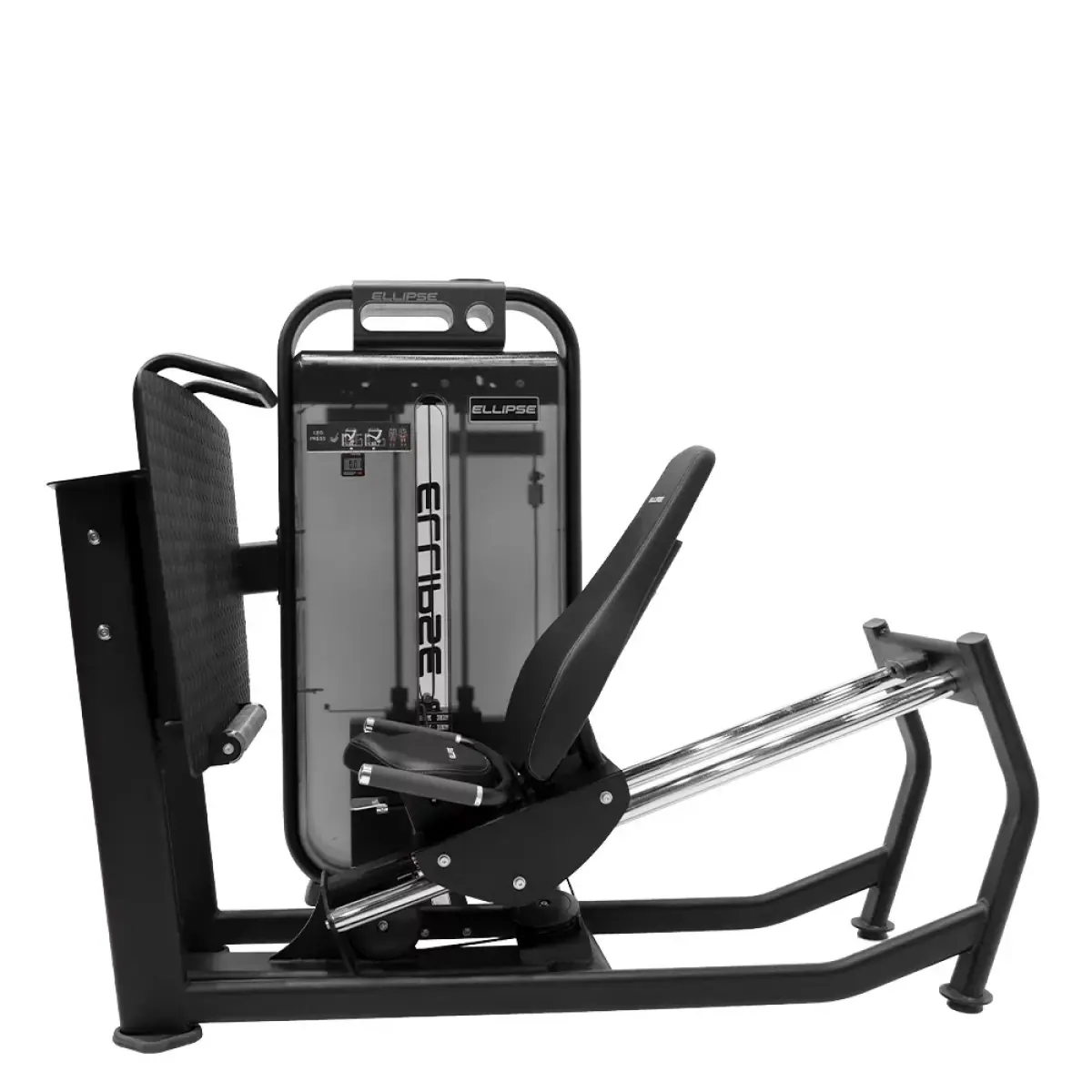
In brief: The case for a professional strength training machine rests on three things: a guided movement path that keeps the station safe to use without permanent supervision, a frame dimensioned for continuous duty, and an adjustment range wide enough to suit very different body types. In a shared-access facility, that adjustment range decides how many users a single station can actually serve.
Repeatable, isolated muscle work
The first argument for a guided-load machine in a commercial room is repeatability. The load follows a path defined by the manufacturer, so the movement a member performs at seven in the morning is the movement the next member performs at eight in the evening. Free weights allow far more variation, which is an advantage under coaching and a liability in a room that is not permanently staffed.
That controlled path also isolates the target muscle group. An arm curl performed on a machine with a fixed elbow pad recruits far less of the shoulder, back and neck than the same movement with a barbell, because the frame, not the user, carries the stabilising work. For an operator the consequence is practical: users reach a usable result sooner, and the complaints that follow a badly executed session become rarer.
Isolation is also what makes a station readable. A user who can see which muscle group a machine addresses does not need an instructor to explain it, which matters in hotel gyms, residential facilities and corporate rooms where no coach is on the floor.
Adjustable resistance and range of motion
Two adjustments decide whether a station serves a wide public or a narrow one. The first is the load increment: a selectorised stack changes weight in seconds, without the user leaving the seat and without plates left on the floor. The second is the geometry, seat height, pad position and start angle, which sets the range of motion.
Range of motion is the adjustment most often underestimated at purchase. A machine whose seat travel only suits users between roughly average heights will be avoided by everyone else, and an avoided station is dead floor space paying rent every month. When comparing two models at a similar price, the number of seat and pad positions is a more useful figure than the maximum load, because very few users in a mixed-membership facility ever approach the top of the stack.
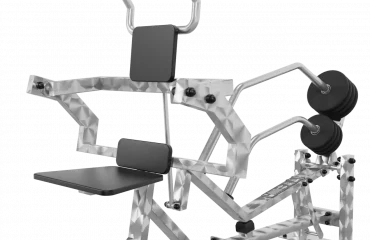
The same logic applies to plate-loaded equipment. Converging and diverging arms follow a natural path for shoulders and hips of different widths, which is why they hold up well in rooms serving both a strength-focused clientele and an older or rehabilitation-oriented one.
Lower injury risk without permanent supervision
Guided equipment reduces risk in two ways. It keeps the load on a defined path, so the joint is not asked to stabilise a weight it cannot control, and it removes the situations where a user is trapped under a bar. A member who fails a repetition on a chest press machine releases the handles; a member who fails under a free barbell needs another person present.
This is the argument that carries most weight with hotels, campsites, residences, schools and municipal facilities, where the room is open long hours and staff cannot watch it continuously. It is also why guided stations are the backbone of rehabilitation and senior-oriented rooms, where the priority is a controlled, low-variance movement rather than maximum load.
None of this makes supervision useless. Initial guidance on pad and seat settings remains valuable, because a station adjusted to the wrong body position is both less effective and less comfortable, and a user who finds a machine uncomfortable simply stops using it.
Throughput, footprint and ease of use
A guided station is fast to use, and speed of use is what turns square metres into served members. There is no plate handling between sets, no waiting for a spotter and no time lost searching for the right dumbbells. In a peak-hour room, that difference in dwell time per set is the difference between a queue and a smooth rotation.
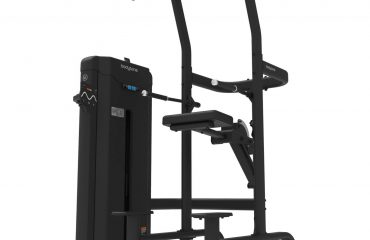
Multi-station units push the same logic further by combining several exercises around a single frame. They suit hotels, residential buildings and corporate rooms where the total surface is fixed and the equipment has to cover a full body programme rather than specialise. A dedicated single-station machine remains the better answer wherever one exercise carries heavy traffic, because it never becomes the bottleneck for four other movements.
Ease of use has a second commercial effect that is easy to miss: it lowers the level of instruction a facility has to provide. Where a room cannot justify a permanent coach, equipment that explains itself through its own geometry is what keeps beginners coming back.
Progress tracking and programme design
Because the load is numbered and the movement is fixed, progress on a guided machine is measurable without any instrumentation. A user records the pin position and the number of repetitions, and the comparison from one week to the next is meaningful because the movement has not changed in between.
For the operator, that measurability supports the services built on top of the equipment: assessments, structured programmes, small-group formats and follow-up. It is far easier to sell a twelve-week programme when the starting point and the progression can be written down in figures the member can verify on the machine itself.
What separates a professional machine from a consumer one
The visible difference is the frame: section, wall thickness and welding are dimensioned for a station used many hours a day, every day, rather than a few hours a week. The less visible difference sits in the guides, bearings and cables, the parts that actually wear, and in whether those parts can still be ordered several years after purchase.
Spare-part availability is usually the decisive line in a total cost of ownership calculation. A station kept in service for a decade because its cables, pads and bushings remain available costs far less per year than a cheaper unit replaced twice over the same period, and it avoids the weeks of downtime that a member notices immediately.
Upholstery and contact surfaces deserve the same attention. In a commercial room they are cleaned several times a day, often with alcohol-based products, and pads that crack after one season create a maintenance line no one budgeted for.
Our ranges cover the main configurations: selectorised strength machines for high-traffic rooms, plate-loaded converging machines for strength-focused facilities, and multi-station gyms where floor space is the constraint. Individual stations such as the SRX30 biceps curl machine can be added to complete an existing layout.
Frequently asked questions about professional strength machines
What justifies the price gap with a consumer model?
Frame section and thickness, the quality of guides and bearings dimensioned for continuous use, the breadth of the adjustment range, and long-term spare-part availability. That last point is often the one that decides total cost of ownership.
How many users can one station serve?
It depends directly on the adjustment range: a machine that fits very different body types serves a wider public. Rotation then depends on how long the exercise itself occupies the station.
Do these machines require supervision?
Guided-load machines are designed for autonomous use, since the movement path is imposed by the frame. Initial guidance on pad and seat settings remains useful, because those settings determine both the effectiveness and the comfort of the movement.
Specifying the right mix for your facility
There is no universal equipment list. The right mix follows from the opening hours, the level of supervision available, the profile of the members and the surface you have. A room open twenty-four hours with no staff has different priorities from a club with coaches on the floor at every session.
Send us your floor plan, your opening model and your member profile, and we will put together a station list and a layout. Request a quote and we will come back with a costed proposal for your project.