Professional Strength Machines: Families and Muscle Group Coverage
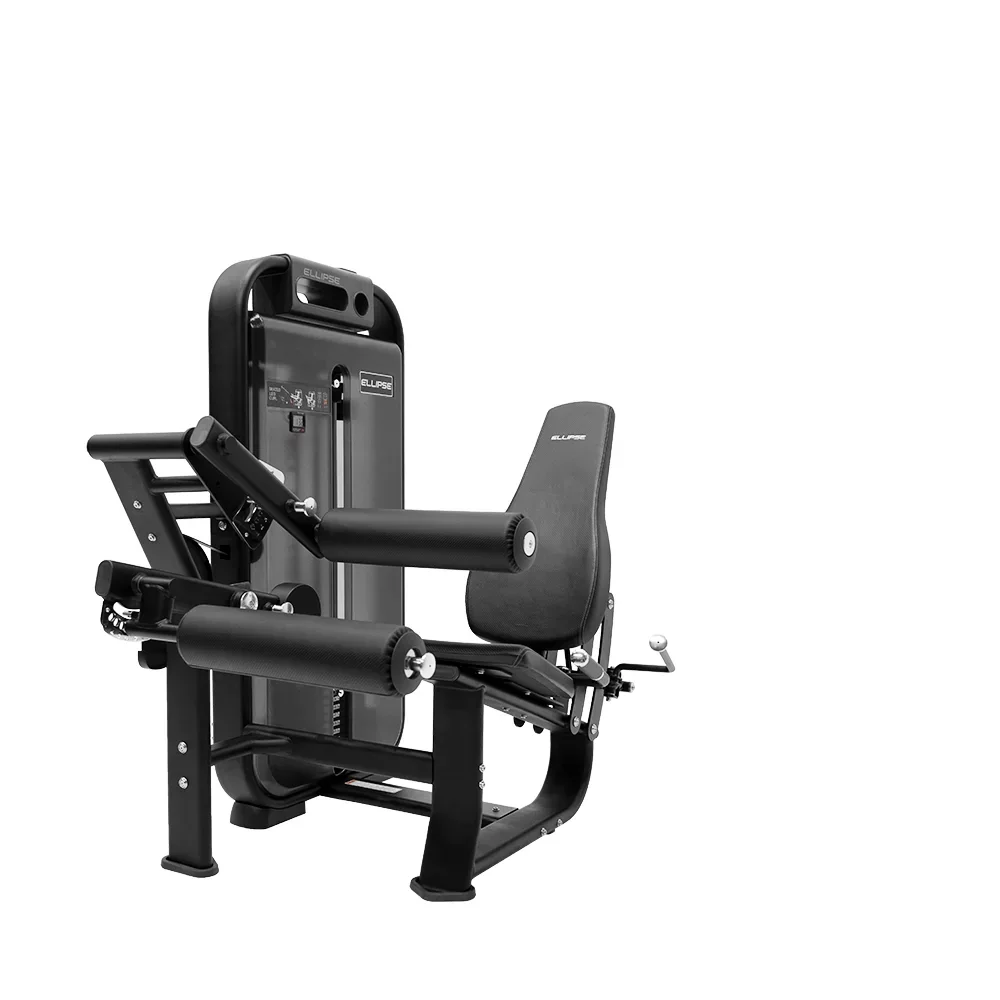
Equipping a gym, a hotel fitness room or a sports club with professional strength machines is a layout exercise before it is a purchasing one. The number of stations, the muscle groups covered and the floor area available define the list long before any brand does. This guide sets out how the main families of machines differ, what makes a machine genuinely professional, and how to assemble a line-up that holds up under continuous use.
What makes a strength machine professional
A machine installed in a facility open to members is used all day, by people of very different sizes, levels and intentions. The relevant reference is EN ISO 20957-1 class S, the class for equipment used in supervised commercial environments. It covers frame strength, stability, the guarding of moving parts and the durability of the adjustment systems. Class I is a professional class for inclusive access, not a level above class S.
In practice, three things separate a professional frame from a light one: the section and the welding of the steel, the quality of the bearings and guide rails that carry thousands of repetitions a week, and the upholstery, which is usually the first component to show wear in a busy room. Replaceable wear parts matter as much as the initial specification, because a machine that cannot be re-padded or re-cabled is a machine with a short life.
The main families of machines
| Family | Principle | Best suited to |
|---|---|---|
| Selectorised machines | Weight stack with a selector pin | High traffic rooms, beginners, circuit training, fast changeovers |
| Plate loaded machines | Olympic discs loaded by hand on the lever arms | Strength work, heavier loads, a resistance curve close to free weight |
| Cable stations and crossovers | Adjustable pulleys, open movement path | Functional work, rehabilitation, versatility in a small footprint |
| Multi station units | Several workstations on a single frame | Hotels, residences, corporate rooms, restricted areas |
| Racks, cages and benches | Free weight with a barbell | Cross training, powerlifting, athletic preparation |
Most commercial rooms mix at least three of these families. Selectorised machines carry the beginners and the peak hours, plate loaded machines carry the experienced members, and free weight carries everyone who trains with a barbell. The full range of professional strength training machines is organised along those lines, with the plate loaded machines forming a family of their own.
Covering the muscle groups without duplicating
A coherent line-up starts from the body, not from the catalogue. The lower body needs a pressing movement and, ideally, a knee extension and a knee flexion. The back needs one vertical pull and one horizontal pull, which is why a lat pulldown and a seated row are rarely optional. The chest needs a press and, where space allows, an opening movement. Shoulders and arms are then covered either by dedicated stations or by a cable station, which is often the better answer in a room short of floor area.
The classic mistake is buying two machines that train the same movement in the same way while leaving a whole pattern uncovered. Before adding a fourth chest station, check that the hip and the posterior chain are properly served.
Floor area, circulation and flooring
Every machine needs its own footprint plus its access and exit zone, and plate loaded machines need loading space in front of the discs. Circulation aisles have to stay clear when several users are working at once, which in a narrow room usually means placing machines along the walls and keeping the centre free. The floor covering is decided at the same time as the machines: point loads under a leg press and dropped discs near a rack do not call for the same specification.
Cardio alongside strength
A strength area is rarely bought on its own. Members alternate between the two zones, and the balance between them depends on the clientele rather than on a rule: a medical or corporate room leans towards professional cardio equipment, a strength-oriented club leans the other way. What matters is that the two zones are separated enough for noise and circulation, and close enough to be supervised by one member of staff.
Frequently asked questions
Selectorised or plate loaded?
Selectorised machines are faster to adjust and more forgiving, which suits high traffic and beginners. Plate loaded machines give a resistance curve closer to free weight and take heavier loads, which suits experienced members. A commercial room usually needs both.
Can equipment intended for the home be used in a club?
No. Equipment designed for private use is not built for continuous use by unknown users and does not meet the requirements of the professional class. Any facility open to members, including a hotel or a residence, needs class S equipment.
Which standard applies to indoor strength equipment?
EN ISO 20957-1 sets the general safety requirements, with additional parts covering specific equipment types. Class S is the class for supervised commercial use.
How many stations does a room need?
There is no universal figure. It follows from the peak number of simultaneous users, the type of training offered and the floor area, which is why an equipment list should be drawn up against a plan rather than against a catalogue.
Building your equipment list
The most efficient route to a workable list is to start from the plan of the room, the profile of the members and the training you intend to offer, then place the families of machines against that. Send the dimensions of the space and the intended use, and the line-up can be built and costed around them: request a quote.