Professional Strength Training Equipment: How to Choose Well
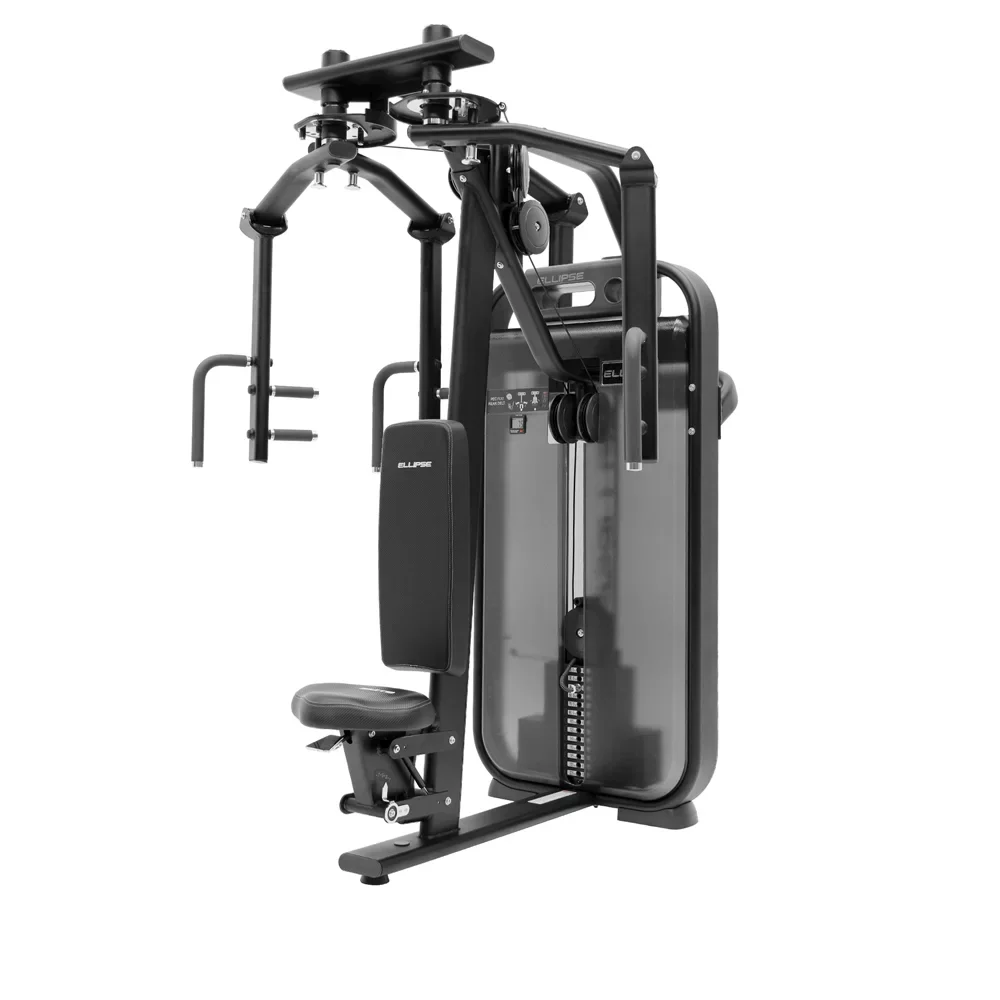
Professional strength training equipment is the backbone of any commercial gym, hotel fitness room or club training floor. It is also the largest single line in most equipment budgets, and the one members judge you on every day. Choosing well is less about brand names than about matching machines to how your members actually train, and about buying to a specification that survives ten years of continuous use.
Start with how your members actually train
Before comparing models, describe your floor in plain terms. Who trains there, at what time of day, and with what goal? A city centre club with a heavy lunchtime peak and a majority of general fitness members needs a different machine mix from a strength focused studio where free weights dominate. List the movement patterns your members repeat most often, then count how many stations each pattern needs at your busiest hour. That count, not a catalogue, defines your order.
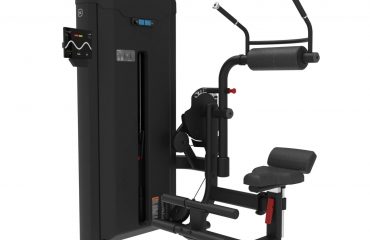
Two questions settle most of the decision. Which muscle groups do your members ask for, and how much coaching are they willing to accept? Members who train unsupervised are better served by guided, selectorised machines with a clear movement path. Members who train with a coach get more from plate loaded machines and racks, which reward technique and load progression.
Judge build quality before you judge the badge
Commercial machines fail in predictable places: bearings, guide rods, cable terminations, upholstery seams and welds. When you evaluate a machine, look at those points first. Steel section thickness, sealed bearings rather than plain bushings, aviation grade cables with swaged ends, and upholstery you can re-cover locally are the details that decide whether a machine is still on the floor in year eight or already scrapped.
Ergonomics matter just as much. Adjustment ranges have to fit a 1.55 m member and a 1.95 m member without tools, seat pads have to be indexed so settings are repeatable, and start positions have to be reachable without an awkward entry. A machine that only fits the average user quietly excludes a large part of your membership.
Insist on EN ISO 20957-1 class S
For indoor equipment, the reference is EN ISO 20957-1 class S, the class intended for supervised and commercial use. Ask for it in writing on every quote, for every reference. Class I is a professional class covering inclusive access, not a step above class S, so it answers a different question: whether the machine can be used by people with reduced mobility. Where equipment is installed outdoors for adult use, the applicable standard is EN 16630 instead. Playground and children equipment follows EN 1176-1 for the apparatus and EN 1177 for impact attenuating surfacing, and neither ever applies to an adult strength machine.
Cover the full range of movement patterns
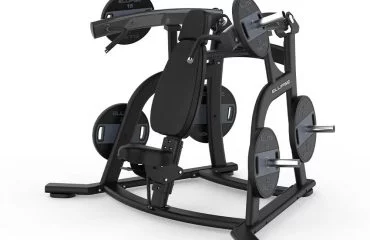
A strong floor covers push, pull, hinge, squat, carry and rotation, at several resistance levels. In practice that means combining families rather than buying one of everything from a single range. Selectorised machines give beginners a safe, fast circuit. Plate loaded machines serve stronger members and give the floor a heavier feel. Weight benches and racks anchor the free weight zone and absorb peak traffic when the machine circuit is full.
Resistance increments deserve a look of their own. Weight stack steps that are too coarse push smaller members off upper body machines; small add on plates keep progression realistic and keep members training instead of waiting.
Plan the floor before you plan the order
Machines are bought as a list and used as a layout. Reserve circulation width between stations, keep loading zones clear on plate loaded machines, and group by movement so a member can complete a session without crossing the room four times. Check floor loading and ceiling height early, especially in converted retail units and basements, and specify flooring at the same time as equipment rather than after delivery.
Frequently asked questions
How many strength stations does a commercial gym need?
Size the floor from your busiest hour, not from your total membership. Count the stations needed so that no member queues for more than one exercise in a normal peak, then add capacity on the two or three most used patterns.
Selectorised or plate loaded?
Both. Selectorised machines lower the barrier for new and unsupervised members; plate loaded machines carry your strongest members and cost less per station. The right ratio follows your membership profile, not a rule of thumb.
What should a quote always state?
The exact standard and class of every reference, the warranty term for frames, moving parts and upholstery, spare parts availability, and the installation and commissioning scope. Anything missing from the quote will be missing on delivery day.
Building your equipment list
Choosing professional strength training equipment comes down to three disciplined steps: define how your members train, buy to a written commercial specification, and lay the floor out before you place the order. Send us your floor plan, your opening hours and your membership profile, and we will build a costed equipment list around them. Request a quote and we will come back with a configuration you can compare line by line.