Professional Abdominal and Back Extension Machines: A Specification Guide
Trunk flexion and extension machines are among the most heavily used stations on a gym floor and among the most carelessly specified. Every member uses them, many use them badly, and the machine has to absorb that for years. For a club operator, a hotel, a municipal sports centre or a rehabilitation facility, the abdominal and back extension station is not a nice-to-have: it is the piece of equipment that trains the muscles which stabilise every other movement on the floor. This guide covers what the machine does, what it trains, and what to look for when specifying one for professional use.
What an abdominal and back extension machine is
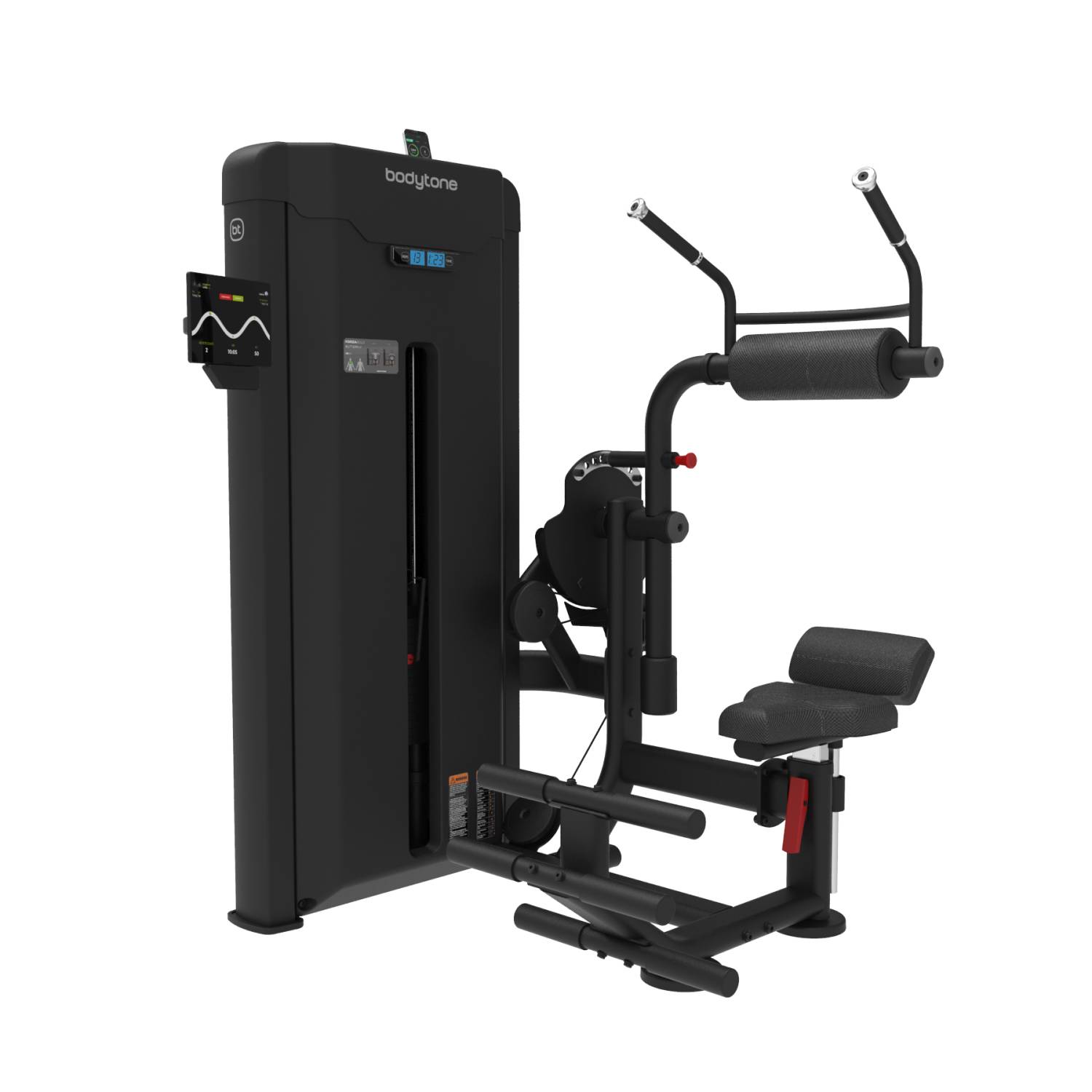
A professional trunk flexion and extension machine consists of a frame with a seat or pad, a foot or shin restraint, a back or chest pad and an adjustable resistance system. The user performs a controlled flexion of the trunk against resistance and, on the extension station, a controlled extension from a flexed position. The two movements are complementary: one loads the anterior trunk musculature, the other the posterior chain. Some ranges combine both functions on a single frame, which saves floor space; others separate them, which allows faster station changes at busy times.
Which muscles the machine trains
Anterior trunk
The abdominal muscles comprise the rectus abdominis, the internal and external obliques and the transversus abdominis. They flex and rotate the spine and control intra-abdominal pressure. Strengthening them improves trunk stability, which is why the station matters far beyond aesthetics.
Posterior chain
The extension movement loads the erector spinae group together with the trapezius and the rhomboids as stabilisers of the shoulder girdle. These muscles extend and rotate the spine and hold the thorax in position. A programme that trains flexion without training extension produces exactly the imbalance the machine is supposed to correct.
Why the station belongs on a professional floor
Targeted trunk strengthening
Free-standing trunk work is highly technique-dependent and difficult to load progressively. A guided station lets a deconditioned member work the trunk under controlled load and lets a coach measure progression, which is a large part of why members stay.
Posture
The abdominal and back muscles hold posture. Strengthening them helps reduce the discomfort and back complaints associated with poor postural habits, which is the single most common reason a new member walks through the door.
Stability and balance
Trunk strength underpins stability in everyday movement and in sport. Members transfer that benefit to every other station on the floor.
Injury prevention
Reinforcing the muscular structures that support the spine reduces exposure to back injury, both for members and for staff who demonstrate movements dozens of times a day.
Versatility
Depending on the model, the same frame can be used for additional movements, which matters in small rooms where each square metre has to earn its place.
Specifying for professional use
Indoor equipment for supervised, unrestricted-access facilities must be professional equipment to EN ISO 20957-1 class S. That is the baseline, not an option, and it is what separates a machine built for a gym floor from one built for a spare bedroom. On top of the class, four things decide whether the station works in practice.
Adjustment range
The pad and foot restraint have to fit the population you actually serve, from a small adolescent in a school setting to a tall adult in a club. A station with a narrow adjustment range is a station half your members cannot use safely. Check the number of adjustment positions and, more importantly, how quickly an adjustment can be made mid-circuit.
Resistance system
Selectorised stacks give fast, tool-free load changes and precise increments, which suits circuit use and mixed-ability floors. Plate-loaded frames give a different loading feel and lower purchase cost but slower changeovers. Choose from the traffic pattern: circuits favour stacks, strength-focused rooms often prefer plate-loaded. Compare our selectorised machines with our plate-loaded machines.
Upholstery and contact surfaces
Pads are the first thing to fail and the first thing members notice. Ask about foam density, cover material, cleaning compatibility with the disinfectants your team actually uses, and whether pads are replaceable as a spare part.
Footprint and access
Plan the station with its working envelope, not just its frame dimensions, and leave clear access for supervision. Grouping the trunk stations together makes coaching and circuit design far easier than scattering them across the floor.
Using the station well
Warm up first
A few minutes of light cardio or dynamic mobility before loaded trunk work raises tissue temperature and improves movement quality. Build it into the induction rather than hoping members do it.
Set an appropriate resistance
The load should create tension through the full range while allowing the movement to stay controlled. Start light and progress as strength develops. On a busy floor, a clearly displayed starting load on the induction card prevents most of the misuse.
Keep the form
Back in contact with the pad, shoulders back, trunk engaged, no swinging and no compensation from other body parts. Momentum is what turns a trunk station into a back complaint.
Vary the work
Different positions, angles and loads keep the stimulus effective and members engaged. A station that is programmed into varied sessions gets used; one that is not becomes a coat rack.
Be consistent
Regular sessions with rest days for recovery produce measurable gains in strength and endurance over time. Consistency, not intensity, is what shows up in retention figures.
Frequently asked questions
Should staff supervise use of the station?
Induction is essential and periodic correction is worthwhile. Members with pre-existing health conditions should be referred to a qualified health professional before starting any new programme, and that referral should be documented in your induction procedure.
Is the station suitable for older members?
It can be used by adults of all ages, provided the load and the range are adapted and the member has been cleared by a health professional where appropriate. A wide adjustment range and fine load increments are what make a station genuinely inclusive.
Can it be used by members with back problems?
Anyone with a back condition should be assessed by a health professional before using the station, and any programme should follow that professional advice. In rehabilitation settings the station is used under clinical supervision.
What alternatives exist?
Bodyweight work, dumbbells, resistance bands, Pilates and mat-based programmes all train the trunk. They complement rather than replace a guided station, which is what allows measurable progressive loading. Our weight benches cover the free-weight side of the same programme.
How long before members see results?
That depends on starting condition, nutrition and adherence, and it is not something equipment can promise. With regular, consistent use, members typically report improvements in trunk strength and comfort within a few weeks.
Specifying your strength zone
An abdominal and back extension station is one component of a strength floor that should be planned as a whole: station mix, circulation, supervision sightlines and flooring. Send us your floor plan, your member profile and your programme, and our technical team will propose a full strength equipment layout with the trunk stations correctly placed. Request a quote and we will come back with a costed specification.