Professional Chest and Triceps Machines: The Complete Guide
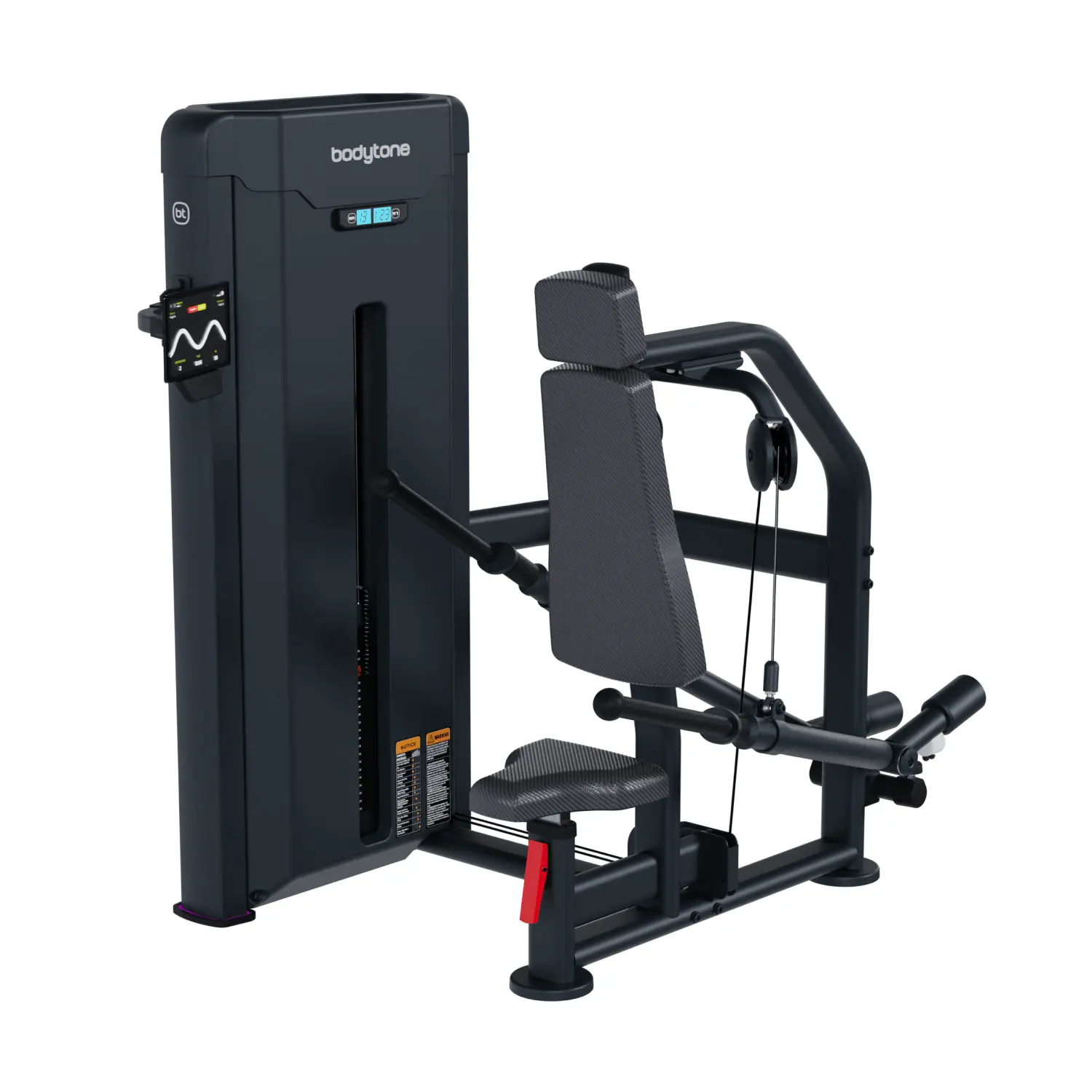
Chest and triceps are trained together because they work together: every pressing movement drives the pectorals and the triceps in the same chain. That is why a commercial floor equips a push zone rather than isolated machines. A complete zone carries a horizontal press, an incline press, a fly station and a dedicated triceps option – four stations that between them cover the whole pushing pattern for every member on the floor.
The stations that make a complete push zone
Horizontal chest press
The anchor of the zone. A guided pressing path lets members load heavily without a spotter, which is what makes it usable on a floor with limited coaching capacity. If your space allows only one chest station, this is it.
Incline press
Changing the press angle shifts emphasis towards the clavicular head of the pectoralis major and the front deltoid. It is a different loading angle, not a different muscle: incline pressing does not target the pectoralis minor, which lies beneath the major and is not trained by changing bench angle.
Fly station or pec deck
Fixes the elbow angle and brings the arms together in front of the body, isolating the pectorals in adduction with the triceps out of the movement. It is the station that lets a member keep training chest once the pressing stations have exhausted the triceps.
Triceps station
Assisted dips, a triceps extension machine or a cable station with a high pulley. The triceps is the limiting factor on almost every press, so a dedicated station is what allows the member to train it beyond the point where pressing has already fatigued it.
Selectorised, plate-loaded or converging
Selectorised machines change load with a pin, keeping circuit times short and suiting mixed memberships, hotel gyms and corporate facilities. Plate-loaded machines load with Olympic plates and are the usual choice in strength-focused rooms. Converging machines bring the handles inward as they travel forward, reproducing part of the fly pattern inside a press – a strong compromise when the floor has room for only one chest station.
Specifying the zone
- Build standard: for indoor commercial use, specify equipment built to EN ISO 20957-1 class S. Anything below that class is not rated for the duty cycle of a staffed facility.
- Adjustment range: seat and back-pad positions have to serve a 1.55 m and a 1.95 m member without tools. Count the increments rather than trusting the brochure.
- Load increments: on a mixed floor, small increments matter more than a high maximum. Ask about 2.5 kg add-on weights, especially on the triceps station where jumps of 5 kg are too coarse.
- Footprint and access: measure the machine plus the entry and exit path. Rear-entry fly stations need clearance behind them that catalogue drawings often omit.
- Wear parts: pads, cables, pulleys and bearings are what you replace. Get the parts list and its lead time before you sign.
Coaching members on the zone
Three cues prevent most of the problems these stations produce. Keep the shoulder blades set down and back against the pad throughout the press, rather than letting the shoulders roll forward at the end of the movement. Keep the elbows from flaring wide on chest work, and keep them close to the body on triceps work. Control the return: letting the stack pull the arms back removes the tension where the training effect lives, and it is the single most common fault on a busy floor.
Setup should be part of the member induction rather than something they work out alone. A back pad set for the previous user is the most frequent cause of shoulder complaints traced back to a press station.
Frequently asked questions
Which muscles do these machines work?
Pressing stations recruit the pectoralis major, the anterior deltoid and the triceps together. Fly stations isolate the pectorals in adduction with the triceps largely removed. Dedicated triceps stations load the three heads of the triceps brachii.
How many push stations does a commercial floor need?
A working baseline is one horizontal press, one fly station and one triceps option, with an incline press added once queuing appears at peak. Size against peak-hour flow rather than total membership.
Are guided machines suitable for experienced members?
Yes. Guided loading lets any member work heavily without a spotter and keeps the movement path consistent, which is why these stations sit alongside free weights on serious strength floors rather than replacing them.
Can members train chest and triceps in the same session?
That is the usual arrangement, because the triceps is already involved in every press. Programming triceps work after pressing rather than before it keeps the pressing stations loaded properly.
Browse the chest press machines and the cable stations, or request a quote for a complete push zone.
À lire aussi sur le même thème
- Découvrez le Leg Curl Allongé : La Clé pour des Ischio-jambiers Puissants et en Bonne Santé
- Renforcer et sculpter vos jambes : maîtriser la presse à cuisses inclinée
- Leg Extension Machine: Setup, Technique and Quadriceps Training
- Sculptez vos Pectoraux avec le Pec Deck : Guide Complet pour Maîtriser cet Exercice Efficace