Strength Training: Principles, Methods and Benefits for Clubs

Sooner or later, almost everyone who walks into a gym or a fitness club becomes interested in strength training. If you operate a facility and want to understand what your members are really asking for, or if you are about to specify the equipment that will serve them for the next ten years, this article is for you.
What is strength training?
By design, strength training is built to place a progressive demand on the muscular and neurological systems in order to reach a defined goal. It is a process rather than a collection of isolated exercises, and it is exactly that progressive quality that dictates both how a programme is written and how a training floor is equipped.
Strength training is still too often associated only with male members and very large muscles. It is true that no other form of training develops muscle mass as effectively. Even so, strength work serves every objective: it helps members lose weight, shape their physique, build endurance and improve their general physical condition. For an operator, that breadth is what makes a well planned strength area the most versatile floor space in the building.
The second piece of good news for your members is that losing weight does not require running long distances, swimming dozens of lengths or riding tens or hundreds of kilometres on a bike, particularly in autumn and winter. Unless they enjoy it, of course. They can simply come to the gym. Below are the answers to the questions members and operators ask most often.
Is strength training right for every member?
Before explaining why, here is the answer: yes. Strength training is for everyone, provided the exercises are technically correct and the training plan has been properly selected. The principles of good preparation are straightforward.
- Consult a personal trainer. It is always worth discussing an individual case with a professional, a personal trainer or a physiotherapist where there is an existing condition or a degenerative issue. Experience shows that most people are simply unaware of their own postural faults, which matter enormously when exercises are being chosen. The trainer is also the person who can demonstrate the movement and make sure it is performed correctly, rather than the member on the next bench who only knows how to push 120 kg off his chest.
- Set a training goal. The second key element is to define the objective, because the whole type of training will depend on it.
- Follow a training plan. The third part of looking after health and appearance is a training plan written by a personal trainer with clearly defined rules. Yes, the internet is full of ready made plans, clever advice and recipes for getting in shape quickly. They are other people’s experiences, and they are not necessarily transferable to your members.
The three training methods your floor has to absorb
Opinions on the most effective form of training are strongly divided. The three most popular methods are set out below, and each of them puts a different kind of pressure on your equipment mix.
FBW, or full body workout
FBW consists of working the muscles of the whole body in a single session. It places a heavier demand on the central nervous system than the other formats, so it should be performed three times a week with a rest day between training units. Multi-joint exercises that recruit many muscle groups dominate the session, squats and deadlifts among them.
This format suits members who are cutting, bulking or building endurance. Reaching the goal depends on how the session is structured: the number of sets, the length of the rest periods and the number of repetitions. In equipment terms, FBW concentrates traffic on barbells, racks and heavy compound stations rather than on isolation work.
Split
In what is commonly called a SPLIT, selected muscle groups are trained in a given session. Chest and biceps on one day, back and triceps on another, and so on. This loads the central nervous system less, but it covers a larger number of training units: members can train up to five times a week. It is recommended for people developing endurance as well as muscle mass. A split oriented club needs depth in its plate loaded range, because several members will be working the same body part at the same hour of the evening.
Circuit training
The session consists of roughly 9 to 12 stations performed one after the other until all of them have been completed. The number of repetitions is around 10 to 30. Once every exercise has been done, the circuit begins again; repeat the circuit two to three times. This is ideal training for building muscular endurance without excessive muscle gain, and for members following a weight loss diet. Two to three circuit sessions a week are enough.
Remember that before every session, whatever the method, a warm-up is necessary: it prepares the body for work with weights and prevents injury. A word for women members: do not be afraid of training with weights. Women have no natural predisposition to excessive muscle mass, while strength training can shape the physique beautifully.
Recovery is part of the programme, not a reward
The foundation of training is recovery. Remind your members not to force things, and not to believe the television shows in which you have to sweat ten buckets and eat nothing but lettuce and fish in order to lose weight. That approach is out of the question, and it is particularly damaging in strength training. Muscles grow while the body rests, so an optimal amount of sleep and adequate recovery time between sessions matter as much as the sessions themselves. Rest is what allows damaged muscle fibres to repair. Following the recovery principles below, a member reaches the goal in a healthier way and faster.
- Diet. A member who wants to move to a diet that suits them should ask for a consultation with a personal trainer or a dietitian. They will build a menu that, during physical activity, keeps healthy proportions between carbohydrates, proteins and fats. What a member eats is the single most restorative factor for the body.
- Rest days. A member starting out in physical activity cannot train seven days a week. Plan at least two training free days, and use them to see friends, sit in the sun or book a massage.
- Muscle support. Tired muscles after a session are helped by massage, a sauna or a cold chamber. In a club that already runs a wellness area, it is simply a matter of moving from one zone to the other.
Analysing progress and reacting to change
Because training is a process, more or less expected situations arise along the way. To avoid being caught out, results should be monitored continuously, for example by analysing body composition. That is how a member checks whether what is developing is what they wanted, in other words muscle mass rising while fat tissue falls. It is also worth listening to the body itself. If the training plan is followed stubbornly and the diet is respected, and yet the results are poor or there are no results at all, it is time to change something. Sometimes small changes to the plan are enough: different exercises, different loads, a different number of sets.
As you can see, strength training is a complex discipline. Lifting a barbell or a pair of dumbbells is not, on its own, enough to produce measurable results. We encourage every operator to promote this type of training in their club, because there is no greater satisfaction for a member than pressing a heavy weight or seeing in the mirror that squats have done their work.
What this means for your equipment plan
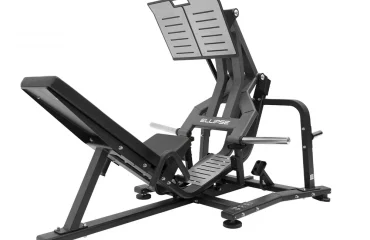
Every method described above translates directly into hardware. A club that sells FBW programmes needs free weight space and robust compound stations. A club built on splits needs a broad line of professional strength training machines so that several members can work the same muscle group without queuing. A club that programmes circuits needs a consistent series of stations that can be run in sequence, with enough weight benches to keep the rotation moving. Most commercial facilities end up serving all three populations at once, which is why the equipment list should be built from the timetable rather than from a catalogue.
Frequently asked questions
How often should a member train with weights?
It depends on the method. Full body workouts are performed three times a week with a rest day between sessions. Splits allow up to five sessions a week because each one loads a different area. Circuit training works well at two to three sessions a week. In every case, at least two training free days should remain in the week.
Do beginners need a coach before touching the equipment?
Yes. A first consultation with a personal trainer, or with a physiotherapist where there is a medical history, is what identifies postural faults and sets the technique. It is also the cheapest injury prevention measure a club can offer.
Will women members become bulky if they lift?
No. Women have no natural predisposition to excessive muscle mass. Strength training shapes the physique and improves general condition, which is precisely why mixed clubs should make the strength floor feel accessible rather than intimidating.
Is circuit training a substitute for cardio?
Circuit training develops muscular endurance without excessive muscle gain and suits members on a weight loss diet, which makes it a strong complement to cardio programming rather than a straight replacement for it.
Equipping a strength floor that matches your programming
Strength training is the most profitable use of floor space in a commercial facility, on one condition: the equipment has to match the methods actually being coached. Send us your floor plan, your opening hours and the training formats you run, and our team will build a strength area around them. Request a quote and we will come back to you with a room layout, a station list and a budget.