Sled push and farmer walk: the guide to pushing and carrying work
Le sled développe la puissance des jambes sans phase excentrique, donc avec très peu de courbatures, ce qui le rend utilisable en fin de séance ou en veille de compétition. Le farmer walk travaille le port de charge, le gainage et la poigne sur une distance donnée. Les deux mouvements sont devenus centraux en préparation physique, en HYROX et en strongman, en salle comme en extérieur.
Sled push, sled pull and loaded carries are the only high-power lower-body work with no eccentric phase, which means almost no delayed onset muscle soreness and no meaningful recovery cost. That is why they moved from strongman into mainstream conditioning, hybrid racing and rehabilitation within a decade. Programming them commercially needs one thing most gyms do not have: a dedicated lane, 15 to 20 m of usable length and 1.5 to 2 m wide, on a surface designed for it. A commercial sled with a power console starts at 1,250 EUR excluding VAT; the lane usually costs more than the sled.
Why push and carry work earned its floor space
Concentric-only work produces high force output without the muscle damage that comes from decelerating a load. Three consequences follow, and each maps to a different customer:
- Performance floors can programme heavy sled work the day before competition without compromising the athlete.
- Rehabilitation and return-to-sport settings can load the quadriceps and glutes progressively without the eccentric stress that irritates a healing tendon or a repaired knee.
- General memberships get an exercise with essentially no technical barrier. Load is adjusted in seconds, and there is no way to fail a repetition badly.
The four sled variants and what each trains
| Variant | Hand position | Primary quality | Typical prescription |
|---|---|---|---|
| Low push | Low uprights, torso at 45 degrees | Maximum horizontal force, acceleration mechanics | Heavy load, 10 to 20 m, long rest |
| High push | High uprights, torso more upright | Speed and stride frequency | Lighter load, 20 to 30 m, moderate rest |
| Backward drag | Straps or handles, walking backwards | Quadriceps and knee-extensor loading; widely used post-injury | Moderate load, 20 to 40 m, continuous |
| Harness pull | Body harness, hands free | Heaviest total load; whole-body drive | Very heavy, 10 to 15 m |
Loading benchmarks
| Objective | Load on the sled | Distance | Rest |
|---|---|---|---|
| Introduction | Sled only to 50 per cent of bodyweight | 15 to 20 m | 60 s |
| Speed development | 10 to 30 per cent of bodyweight | 20 to 30 m | 90 to 120 s |
| Maximum strength | 100 to 200 per cent of bodyweight | 10 to 15 m | 2 to 3 min |
| Conditioning | 50 to 75 per cent of bodyweight | Repeat 40 to 50 m intervals | Work to rest 1:1 |
Note that the load a given sled requires for a given effort depends heavily on the surface. The same 80 kg on artificial turf, on a rubber tile and on polished concrete produces three completely different exercises. Standardise the surface before standardising the load.
Farmer walk: technique and loading
A heavy implement in each hand, ribs down, shoulders packed, short and fast steps. The farmer walk builds grip, trapezius, trunk stability and postural endurance in a way no machine reproduces, and it is one of the few exercises where the limiting factor for almost everyone is grip rather than the target musculature.
- Starting load: 50 per cent of bodyweight per hand over 20 m.
- Progression order: increase load first, distance second. A long, light carry becomes a cardiovascular exercise and stops training what it is there for.
- Implements: dedicated farmer handles for the heaviest work, hex dumbbells or trap bars for general use, kettlebells for a mixed membership.
- Cue: if the shoulders round forward, the load is too heavy. That is the stop signal, not the fatigue in the hands.
The lane: the part that decides whether it works
This is where most installations fail. A sled needs a surface that provides consistent, repeatable friction and survives thousands of passes.
| Surface | Friction | Verdict |
|---|---|---|
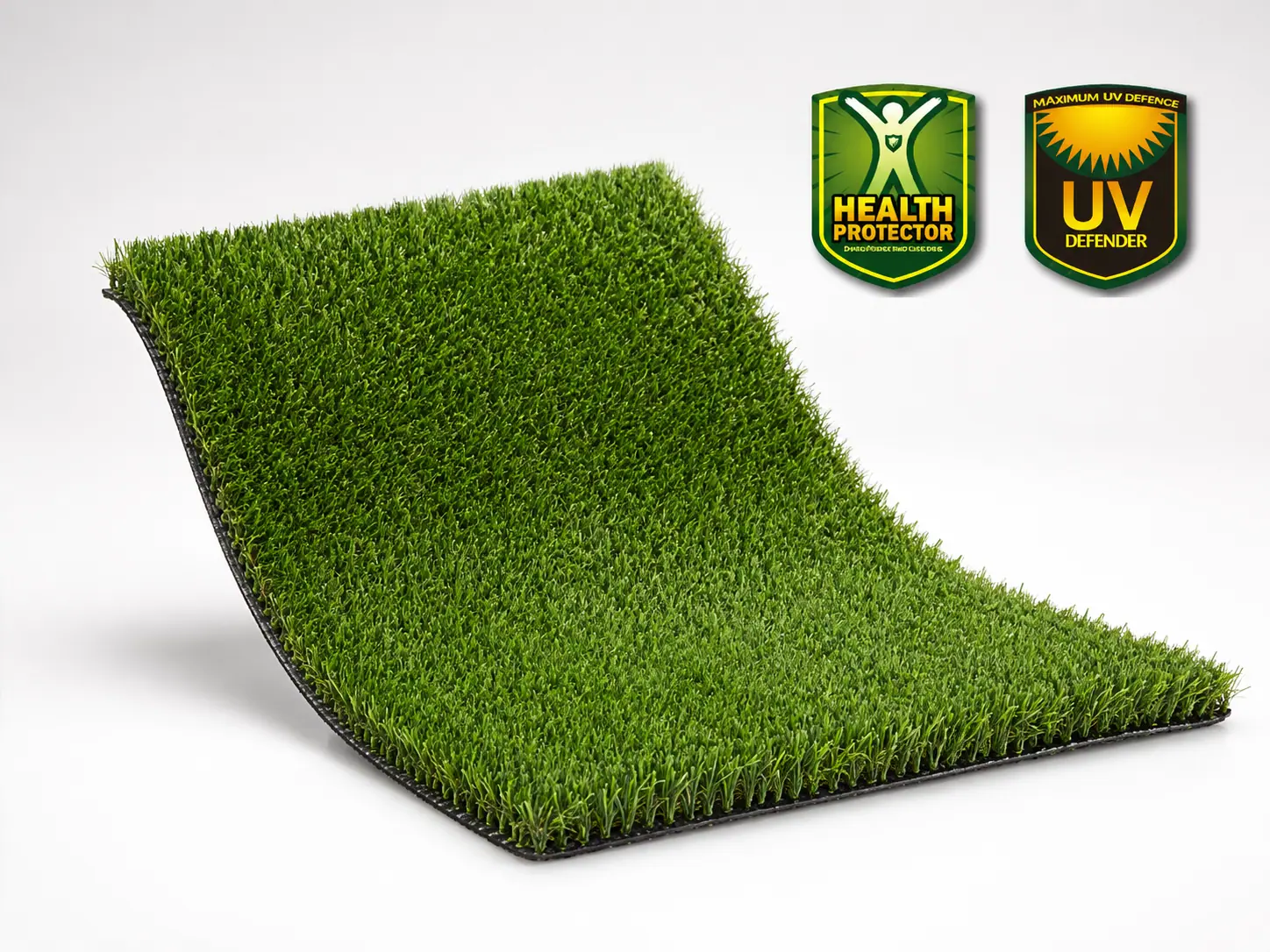
| High-density artificial turf | Moderate and consistent; sled runs on plastic skis | The reference solution for indoor sled and carry lanes |
| Smooth rubber tile | Variable; wears in a visible track | Acceptable for occasional use; the tile becomes a consumable |
| Sealed concrete | Low but abrasive | Destroys sled skis and generates noise; not recommended |
| Outdoor rubber or sports surfacing | Moderate | Good for outdoor tracks; check ultraviolet and frost resistance |
Dimension the lane as follows: 15 to 20 m of usable running length for general conditioning, 1.5 m wide for a single lane and 2 m where athletes push side by side, plus 2 m of turning and deceleration space at each end. Numbered or marked turf lets a coach set distances without a tape measure and is why numbered artificial turf tracks have become standard in functional facilities. Our detailed guidance on turf specification for pushing work is in the sled track artificial turf guide.
Hybrid racing: what the competition format demands
Hybrid fitness racing has changed sled specification for a large part of the market, because members now train to a defined standard. The sled push is contested over 50 m, typically as four lengths of 12.5 m, and the sled pull over the same distance. Competition sled weights are set by division and are revised periodically by the organiser, so a venue preparing athletes should confirm the current figures rather than assume them; as a planning range, sled push loads sit between roughly 100 and 200 kg including the sled, and sled pull loads between roughly 75 and 155 kg.
For a facility, the practical implication is the lane, not the sled. A venue that wants to run race-format sessions needs 12.5 m of clean, straight, uninterrupted turf, which is a genuine constraint in a converted retail unit. Our hybrid racing venue equipment section covers the full station list and the space each one takes.
Budget for a sled and carry zone
| Item | Specification | Indicative cost excluding VAT |
|---|---|---|
| Commercial power sled | Steel frame, high and low uprights, harness eyelets, power console | From 1,250 EUR |
| Second sled | Basic frame, no console, for parallel lanes | Lower; specify identical ski geometry |
| Loading plates | Bumper or cast plates, 200 kg inventory | From roughly 1,200 EUR for 200 kg of standard bumpers |
| Turf lane, 20 x 2 m | High-density artificial turf, numbered | Quoted by area and specification |
| Farmer handles or trap bar | Pair of handles or a 120 cm hexagonal bar | From 275 EUR for a trap bar |
The turf lane is usually the largest single line and is also the item that determines whether the zone is used. A 1,250 EUR sled on an unsuitable floor gets programmed twice and then abandoned.
Frequently asked questions
What load should a beginner use on a sled?
Bodyweight on the sled over 15 to 20 m is a sound starting point for a general fitness member, adjusted immediately by feel. Because the sled has no eccentric phase and no technical failure mode, load can be corrected mid-session in a way that is not possible with a barbell.
Is the sled suitable for beginners and rehabilitation?
It is one of the safest loaded exercises available. There is no eccentric phase, no complex technique to learn and no way to be trapped under the load. Backward sled drags in particular are widely used in knee rehabilitation because they load the quadriceps concentrically at a controlled intensity.
How long should a sled track be?
Fifteen to 20 m of usable length covers general conditioning, plus 2 m of turning space at each end. Venues preparing athletes for hybrid racing need a clean straight 12.5 m section, because the competition sled push and sled pull are contested over 50 m in four lengths.
What surface should a sled run on?
High-density artificial turf is the reference indoor surface: consistent friction, low noise, and it protects both the sled skis and the floor beneath. Rubber tile works for occasional use but wears in a visible track, and bare concrete abrades the skis and is loud enough to be a problem in a shared building.
How much space does a farmer walk need?
The same lane as the sled. Twenty metres of straight, obstruction-free width of at least 1.5 m, with the implements stored at one end so that a class can rotate through without crossing another station.
Planning a sled and carry zone? Light In Fitness supplies sleds, turf lanes, plates and complete functional zones to gyms, hybrid racing venues, defence facilities and clubs across Europe and export markets, including lane layout, surfacing specification and installation. Request a quote or browse our power sleds range.
À lire aussi sur le même thème
- Anchoring a rig or outdoor structure: chemical anchors, mechanical fixings and foundations
- Cross-training rigs: compare import and manufacturer quotes
- Medicine ball, wall ball ou slam ball : laquelle choisir
- Body Dome (Bosu): 10 Balance and Rehabilitation Exercises
- Un coach sportif en plus de ses entraînements de boxe anglaise, est-ce utile ?