Shock-Absorbing Non-Slip Rubber Tiles for Gym Floors
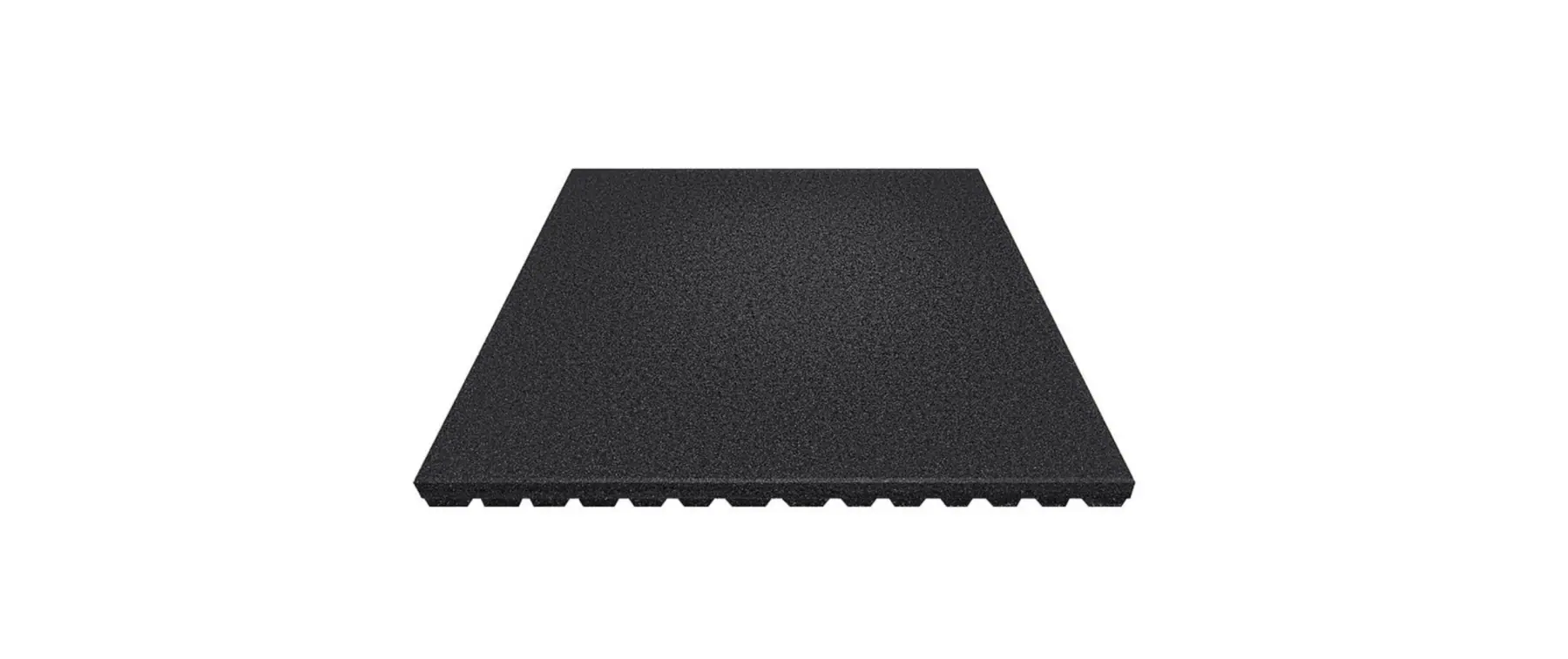
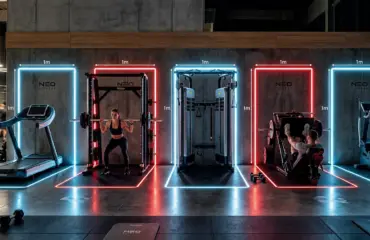
Flooring is the first thing specified and the first thing regretted. In a strength or fitness facility it protects the structural slab, controls noise reaching the rest of the building, and determines whether members keep their footing under load. Shock-absorbing non-slip rubber tiles are the standard answer for commercial gym floors, and this guide covers what they do, how the options differ, and how to specify and install them properly.
What a rubber gym tile is doing
Absorbing impact
A shock-absorbing rubber tile is engineered to take the energy of a dropped load and of repeated high-impact movement, rather than passing it into the slab. High-density rubber compresses under impact and recovers, which protects the structure underneath and reduces the jarring that members feel through the joints during floor work and jumping.
That protection is the commercial argument. Repairing a cracked slab in an occupied building costs many times what the flooring cost, and it closes the floor while it happens.
Providing grip
The non-slip surface is the safety argument. Members change direction quickly, work with wet hands and sweat onto the floor, and move under load. A rubber surface holds grip in those conditions in a way that sealed concrete and most hard finishes do not, which is why slip resistance belongs in the specification rather than being assumed.
Controlling noise
Rubber flooring reduces both the airborne noise of equipment and the impact noise transmitted through the structure. In a building with occupied space below or alongside the gym, that is often the constraint that actually decides the specification, and it is worth raising early rather than discovering it after handover.
Choosing between the formats
Tiles
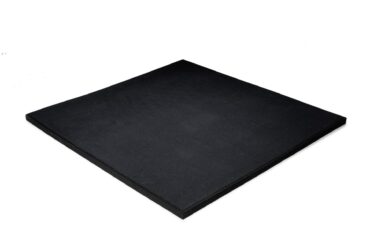
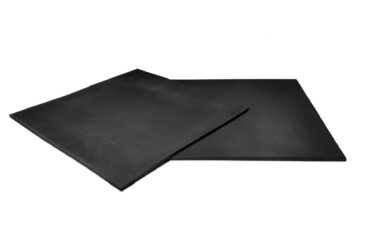
Interlocking or butt-jointed tiles are the workhorse of commercial gym flooring. Their real advantage is maintenance: a damaged or worn tile is lifted and replaced individually, without disturbing the rest of the floor. In a high-traffic facility with concentrated wear under specific stations, that is a substantial whole-life saving. Our rubber gym flooring tiles range covers the commercial specifications, including the 25 mm rubber tile in 100 x 100 cm format used across free-weight areas.
Rolls
Rolled rubber flooring gives a continuous surface with far fewer joints, which suits large open areas, cardio floors and studio spaces where appearance matters and impact loads are lower. Fewer joints means fewer edges to lift over time, but a damaged area cannot be swapped out as neatly. Our rubber flooring rolls cover this format.
Puzzle and interlocking formats
Puzzle-edge tiles assemble quickly without adhesive and can be lifted and reconfigured, which suits multi-use rooms, temporary layouts and areas where the use is expected to change. They are a genuinely useful format, but they are not the specification for a platform where loaded barbells are dropped.
Rubber against EVA foam
EVA foam tiles are light and cheap and give some cushioning, but they do not compare with rubber for durability under commercial traffic. Foam compresses permanently, tears at the edges and degrades quickly under weights and equipment feet. For any facility open to members, rubber is the specification; foam belongs to lighter, low-traffic uses.
Specifying the floor
Zone the room before choosing a product, because the right floor is rarely one product across the whole area. A free-weight and platform area, a machine circuit, a functional or turf lane and a studio space each have different impact, grip and appearance requirements.
For each zone, specify thickness and density against the actual drop height and load rather than against a general impression of heaviness. Ask for density, tensile and tear properties, dimensional tolerance and surface finish. Where weightlifting platforms are involved, specify to the drop, not to the room. The weightlifting rubber tiles range is built for that case.
Two further points are frequently missed. Where the room requires a fire classification, take the class from the product documentation exactly as stated, including the smoke index, and keep the documentation. And where the building has occupied space below, an acoustic underlay may be needed in addition to the tile, not instead of it.
Installation
Preparing the substrate
The substrate determines the result. It must be clean, dry, sound and level within tolerance before anything is laid. Debris, dust and residual moisture are the three causes of floors that lift, and moisture in particular needs to be tested rather than assumed on a new or ground-floor slab. Time spent on the substrate is what prevents deformation, curling and lifting later.
Laying out
Plan the layout before laying so that cuts fall in the least visible and least trafficked positions, and set out from a straight reference line rather than from a wall that may not be square. Work from one corner, keeping joints tight, and check alignment as you progress rather than at the end. Rolled flooring generally needs rolling to bed it and remove air; interlocking tiles need their edges properly engaged along the whole joint.
Maintenance
Regular cleaning with products suitable for rubber keeps both the appearance and the slip resistance. Avoid solvent-based cleaners, which attack the surface. Inspect joints and high-wear areas periodically, and replace individual tiles as they wear rather than waiting for a full refit.
Frequently asked questions
Tiles or rolls for a gym floor?
Tiles allow individual replacement of worn or damaged areas and suit high-impact zones. Rolls give a near-continuous surface with fewer joints and suit large open areas and studio spaces. Many facilities use both, zoned by use.
How thick should gym flooring be?
Thickness is selected against the drop height and load in each zone, not for the room as a whole. A free-weight or platform area needs substantially more than a machine circuit or a studio floor, which is why the room is zoned before a product is chosen.
Is EVA foam an alternative to rubber?
Not for commercial use. Foam compresses permanently and degrades quickly under weights, equipment feet and continuous traffic. Rubber is the specification for any facility open to members.
Does rubber flooring reduce noise to the floor below?
It reduces both airborne and impact noise, but where there is occupied space below, an acoustic underlay is often required in addition to the tile. Raise this at design stage rather than after installation.
Specifying your floor
The right specification depends on your zones, your slab, what is below the room and how the space is programmed. Send us your floor plan and a description of each zone and we will come back with a flooring specification and a costed proposal: request a quote.
Réalisations documentées
- Dalles et sols sportifs : livraisons documentées – plusieurs chantiers
- Sol sportif extérieur, square Georges-Vallerey – Taverny (95)
Sources et références
- Décret n° 96-1136 du 18 décembre 1996 – prescriptions de sécurité relatives aux aires collectives de jeux (Légifrance)
- NF EN 1176-1 – Équipements et sols d’aires de jeux, partie 1 : exigences de sécurité et méthodes d’essai générales (AFNOR)
- NF EN 1177 – revêtements de surface amortissants : détermination de la hauteur de chute critique (AFNOR)