Rubber Flooring: Tiles and Hard-Wearing Surface Solutions
Le caoutchouc combine amortissement, adhérence et résistance à l'abrasion, ce qui explique sa présence en salle de sport, en aire de jeux et en milieu industriel. Il se présente en dalles, rouleaux ou pavés, selon la continuité de surface recherchée. Sa durée de vie dépend de la densité et du liant utilisés.

Rubber flooring has become the default surface across a wide range of professional environments, thanks to a combination of properties no other material matches at the same price: shock absorption, grip and abrasion resistance in one product. Whether the project is a playground, a training floor, a gym or a commercial space, rubber tiles give you a surface that is soft where it needs to be and extremely hard-wearing everywhere else. This guide covers composition, benefits, applications, installation and how to specify the right product.
Introduction to rubber flooring
Rubber flooring is made mainly from rubber granulate, supplied either as prefabricated tiles or as a poured in-situ surface. The material is valued for its slip resistance and for the comfort it gives underfoot, which is what makes it suitable for such different uses. Rubber tiles are available in a range of colours and thicknesses, so the same product family can serve both the design of a space and its technical requirements. Because rubber also has useful acoustic properties, it is a practical answer to noise transmission in gyms and training rooms, where dropped loads and impact noise are a recurring source of complaints from neighbouring tenants.
What is rubber?
Rubber is an elastic material, derived either from the sap of tropical trees or manufactured from synthetic polymers. In flooring, natural and synthetic rubbers such as SBR and EPDM are used to produce tiles and surfaces that absorb impact. These materials are processed to give increased resistance to shock, weather and wear, which is what delivers a long service life and good insulation. Rubber is also an environmentally sound choice, particularly when the tile is manufactured from recycled granulate rather than virgin material.
The practical difference for a buyer is this: SBR is the workhorse granulate, usually black, used for the body of the tile; EPDM is the coloured, UV-stable granulate used for the wearing layer and for decorative surfaces. Most professional tiles combine the two.
Benefits of a rubber floor
The advantages are numerous and, unusually, they all point the same way.
- Slip resistance. Essential wherever safety comes first, which in practice means playgrounds and training floors.
- Load bearing and impact resistance. Rubber tiles carry heavy point loads and absorb repeated impact without permanent deformation.
- Ease of maintenance. Rubber surfaces need very little cleaning to keep their appearance, which is a direct saving on your operating budget.
- Fatigue reduction. Shock absorption reduces foot and joint fatigue, making the space more comfortable for people who stand or train on it for hours.
Common applications
Rubber flooring is used across a wide spread of settings. In playgrounds, rubber tiles provide a safe surface that protects children in a fall; impact-attenuating playground surfacing is covered by EN 1177, while the play equipment itself falls under EN 1176-1, and the two must never be confused when you write a specification. In sport, rubber floors are specified for their shock absorption, which makes training both safer and more comfortable. Rubber tiles are equally common in commercial spaces, where their appearance and stain resistance make them an easy choice. Indoors or outdoors, rubber in tile form gives you a flexible, attractive solution for each requirement.
Rubber tiles: types and characteristics
Comparing materials
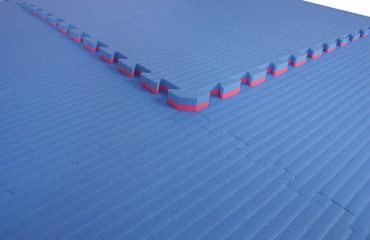
Several materials are available when you choose floor tiles, each with distinct characteristics in elasticity and resistance. Rubber tiles, whether SBR or EPDM based, stand out for their toughness and durability, and interlocking versions make installation straightforward. Compared with vinyl or wood, rubber is preferred above all for its slip resistance and the low effort its maintenance demands.
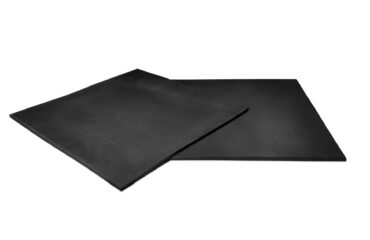
Rubber tiles come in formats such as 50 x 50 cm and 100 x 100 cm, and in a range of thicknesses so that the product can be matched to the project. Their capacity to absorb impact is what makes them the right answer for playgrounds and training floors, where safety and comfort are not optional.
Characteristics of rubber tiles
Rubber tiles have properties that make them particularly interesting across very different environments. The slip-resistant surface delivers a higher level of safety, especially in playgrounds and gyms. The rubber used in these tiles is frequently made from recycled granulate, which makes it an environmentally responsible choice as well as a technically sound one.
Rubber tiles are also designed to resist wear, weather and impact, which is what underpins their long service life. In design terms the finish options are varied, including attractive colours that let the surface sit comfortably in any kind of space. Finally, their ability to reduce noise contributes to a more pleasant environment, particularly in heavily used areas.
Finish options
Finish options for rubber tiles are diverse and allow the surface to be matched to specific aesthetic and functional requirements. Textures range from smooth surfaces to studded profiles, giving choices that answer precise safety and comfort needs while providing good insulation. Rubber tiles can also be treated with polyurethane resins to increase durability and stain resistance, which matters particularly on sports floors.
The colours available allow the space to be personalised to the client brief, making the rubber floor visually attractive as well as functional. With the right finish options you can create genuinely distinctive spaces, whether in a gym, a playground or a commercial environment.
Specific applications
Rubber flooring for gyms and training floors
Rubber flooring for gyms is engineered for the demands of a sports environment. The slip-resistant surface protects users even during intense activity, and the tiles create a resilient floor that absorbs impact and reduces foot fatigue during long sessions. Rubber flooring resists wear and is easy to maintain, which is exactly what a busy facility needs.
Thickness is the specification that matters most here, and it follows the use rather than the room. A general fitness or machine area is normally laid with tiles in the 20 mm to 25 mm range, such as our 25 mm rubber gym tile in 100 x 100 cm format. A free-weight or cross-training zone where loaded barbells are dropped needs a thicker, denser tile, which is what the 40 mm CrossFit rubber tile is built for. Specifying a thin tile in a drop zone is the single most common and most expensive mistake in gym flooring, because the tile fails, the screed underneath it fails, and the whole zone has to be relaid.
Solutions for heavy traffic
Rubber flooring for heavy traffic is designed to survive extreme conditions of use, of the kind found in airports, shopping centres and industrial buildings. Made from high-quality rubber granulate, these surfaces are durable and able to carry heavy loads while remaining slip resistant. The finish range runs from smooth surfaces to coarser textures so that each space gets what it needs. Using SBR or EPDM in the tile further improves resistance to impact and to chemicals, which is what delivers exceptional longevity.
Poured rubber in public spaces
Poured rubber, laid in situ, is the answer for public spaces such as parks, promenades and playgrounds. The technique creates a continuous surface with no joints, which reduces trip and fall risk. Poured rubber surfaces can be produced in a variety of colours and finishes, so they integrate into the design of a public space while remaining slip resistant and comfortable. Using recycled rubber granulate makes poured rubber an environmentally sound choice as well, contributing both to the durability of public infrastructure and to sound insulation. Its shock absorption creates a pleasant environment for users while resisting weather and wear.
Where the poured surface is an impact-attenuating playground surface, the critical fall height of the play equipment determines the thickness required, and the finished surface must be tested against EN 1177. Ask for that test report as part of the handover documentation rather than after the first incident.
Installation and maintenance
Installation techniques for rubber tiles
Installing rubber tiles requires care if the finished surface is to be both functional and attractive. Before installation, the substrate must be prepared: clean, dry and free of debris. Tiles in 50 x 50 cm or 100 x 100 cm format must be laid accurately to avoid any progressive offset across the room. Adhesives designed specifically for rubber, and dry-bonding techniques, help to keep the surface slip resistant and durable over time. A check shortly after installation will catch anything that would otherwise cause premature wear.
Loose-laid installation suits large areas with heavy tiles and rooms where the floor may later be reconfigured; bonded installation suits smaller tiles, ramps, thresholds and any area where lateral movement of a tile would be a hazard.
Cleaning and maintenance
Maintaining a rubber floor is straightforward and undemanding. To preserve the appearance and performance of rubber tiles, regular cleaning with warm water and a mild soap is recommended, and this applies particularly to sports floors. Avoid aggressive chemical products, which can damage the rubber surface. Where a spill occurs, cleaning it immediately with a sponge or soft cloth will prevent permanent marking. It is also worth checking the joints between tiles periodically to confirm they remain tight. With appropriate maintenance, rubber flooring will deliver its full service life and remain a safe, resilient surface for users.
Durability and service life
Durability is one of the most valued characteristics of rubber flooring, and particularly of SBR-based products. Manufactured from high-quality rubber granulate, these surfaces are designed to resist wear, impact and varying climatic conditions. Rubber tiles in SBR or EPDM offer excellent impact resistance, which is what makes them the preferred choice for high-traffic environments such as playgrounds and gyms. The shock absorption of a rubber tile floor also reduces user fatigue during long sessions. As a result these surfaces last for many years, which is what gives them their return on investment.
Choosing the right rubber floor
Choosing the right rubber floor depends on several factors: the intended use, the level of traffic and aesthetic preference. Tile dimensions matter, with 50 x 50 cm and 100 x 100 cm being the common formats, and so does thickness, which should be selected from the load and the drop height the zone will actually see rather than from a catalogue average. The choice between SBR and EPDM will influence both durability and appearance. For a gym, a slip-resistant surface is essential; for a playground, impact attenuation and compliance with EN 1177 come first. Weigh those elements and you will arrive at the right resilient surface for your project.
Our full ranges are on the rubber gym flooring tiles page, with the heavy-duty options grouped under weightlifting rubber tiles and the continuous-surface options under rubber flooring rolls. Where impact noise to the floor below is part of the brief, look at the acoustic underlay range at the same time as the tile.
Where rubber flooring is heading
The outlook for durable rubber flooring is positive, with growing demand for environmentally responsible materials. Using recycled rubber granulate to manufacture tiles reduces environmental impact while maintaining a high level of quality. Innovation in manufacturing, poured rubber among it, continues to produce surfaces that perform better and look better, with well-controlled elasticity. Future trends may also include rubber floors incorporating smart technologies to improve safety and comfort in both public and private spaces.
Frequently asked questions
What thickness of rubber tile do I need?
It follows the use. A machine and general fitness area is typically laid in the 20 mm to 25 mm range; a free-weight or cross-training drop zone needs a thicker, denser tile such as a 40 mm product. Tell us what happens in each zone and we will specify each one separately.
What is the difference between SBR and EPDM?
SBR is the black recycled granulate that forms the body of most professional tiles. EPDM is the coloured, UV-stable granulate used for wearing layers and decorative surfaces. Many tiles use both.
Which standard applies to playground surfacing?
EN 1177 covers impact-attenuating playground surfacing and the way it is tested. EN 1176-1 covers the play equipment itself. They are separate standards and a specification should reference both, each for its own scope.
Loose-laid or bonded?
Loose-laid suits large areas with heavy tiles and floors that may be reconfigured later. Bonded suits smaller tiles, ramps and any zone where a tile shifting sideways would create a hazard.
How long does a rubber floor last?
Service life depends on the density of the tile and the binder used, as well as on the traffic it carries. A correctly specified professional tile, correctly installed and cleaned, lasts many years.
Specify your floor with us
Rubber combines shock absorption, grip and abrasion resistance, which is why it appears in gyms, playgrounds and industrial settings alike. It is supplied as tiles, rolls or poured surfaces depending on how continuous the finished surface needs to be, and its service life depends on the density and the binder used. Send us the room dimensions, the activity in each zone and the substrate you are laying on, and we will return a specification with quantities and a cost. Request a quote.
Réalisations documentées
- Dalles et sols sportifs : livraisons documentées – plusieurs chantiers
- Sol sportif extérieur, square Georges-Vallerey – Taverny (95)