25 mm Rubber Gym Tiles: When to Step Above 20 mm

Introduction
Between 20 mm and 25 mm you might think the difference is negligible. In practice those 5 mm change three very concrete things: comfort, noise, and above all the safety margin once training gets more serious. Heavier loads, more frequent impacts, a more fragile substrate, a more sensitive neighbour.
The right decision is not to go thicker on principle. It is to step above 20 mm at the right moment, and so avoid the classic outcome: a substrate that marks, vibration travelling through the building, tiles that shift, uncertain material quality, or a free weight zone that has to be redone.
This guide tells you exactly when 25 mm is the best compromise, when 20 mm is enough, and when you need to go further still, to 30 to 40 mm or a dedicated platform. The approach is practical and oriented towards performance, safety and durability.
20 mm or 25 mm rubber tiles: what are we actually comparing?
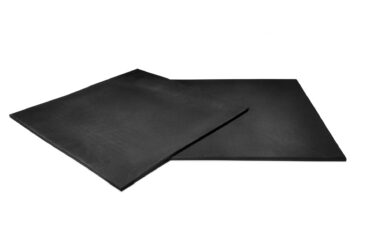
A rubber gym tile is an elastomer covering, often SBR with an EPDM finish in some ranges, whose job is to:
- protect the substrate: concrete, tiles, screed;
- absorb part of the impact energy;
- limit noise and vibration;
- improve grip and comfort;
- define training zones for machines, cardio and free weights.
The step from 20 mm to 25 mm means:
- 25 per cent more thickness, since 25 divided by 20 is 1.25;
- more material, so generally more mass and more capacity to dissipate energy;
- a better tolerance for some, not all, uses: moderate to regular impacts, a slightly fragile substrate, a more demanding acoustic requirement.
Important: thickness is not everything. Density, hardness, granulometry, manufacturing quality and the substrate underneath all determine real performance.
What 25 mm is really for in a sports project
25 mm is typically chosen when you want:
- a versatile floor for a serious training room;
- better resistance to repeated loading from free weights and heavy machines;
- a noticeable gain on vibration and comfort;
- a budget and performance compromise before moving to 30 to 40 mm.
It fits particularly well in contexts such as:
- a controlled free weight zone, where dumbbells are set down rather than dropped;
- a coaching studio with daily intensity;
- platforms and technical zones where you want a floor that is both stable and protective;
- a facility on an upper floor, depending on the building, often combined with an underlay or other complementary solutions.
How it works: why 5 mm can matter
A rubber floor acts as a damping system: it deforms, then dissipates part of the energy.
What drives the demand on it is not weight alone. It is above all:
- impact energy, which is very different for an object dropped and an object set down;
- height, even a small one;
- repetition, 10 times a day against 300 times a day;
- the hardness of the contact: cast iron, bumper plate or a dumbbell with sharp edges;
- the stiffness of the substrate: a ground-bearing concrete slab against a suspended upper floor.
25 mm becomes interesting when you are not simply looking for a floor, but for a safety margin and greater durability across a heavily used zone.
Common mistakes and received ideas
Received idea 1: 20 mm is enough for everything. It is enough for a great many uses: machines, cardio, circulation. But as soon as the use shifts towards regular free weights, repeated micro-impacts and an acoustic requirement, 20 mm can be marginal.
Received idea 2: 25 mm replaces a lifting platform. It does not. 25 mm improves protection and comfort, but it does not turn a zone into an area for intensive dropping. For a dropped barbell you specify dedicated solutions: platforms, thicker tiles, multi-layer systems.
Received idea 3: it is only a floor covering, compliance does not apply. In a professional environment, and particularly in premises open to the public, in municipal facilities and in hotels, you have to think about documentation: reaction to fire, indoor emissions labelling and material traceability. Each is covered below.
What is actually at stake
1. Safety and the integrity of the substrate: the real hidden cost
The floor is not a detail. It is a protective layer for the building.
Moving to 25 mm often pays for itself if you have:
- a sensitive substrate: ceramic tiles, screed, levelling compound, an old floor;
- concentrated loads from the feet of heavy machines, racks and benches;
- moderate but regular impacts, from dumbbells and kettlebells set down quickly;
- daily or intensive use.
The benefit is fewer cracks, fewer chips and fewer deep marks, and therefore less remedial work.
2. Noise and neighbours: the most underestimated issue
Noise in a gym is not only airborne. It is structural too: impact noise and vibration propagating through the building fabric.
25 mm can offer:
- a better buffer against vibration transmission;
- a perceptible reduction in light to moderate impacts;
- a more professional feel underfoot, less hard and dry.
If you are on an upper floor or share a party wall, 25 mm often becomes the reasonable minimum, and you can go further with a multi-layer approach depending on the constraints. Dedicated acoustic underlays exist for exactly this situation.
3. Performance, comfort and fatigue when sessions are long
In a studio or a facility running coaching, resistance work, circuit training and loaded carries one after another, 25 mm often gives the better compromise:
- stable enough to work cleanly;
- comfortable enough to limit fatigue in certain formats;
- more forgiving when technique is not perfect, without ever making dropping acceptable.
4. Durability of the covering: less movement, less wear
A tile that is marginal for its use will:
- mark more quickly;
- open at the joints;
- shift in rotation zones, around pivots and machines;
- degrade where loads are repeated.
25 mm, well chosen and well laid, generally improves service life in the intermediate zones: those that do not justify 40 mm, but that bring 20 mm to its knees.
A simple decision framework
Here is a practical professional rule: step above 20 mm as soon as you tick two or more of the following six.
The six triggers for moving to 25 mm
- Regular free weight use, even without dropping.
- Heavy loads handled daily, machines and free weights together.
- A fragile substrate: ceramic tiles, screed, levelling compound, an older floor.
- Neighbours, an upper floor or party walls sensitive to noise.
- Intensive use: a PT studio, a commercial facility, high footfall.
- A need for versatility: one floor for several zones, without multiplying thicknesses.
If you tick none of them, 20 mm is often sufficient and more economical. If you tick three or more, consider either 25 mm with targeted reinforcement, or going straight to 30 to 40 mm on the impact zones.
20 mm, 25 mm or beyond: which use, which thickness
| Use or zone | 20 mm | 25 mm | 30 to 40 mm or platform |
|---|---|---|---|
| Selectorised strength machines | Very suitable | Very suitable | Unnecessary except in specific cases |
| Cardio: treadmill, rower, bike | Suitable | Suitable, plus comfort and noise | Useful on a very sensitive upper floor |
| Circulation and corridors | Suitable | Suitable | Rarely necessary |
| Controlled free weights, set down not dropped | Marginal if intensive | Often ideal | Useful with very heavy loads |
| Kettlebells, set down quickly, repeated moderate impact | Sometimes marginal | Good compromise | Useful if drops are frequent |
| Deadlift and weightlifting with drops | Not recommended | Not recommended | Yes, as a dedicated zone |
| Upper floor or shared building | Sometimes insufficient | Often the minimum | Often required depending on structure |
Zone the floor rather than over-buying
The most cost-effective strategy, and the cleanest technically, is almost always:
- 20 mm on cardio, machines and circulation;
- 25 mm on controlled free weights and coaching zones;
- a dedicated zone, platform or thicker tiles, for anything involving high impact.
You save money, you gain service life, and you avoid turning the whole floor into unnecessary over-thickness.
Three real cases
Case 1: a small private training room, serious use without drops
- loads: moderate to heavy;
- dumbbells: set down, sometimes quickly;
- constraints: noise, neighbours, substrate.
Typical recommendation: 25 mm on the free weight zone, 20 mm elsewhere. If deadlifting is regular, add a reinforced zone.
Case 2: a coaching studio where everything happens in one place
- daily sessions, clients rotating through;
- resistance work, lunges, circuits, kettlebells;
- the need for a versatile, stable, durable floor.
Typical recommendation: 25 mm as the base, with local reinforcement if one area concentrates the impacts.
Case 3: a commercial facility with machines, free weights and building compliance
- high footfall;
- heavy equipment;
- documentation required for fire, emissions and traceability.
Typical recommendation: zoning plus documentary requirements, and a covering compatible with your building constraints.
Installation practice: the detail that decides service life
Even the best tile becomes mediocre if installation is rushed.
- a level substrate: 25 mm is more tolerant than 20 mm, but it works no miracles;
- stagger the joints where possible, for better joint stability;
- manage expansion at the perimeter by leaving a gap;
- clean transitions: threshold strips and ramps where required;
- in heavily trafficked or wheeled zones, prevent tile movement, by bonding or by perimeter fixing depending on the case.
Why 20 mm gets regretted
When a 20 mm floor is under-specified, it is rarely dramatic in the first month. The signals usually appear after a gradual increase in loading, a rise in attendance, a change of use towards more free weights, a complaint from a neighbour, or a heavy machine marking the substrate.
25 mm is often chosen not to do more, but to stabilise a project where use is clearly above light training.
Compliance: what to ask for
1. Reaction to fire: EN 13501-1
In premises open to the public you will frequently be asked for a reaction to fire classification. EN 13501-1 provides the basis for that classification, including the classes used for floor coverings with their smoke indices. Ask for the exact class stated for the product, and note that the smoke index is part of the class, not an optional extra. This belongs in the covering selection, not after it. Fire-rated rubber tiles are supplied specifically for these projects.
2. Indoor VOC emissions labelling
Indoor floor coverings are subject to volatile organic compound emissions labelling requirements, which vary by country. Ask the supplier for the emissions labelling and the traceability documentation for the product intended for indoor use, and check it against the requirements applicable where the installation will be built.
3. Materials and PAH content
At European level, a REACH restriction, Regulation EU 2021/1199, targets certain uses of loose granulate and mulch in sports applications, applicable from 10 August 2022, with a concentration limit expressed as the sum of eight PAHs. Even where your tile is not a loose granulate, the professional logic is unchanged: material traceability, documentation and compliance.
4. Impact attenuating surfaces and critical fall height: EN 1177
If your project involves fall scenarios, such as playground areas or certain trails, you are in a different world. EN 1177 defines the test method for impact attenuation and the concept of critical fall height. In plain terms: do not confuse a gym floor with a fall protection surface. They are not the same requirement.
5. Slip resistance: mind the scope
EN 16165 covers methods for assessing slip resistance of pedestrian surfaces, and it also states the limits of its application, notably that it does not cover surfaces intended for sports use. It is useful for wet circulation areas and ancillary spaces, but sports surfaces have to be reasoned on their own criteria: real use, sweat, chalk and cleaning regime.
The differentiators that actually count
When comparing tiles, even at identical thickness, ask for:
- the technical data sheet: density, hardness, tolerances;
- installation recommendations;
- the documents relevant to your constraints: fire, indoor emissions;
- zoning advice: where to put 25 mm, where to reinforce;
- project coherence: transitions, thresholds, perimeters, joints.
A professional floor is not a product. It is a system: substrate, covering, use and maintenance.
Express diagnostic: decide in five minutes
To settle 20 mm against 25 mm, and to know whether a zone should go above 25 mm, answer these questions:
- Free weights: occasional, regular or intensive?
- Drops: never, sometimes or often?
- Substrate: concrete, ceramic tiles, screed, upper floor?
- Noise constraint: low, medium or high?
- Objective: private room, studio, commercial facility open to the public?
- Zones: cardio, machines, free weights, weightlifting?
With those six answers a supplier can produce a structured recommendation: a zoning plan, thicknesses and useful reinforcement, without over-specifying, and with a long-term logic.
Conclusion
Moving from 20 mm to 25 mm is not a marketing step. It is a step in use.
- If you are on machines, cardio and circulation, 20 mm often remains excellent.
- If you move towards regular free weights, daily intensity, a fragile substrate or an acoustic constraint, 25 mm often becomes the best compromise: more margin, more comfort, more durability.
- And if you have high impacts, drops, weightlifting or intensive deadlifting, the real choice is not 20 against 25, but a dedicated zone: platform, thick tiles or a multi-layer system.
For a clean, stable project, think like a professional: zoning, evidence, durability.
FAQ
Is 25 mm really better than 20 mm for a gym?
Yes, as soon as use becomes more intense: regular free weights, a fragile substrate, an acoustic requirement. The gain is mostly in safety margin and durability, not only in comfort.
When is 20 mm enough and 25 mm unnecessary?
When you are mostly on selectorised machines, cardio and circulation, and you are not doing heavy free weight work every day.
Is 25 mm enough for deadlifting and weightlifting?
For deadlifting or weightlifting with a dropped bar, that is generally the wrong question. You usually need a dedicated zone, a platform or a thicker solution, because the governing factor is impact energy.
On an upper floor, is 25 mm automatic?
Often, but not automatically. It depends on the structure and on the noise requirements. 25 mm helps, and sometimes you need to go further with an underlay or a multi-layer system.
Which documents should I ask for on an indoor rubber floor?
Depending on the context: the indoor VOC emissions labelling applicable in the country of installation, the reaction to fire classification under EN 13501-1 including the smoke index, and material traceability.
Do 25 mm tiles have to be bonded?
Not always. In intensive use, wheeled zones or where movement is a constraint, bonding can stabilise the floor. Otherwise a well executed loose lay can be sufficient if the substrate is level and the perimeter is properly managed.
How do I choose between 25 mm and 30 to 40 mm?
Ask a different question: are there high impacts, meaning drops? If not, 25 mm is often ideal. If yes, use 30 to 40 mm or a platform on a dedicated zone, and 25 mm elsewhere.
Specifying your floor
Bring the six diagnostic answers to the table and the thickness decision resolves itself, zone by zone. Detailed flooring quotations, including a zoning plan and the technical documentation for each reference, are available for any professional project.
Réalisations documentées
- Dalles et sols sportifs : livraisons documentées – plusieurs chantiers
- Sol sportif extérieur, square Georges-Vallerey – Taverny (95)
Sources et références
- Arrêté du 19 avril 2011 – étiquetage des produits de construction ou de revêtement de mur ou de sol sur leurs émissions de polluants volatils (Légifrance)
- Ministère de la Transition écologique – étiquetage des produits de construction : classes d’émission A+ à C
- Décret n° 96-1136 du 18 décembre 1996 – prescriptions de sécurité relatives aux aires collectives de jeux (Légifrance)
- NF EN 1176-1 – Équipements et sols d’aires de jeux, partie 1 : exigences de sécurité et méthodes d’essai générales (AFNOR)