Rubber Sports Flooring for Multisport Halls
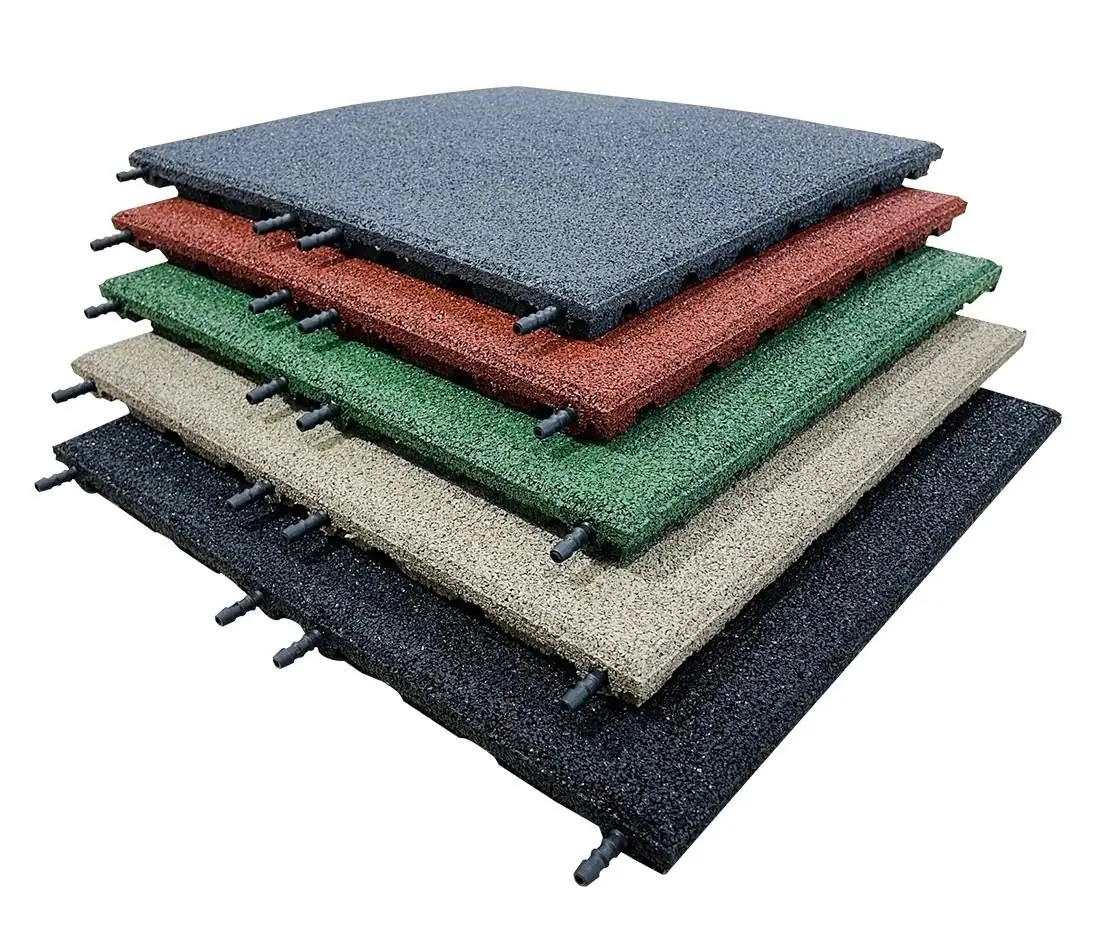
In short: a multisport hall asks one surface to serve several sports with opposite requirements. Vulcanised rubber is the material that comes closest, because thickness and density can be varied zone by zone: heavy and dense where load is dropped, thinner and firmer where people move fast. The specification question is never simply which rubber, it is which rubber where.
Why the floor is a specification, not a finish
In a multisport facility the floor is the only piece of equipment that every user touches, every hour, for the life of the building. It decides three things at once: how much impact reaches the joints of the people using the hall, how much noise and vibration reaches the rooms below and next door, and how long the sub-floor underneath survives.
Get it wrong and the consequences arrive in a fixed order. First the complaints from the neighbouring space, then the damage to the screed under the free-weights area, then the surface itself lifting at the joints. All three are far more expensive to fix than the difference between the right and the wrong floor at the outset.
What rubber actually gives you
Vulcanised rubber is used in sports halls for a combination of properties that few other materials offer together.
- Shock absorption. The elasticity of the material absorbs the impact of landings, dropped loads and fast direction changes, which is what protects both the users and the structure.
- Grip. A non-slip surface that keeps its behaviour when it is damp from cleaning or from use.
- Noise reduction. Impact and structure-borne noise are cut at source rather than treated afterwards, which matters most in buildings with occupied rooms below.
- Durability. The surface survives continuous use, equipment being dragged across it, and cleaning chemicals, and it resists moisture and staining.
- Low maintenance. Routine cleaning is the whole protocol, which keeps the running cost down over the life of the installation.
Thickness and density are the two variables that turn those properties into a usable specification. Greater thickness and higher density absorb more; less thickness and a firmer surface give more stability underfoot. Neither is universally better, which is why a single specification for a whole hall is almost always the wrong answer.
Tiles or rolls?
| Rubber tiles | Rubber rolls | |
|---|---|---|
| Surface | Modular, joints between units | Continuous, very few joints |
| Layout changes | Reconfigure or replace unit by unit | Fixed once laid |
| Installation | Zone by zone, phased if needed | Faster over large uninterrupted areas |
| Damage repair | Replace the affected tile only | Patch or replace a section |
| Best fit | Free-weight zones, drop areas, changing layouts | Cardio floors, studios, large open halls |
The rubber tile range is the modular answer: it lets you put thick, dense material exactly where load is dropped and stop it where it is not needed. The rubber roll range is the continuous answer: fewer joints means fewer weak points and a faster installation across a large uninterrupted floor.
Most multisport halls end up with both, and that is not a compromise. It is the correct answer to a building where one zone takes dropped barbells and another takes running feet.
Specifying zone by zone
Free weights and lifting platforms. The most demanding zone. Thick, dense rubber, laid so that it can be replaced locally when a plate eventually damages it. This is where under-specifying is most expensive, because the damage goes through the surface into the screed.
Functional and cross-training areas. High-impact, high-traffic, and usually the noisiest zone in the building. Shock absorption and acoustic behaviour matter more than appearance.
Cardio floors. Continuous surface, moderate absorption, stable underfoot. Machines sit on it for years, so resistance to point loading and to indentation is the property to check.
Studios and multi-purpose rooms. Firmer and thinner, because participants need stability for balance and lateral movement. A floor that is too soft here works against the activity.
Circulation and changing areas. Grip when wet, and a surface your cleaning protocol can keep hygienic at your traffic level.
What sits under the rubber
The layer nobody specifies is the one that generates the complaints. If there is an occupied room below the hall, or a shared wall with one, the rubber surface alone will not solve structure-borne noise. An acoustic underlay laid beneath the finished surface addresses impact noise at the point it is created, and it can only be installed while the floor is open.
Two other checks belong at this stage. The sub-floor must be level and sound, because rubber follows the substrate rather than correcting it, and any fire performance requirement for the room has to be identified before ordering. Where a fire classification applies, take the exact class stated by the manufacturer for the product concerned, including the smoke index, and carry it into your file unchanged.
Buying and installing
Have the hall measured properly before you order, zone by zone rather than as a single area, and confirm what happens at the transitions between zones and at doorways. Ask what the recommended installation method is for each product, whether the surface is loose-laid, interlocking or bonded, and what the substrate has to be for that method to be valid.
Ask also what a repair looks like in three years. A floor that can only be repaired by relaying a whole room is a different commercial proposition from one where a damaged unit is swapped in an afternoon.
Frequently asked questions
Tiles or rolls for a multisport hall?
Both, in different zones. Tiles where the layout may change or where load is dropped, because they can be replaced individually. Rolls across large open floors where a continuous surface with fewer joints is an advantage.
How thick should the floor be?
It depends on what happens on top of it, and there is no single figure that serves a whole hall. Drop zones need substantially more material than a studio floor. The right method is to specify per zone against the actual activity, which is what our layout study does.
Does rubber flooring reduce noise?
It reduces impact noise significantly at the source. Whether that is enough depends on the building. If there are occupied rooms below or adjacent, add an acoustic underlay under the finished surface rather than relying on the surface alone.
How is it maintained?
Routine cleaning with a compatible product is the whole protocol. Rubber resists moisture and staining, which is what keeps its running cost low compared with surfaces that need periodic refinishing.
Can one surface serve every sport in the hall?
Rarely well. A surface soft enough for a drop zone is unstable for lateral movement, and a surface stable enough for a studio transmits too much impact under dropped load. Zoning is the answer, and it costs less than the compromise.
Specifying your hall
The floor is the decision in a multisport hall that is hardest to revisit, because reversing it means closing the room. The variables that matter are the format, the thickness and density per zone, what goes underneath, and how the transitions are handled.
Send us the plan of the hall with the intended activity for each zone, and we will return a specified floor build-up: request a quote.
Réalisations documentées
- Dalles et sols sportifs : livraisons documentées – plusieurs chantiers
- Sol sportif extérieur, square Georges-Vallerey – Taverny (95)