Rubber sports flooring: Light In Fitness compared with Regupol
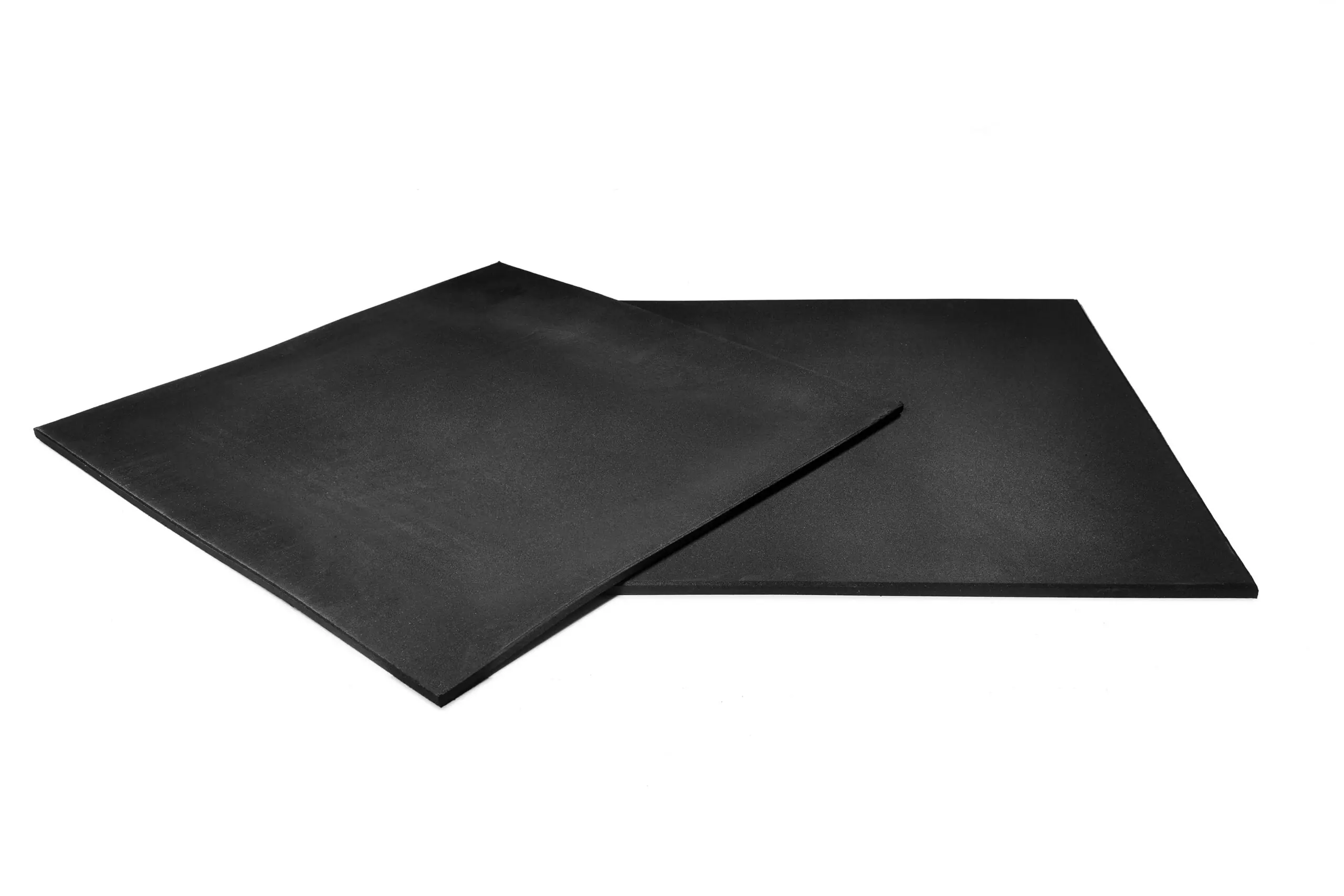
Choosing rubber sports flooring is a specification exercise, not a brand contest: you need a documented reaction-to-fire class, a thickness matched to each zone, a repair method that does not close the room, and a price per square metre you can put in a budget today. Light In Fitness publishes prices from 17.00 EUR excluding VAT per m2 for a 10 mm training tile to 78.00 EUR excluding VAT per m2 for a 60 mm shock-absorbing tile, with fire classifications stated on each product page and a 12-year warranty on rubber tiles. Regupol is a long-established German manufacturer of sports surfaces — athletics tracks, plus the everroll and dynamic fitness ranges — supplied through technical documentation and quotation. This guide sets out how to score either offer.
Start with the standards, not the product
Three references frame almost every indoor sports floor specification in Europe:
- EN 14904 — surfaces for indoor multi-sports areas: shock absorption, vertical deformation, ball behaviour, slip resistance. Relevant where the room hosts court sports as well as training.
- EN 13501-1 — reaction-to-fire classification. For floorings the classes read Afl to Ffl with smoke sub-classes s1 and s2. In publicly accessible premises the specification is typically Cfl-s1, and the safety file will require the evidence.
- EN 1177 — impact attenuation and critical fall height, which applies when the surface sits under equipment people can fall from, indoors or outdoors.
Machines placed on the floor are covered separately by EN ISO 20957-1:2024, class S for professional and commercial use. Getting the floor class right and the equipment class wrong is a common and expensive mistake in tender documents.
Published prices per square metre
| Product | Thickness | Fire class | Price excluding VAT |
|---|---|---|---|
| Training tile, black, 100 x 100 cm | 10 mm | — | 17.00 EUR / m2 |
| Rubber tile, fine grain, 100 x 100 cm | 15 mm | — | 22.00 EUR / m2 |
| High-density tile, 1000 kg/m3 | 20 mm | — | 26.00 EUR / m2 |
| Pro Flow Mat, smooth finish | 20 mm | — | 30.00 EUR / m2 |
| Rubber tile, 100 x 100 cm | 20 mm | Cfl-s1 | 42.00 EUR / m2 |
| Wood-effect tile, oak or grey | 20 mm | — | 42.00 to 49.00 EUR / m2 |
| Rubber tile, black flecked white | 20 mm | Bfl-s1 | 45.00 EUR / m2 |
| High-density tile | 25 mm | — | 32.00 EUR / m2 |
| Rubber tile | 25 mm | Dfl-s1 | 45.00 EUR / m2 |
| Functional training tile | 40 mm | — | 38.50 EUR / m2 |
| Rubber tile | 40 mm | Dfl-s1 | 58.00 EUR / m2 |
| Pro Flow Mat, weightlifting grade | 40 mm | — | 60.00 EUR / m2 |
| Premium shock-absorbing tile | 42 mm | Cfl-s1 | 64.00 EUR / m2 |
| Shock-absorbing tile, SBR | 50 mm | Efl | 65.00 EUR / m2 |
| Shock-absorbing tile, SBR | 60 mm | Efl | 78.00 EUR / m2 |
| Interlocking rubber pavers, 35 pieces | — | — | 58.00 EUR / m2 |
| Puzzle tile, low VOC rating A+ | 7 mm | Cfl-s2 | 65.00 EUR / m2 |
| Martial arts puzzle mat | 30 / 40 / 50 mm | — | 28.00 / 36.00 / 45.00 EUR / m2 |
| Edge trim profile, 20 mm / 40 mm | — | — | 6.30 / 10.40 EUR per piece |
Regupol does not publish list prices for its fitness ranges; the buying route is a request to the manufacturer or an approved supplier. That is a normal specification-led model and works well on large prescribed projects. It is simply slower when an operator needs three comparable figures before a board meeting.
Thickness by zone: the specification that actually prevents damage
A single thickness across a whole facility is either over-specified in the cardio area or under-specified in the lifting area. Zone it:
| Zone | Recommended thickness | Why |
|---|---|---|
| Cardio and selectorised machines | 20 mm | Point-load distribution under machine feet, vibration damping, easy cleaning |
| Free weights, dumbbell area | 20 to 25 mm | Occasional drops from low height, sub-floor protection |
| Drop zones, weightlifting platforms | 40 mm and above | Repeated impact of loaded barbells, structural noise transmission |
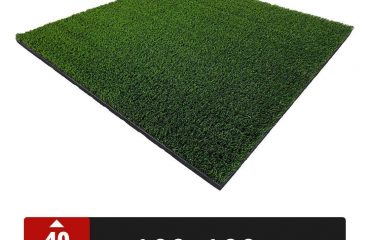
| Functional and sled lanes | Synthetic turf on rubber base | Sled glide, sprint traction, reduced wear on rubber |
| Martial arts and floor work | 30 to 50 mm puzzle mat | Fall attenuation, EN 12503 mat categories where mats are also used |
| Reception, corridors, studio | 7 to 15 mm | Comfort and acoustics without unnecessary build-up height |
Two practical rules that save money later: never step the floor level between adjacent zones without an edge trim, and always confirm that the total build-up height still allows doors to swing and thresholds to comply.
Loose-laid tiles versus bonded sheet: the maintenance argument
This is a systems comparison rather than a brand comparison — most serious manufacturers, including Regupol, offer both formats.
- Bonded sheet or roll gives a seamless surface with excellent acoustic continuity and is often the right answer for large, uniform halls. Localised damage means cutting out, re-bonding and living with a visible joint, and the room is out of use while the adhesive cures.
- Loose-laid interlocking tiles can be lifted and replaced one at a time. A friction burn under a treadmill, a gouge from a dropped plate or an oil stain becomes a five-minute swap, and there is no adhesive curing time on installation day either.
- The reserve stock rule: whichever system you choose, buy 3 to 5% extra at the time of order, from the same production batch. Rubber colour batches drift, and a repair with a visibly different tile is a repair everybody notices.
Light In Fitness publishes a 12-year warranty on its rubber tiles and supplies them loose-laid with cut-to-size edges, so replacement is unitary.
Worked budget: a 400 m2 training facility
| Zone | Area | Specification | Cost excluding VAT |
|---|---|---|---|
| Cardio | 120 m2 | 20 mm Cfl-s1 at 42.00 EUR | 5,040.00 EUR |
| Selectorised and free weights | 150 m2 | 25 mm high density at 32.00 EUR | 4,800.00 EUR |
| Drop zone | 60 m2 | 40 mm at 60.00 EUR | 3,600.00 EUR |
| Functional lane | 40 m2 | Synthetic turf lane at 33.00 EUR | 1,320.00 EUR |
| Studio | 30 m2 | 7 mm Cfl-s2, VOC rating A+ at 65.00 EUR | 1,950.00 EUR |
| Total materials | 400 m2 | — | 16,710.00 EUR |
Materials only. Sub-floor preparation, delivery, laying, edge trims and reserve stock are quoted separately and typically add 20 to 35% on a refurbishment. Treat this as a project estimate, not a quotation.
Five questions to put to any flooring supplier in writing
- What is the EN 13501-1 class of the exact product proposed, and can you send the classification report rather than a marketing claim?
- What density (kg/m3) and what binder are used? Density predicts indentation resistance under machine feet.
- What is the warranty duration and what does it exclude — indentation, colour fade, joint opening?
- What is the repair procedure and the lead time for matched replacement stock?
- Who is responsible if a problem occurs at the interface between the floor and the equipment — vibration under a treadmill, indentation under a rack, an anchor drilled through the tile?
That last question is the structural difference between a flooring specialist and a full-project supplier. Light In Fitness quotes floor, machines, rigs and installation in a single package, so interface responsibility sits with one party.
Which route for which project
- Fitness club, functional training box, weight room — zoned tiles, loose-laid, replaceable individually, priced per m2 today, quoted with the equipment.
- Local authority, school, care home, university — specify Cfl-s1 and ask for the classification report up front; a published warranty duration is easier to score in a tender than an unquantified claim.
- Athletics track or stadium surface — the specialist track manufacturers, Regupol among them, are the right route for that specific work.
- Architect or specifier — request full technical sheets with density, thickness range, fire class and acoustic data for every product before writing the specification.
Planning the equipment at the same time? See our comparisons of commercial treadmills and air bikes and air rowers.
Frequently asked questions
How much does rubber gym flooring cost per square metre?
Light In Fitness publishes from 17.00 EUR excluding VAT per m2 for a 10 mm training tile, 26.00 to 45.00 EUR for 20 mm depending on density and fire class, 38.50 to 60.00 EUR for 40 mm, and 78.00 EUR for a 60 mm shock-absorbing tile. Installation, sub-floor preparation and trims are additional.
What fire classification does a gym floor need?
In publicly accessible premises the usual specification is Cfl-s1 under EN 13501-1, and the safety file will require the classification evidence. Always check the class of the exact product and thickness proposed, because the class can differ between thicknesses of the same range.
What thickness of rubber tile do I need for a weightlifting area?
40 mm minimum under drop zones and lifting platforms, against 20 mm under cardio and selectorised machines. If barbells are dropped from overhead on a suspended slab, also check structure-borne noise transmission with the building engineer.
Are interlocking tiles better than bonded rolls?
They serve different purposes. Bonded rolls give a seamless surface for large uniform halls; loose-laid interlocking tiles can be replaced one at a time without closing the room and without adhesive curing time. For operators, unitary replacement over a ten-year life is usually the deciding factor.
How much spare flooring should I order?
Between 3 and 5% of the area, from the same production batch as the main order. Rubber colour varies between batches, so late replacements sourced separately rarely match.
Specifying a sports floor? Send us the room dimensions, the zones you need and the equipment that will stand on them. Light In Fitness returns a zoned layout with thicknesses, fire classes, quantities and prices per m2 excluding VAT within 24 working hours — and can quote the machines that go on top in the same package, with a 12-year warranty on rubber tiles and after-sales response within 48 working hours.
Related guides: street workout park equipment.
Réalisations documentées
- Dalles et sols sportifs : livraisons documentées – plusieurs chantiers
- Sol sportif extérieur, square Georges-Vallerey – Taverny (95)
Sources et références
- Arrêté du 19 avril 2011 – étiquetage des produits de construction ou de revêtement de mur ou de sol sur leurs émissions de polluants volatils (Légifrance)
- Ministère de la Transition écologique – étiquetage des produits de construction : classes d’émission A+ à C
- Code du sport, articles R322-4 à R322-43 – garanties d’hygiène et de sécurité applicables aux établissements d’activités physiques et sportives (Légifrance)