Recycled rubber tiles: which environmental claims stand up in a tender
Short answer: recycled rubber tiles are a genuine circular-economy product — the body is made from SBR granulate recovered from end-of-life tyres, pressed with a polyurethane binder — but only three of the claims commonly made about them survive contact with a tender evaluator: documented recycled content, service life beyond ten years in commercial use, and tile-by-tile repairability. “100% recyclable” and “fully circular” do not. This guide separates the defensible arguments from the greenwashing, and shows how to turn the defensible ones into award criteria under EU and UK procurement rules.
What is actually recycled in a rubber tile
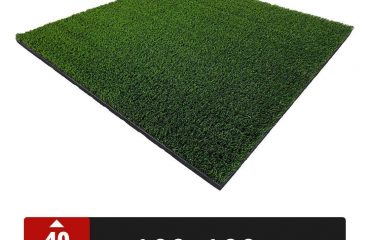
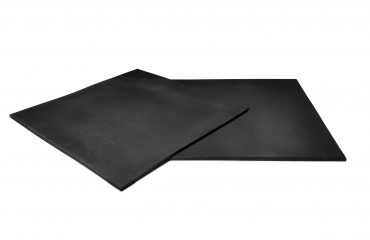
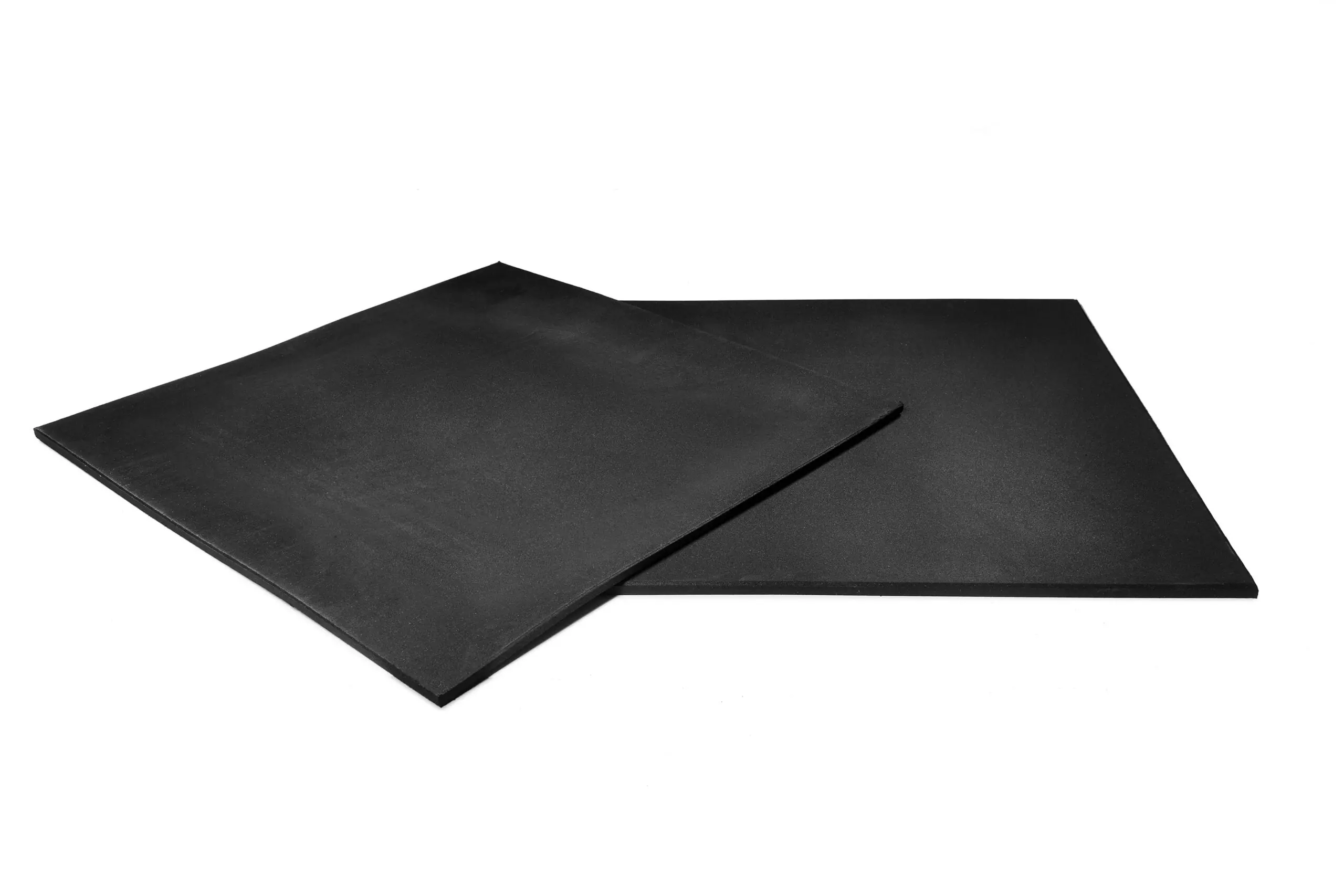
A standard sports tile is manufactured from SBR (styrene-butadiene rubber) granulate produced by shredding used tyres, bound under press with a polyurethane resin. Density typically runs from 900 to 1,000 kg/m³ depending on the reference, with technical ranges at 1,000 kg/m³ — that density is what delivers compressive strength and shock absorption. Coloured finishes normally add a through-coloured EPDM wear layer over the recycled SBR body.
Two honest qualifications separate a credible technical memorandum from marketing copy:
- The polyurethane binder is not recycled. Depending on the reference it represents roughly 6 to 12 per cent by mass.
- An end-of-life tile is not recycled in closed loop everywhere. Recovery depends on local waste streams, and in most European countries a used bound tile goes to energy recovery rather than back into new tiles.
So the strongest and most defensible claim is: recycled raw material with a long, documented service life. Not circularity.
Durability is the most measurable environmental argument
The lowest-impact floor is the one you do not replace. Three structural properties do the work:
- Service life — over ten years in commercial use with an appropriate cleaning regime, against three to five years for a light-duty foam or PVC solution in the same traffic.
- Unit repairability — a damaged tile is replaced on its own, without redoing the zone. A poured or sheet floor cannot be repaired invisibly.
- Re-use — a loose-laid, non-bonded floor can be lifted and reinstalled elsewhere, which matters for a tenant operator with a break clause.
Over a full life cycle these three usually outweigh the recycled-content percentage itself. If your tender allows life-cycle costing under Article 68 of Directive 2014/24/EU, this is the argument to build it on.
Health and compliance: the documents to demand
Recycled rubber has been the subject of genuine health scrutiny, mostly around loose infill granulate on synthetic turf pitches. The EU response was Regulation (EU) 2021/1199, which amended REACH Annex XVII to restrict the polycyclic aromatic hydrocarbon (PAH) content of granules and mulches used as infill in synthetic turf and in loose form on playgrounds.
Bound tiles are a different product — the granulate is encapsulated in the binder — but the buyer’s reflexes should not change. Ask every supplier for the same file:
- Technical datasheet stating composition, density in kg/m³, thickness tolerance and dimensional stability.
- Safety data sheet.
- Reaction-to-fire classification to EN 13501-1, with the test report from a notified body — the flooring classes are Afl to Ffl with an s1 or s2 smoke suffix.
- Impact attenuation to EN 1177 with the certified critical fall height, where the floor sits under playground or outdoor fitness apparatus.
- Where the surface serves indoor multi-sport use, the relevant EN 14904 characteristics.
- Declared recycled content by mass, and the method used to establish it.
A supplier who cannot produce these should be excluded, and that exclusion is defensible. Our guide to labels and certifications in tenders covers how to word the requirement so it survives challenge.
Reading the numbers: what you get for what you pay
The table below uses current Light In Fitness catalogue prices, excluding VAT, per square metre for 1 x 1 m tiles. It shows how fire classification and thickness — not the recycled-content claim — drive price.
| Reference | Thickness | Key certification | Price per m² (excluding VAT) |
|---|---|---|---|
| Training tile, black | 10 mm | Standard, low-impact zones | 17.00 EUR excluding VAT |
| Fine-grain tile, black | 15 mm | Standard | 22.00 EUR excluding VAT |
| High-density tile 1,000 kg/m³ | 20 mm | Standard | 26.00 EUR excluding VAT |
| High-density tile 1,000 kg/m³ | 25 mm | Standard | 32.00 EUR excluding VAT |
| Fire-classified tile | 20 mm | Cfl-s1 to EN 13501-1 | 42.00 EUR excluding VAT |
| Fire-classified tile | 20 mm | Bfl-s1 to EN 13501-1 | 45.00 EUR excluding VAT |
| Premium shock-absorbing tile | 42 mm | Cfl-s1 to EN 13501-1 | 64.00 EUR excluding VAT |
| Fine-grain shock pad tile | 60 mm | Efl, high fall height | 78.00 EUR excluding VAT |
Note the arbitrage: moving from a standard 20 mm tile to a Bfl-s1 classified 20 mm tile costs about 19.00 EUR per m² more and buys you a document that public venues need. Moving from 20 mm to 60 mm buys fall-height performance, not fire performance. Confusing the two is the most common specification error we see. See fire-rated rubber tiles and tile density.
Turning the argument into award criteria
Under Directive 2014/24/EU a contracting authority may set environmental technical specifications (Article 42), require labels as proof (Article 43), use life-cycle costing (Article 68) and weight environmental performance in the award criteria. In the United Kingdom the Procurement Act 2023 framework gives comparable room, and the CMA Green Claims Code sets the bar for what a supplier may assert. In both jurisdictions the same principle applies: the criterion must be linked to the subject matter, measurable and verifiable.
| Buyer profile | What works as a criterion | What to avoid |
|---|---|---|
| Public authority | Declared recycled content by mass; warranty length in years; guaranteed availability of single replacement tiles in years; EN 13501-1 class; EN 1177 certified critical fall height; distance from supply point in km | Statements of principle with no unit of measurement — unscoreable and easily challenged |
| Corporate or workplace gym | Attach the floor to the responsible-purchasing section of the ESG or wellbeing programme, with datasheets on file | Publicising an “eco-friendly” floor with no supporting document |
| Private club or operator | Facts you can evidence to members: recycled raw material, service life, tile-level repairability | “100% recyclable” — legally risky and factually wrong for a bound tile |
The EU has also tightened the rules on generic environmental claims in commercial communication, and a claim you cannot evidence is now a liability rather than a differentiator. Our note on environmental award criteria in public procurement gives model wording.
Frequently asked questions
What is a recycled rubber tile made of?
SBR granulate from shredded end-of-life tyres, press-bonded with a polyurethane resin binder. Coloured versions add a through-coloured EPDM wear layer over the recycled body. Density is typically 900 to 1,000 kg/m³, and that density determines compressive strength and shock absorption more than any other single parameter.
Are recycled rubber tiles safe?
Bound tiles encapsulate the granulate in the binder, unlike the loose infill whose PAH content was restricted by Regulation (EU) 2021/1199 amending REACH Annex XVII. The correct approach is documentary: request the technical datasheet, the safety data sheet, the EN 13501-1 reaction-to-fire report from a notified body, and EN 1177 certification where the floor sits under apparatus.
Can I claim a rubber tile is recyclable at end of life?
Not without qualification. The raw material is recycled; recovery of the used tile depends on local waste infrastructure and in most cases means energy recovery rather than closed-loop recycling. The defensible environmental arguments are the recycled input, the service life beyond ten years and tile-by-tile repairability.
Does recycled content count in a European public tender?
Yes, provided it is expressed as a measurable, verifiable criterion linked to the subject matter of the contract. Directive 2014/24/EU allows environmental technical specifications, labels as means of proof and life-cycle costing. Vague statements of environmental intent are not scoreable and are the most frequent ground for a challenge.
Does a thicker tile mean a better environmental profile?
No. Thickness buys shock absorption and fall-height performance; fire classification buys compliance in public venues; density buys durability. A 60 mm tile is not “greener” than a 20 mm one — specifying more thickness than the use case needs simply puts more material into the building.
Building a specification or answering a tender? We supply the full documentary file — composition, declared recycled content, EN 13501-1 classification reports, EN 1177 certification and warranty terms — with every quotation, so the environmental criteria in your dossier are evidenced rather than asserted. Tell us the surface area, the use case and the fire requirement, and we will return a schedule and a delivered price excluding VAT. See the sports flooring range or request the technical pack.
Réalisations documentées
- Dalles et sols sportifs : livraisons documentées – plusieurs chantiers
- Sol sportif extérieur, square Georges-Vallerey – Taverny (95)
Sources et références
- Code de la commande publique – texte intégral en vigueur (Légifrance)
- Direction des affaires juridiques, ministère de l’Économie – réglementation de la commande publique et fiches techniques
- Arrêté du 19 avril 2011 – étiquetage des produits de construction ou de revêtement de mur ou de sol sur leurs émissions de polluants volatils (Légifrance)
- Ministère de la Transition écologique – étiquetage des produits de construction : classes d’émission A+ à C