Why Rubber Wall Tiles Slow and Trap Bullets in Ranges
Les dalles murales de sécurité en caoutchouc ralentissent le projectile par déformation élastique, puis le piègent dans la masse pour éviter tout ricochet. C'est cette double fonction qui les distingue d'un simple revêtement de protection. Elles équipent les stands de tir sportif, de loisir et d'entraînement.
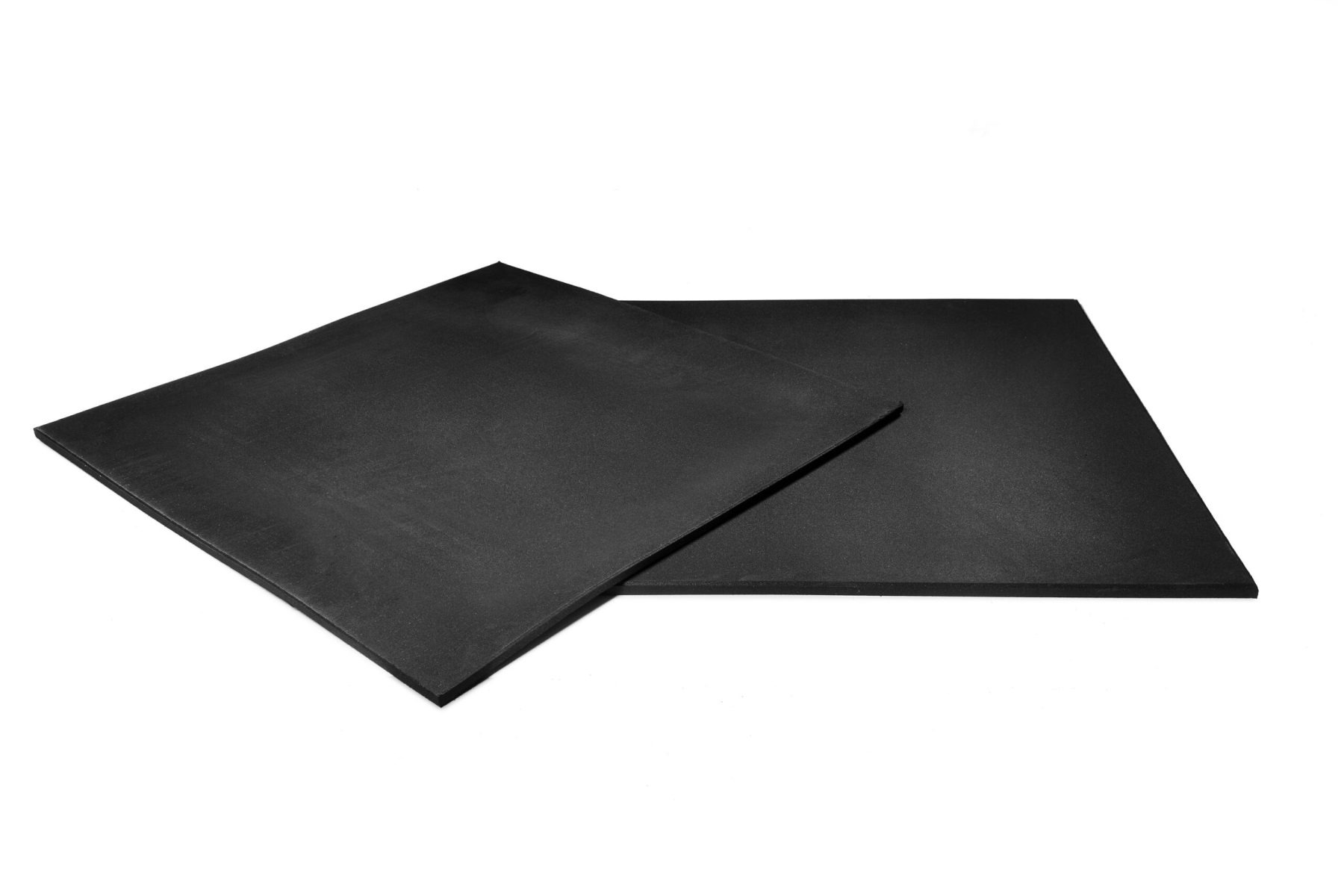
Rubber safety wall tiles play a central role in making a shooting range safe, whether the range is used for sport shooting, recreational shooting, club training or more demanding practice such as competition and precision disciplines. Their design serves one clear objective: protecting people and installations from impacts, while improving comfort of use, acoustics in particular.
These tiles are designed to handle different types of projectile and ammunition, from air rifle pellets through to more powerful cartridges, and including handguns. Rubber is frequently chosen for its absorption properties, its resilience and its ability to reduce rebound. In short, the tile slows the projectile through elastic deformation, then traps it in the mass so that no ricochet leaves the wall. That double function is what separates a safety wall tile from a simple protective lining.
Why use rubber wall tiles in a shooting range?
1. Absorbing impact energy
The first reason is simple: rubber has an excellent capacity to absorb the energy of a projectile at impact. That allows you to:
- limit damage to the walls
- reduce the transmission of shock into the structure
- extend the service life of the installation
Whether the range fires air rifle pellets or more energetic ammunition, the objective stays the same: contain the impact and limit the secondary effects.
2. Reducing noise
In a shooting range, the acoustics are rarely comfortable by default. Shots generate high sound levels, and hard surfaces encourage resonance.
Rubber tiles contribute to:
- attenuating part of the decibels produced by impacts
- improving the overall acoustics of the range
- reducing auditory fatigue, alongside individual hearing protection, which remains mandatory
The gain in comfort is real, particularly during long sessions or in an enclosed range.
3. Limiting rebound and accident risk
This is the major point: safety. Rigid surfaces can encourage ricochets or secondary projections. Rubber wall tiles are designed to:
- trap or slow projectiles
- minimise the risk of rebound
- reduce accidents linked to imprecise shots, unfavourable angles or certain types of ammunition
This matters particularly in the areas where a shot can leave the target zone, through aiming error, stress or inexperience.
4. Protecting the sensitive areas of the firing line
These tiles are usually installed strategically, on the areas at risk:
- side partitions
- walls close to the firing points
- surfaces exposed to deflected shots
They act as a passive safety barrier: even when a shot is imprecise, the range stays better protected.
5. Durability and simplified maintenance
Rubber wall tiles are generally valued for:
- their resistance over time
- their ability to take repeated impacts
- relatively simple maintenance: inspection, cleaning, replacement zone by zone
Regular checks on the condition of the material, covering wear, deformation and fixings, keep the safety level high.
How to integrate and use these tiles correctly
1. Identify the areas to protect first
Before installation, determine the most exposed areas:
- side walls of the firing points
- zones behind and around the targets
- transition zones where a shot can deviate
The point is not necessarily to cover everything, but to secure the sensitive points intelligently.
2. Match the solution to the type of practice
A shooting range does not have the same requirements depending on:
- the type of weapons used
- the power of the calibres
- the frequency of use
- the configuration, indoor or outdoor
The choice of tile, in thickness, density and structure, has to match the real use of the range.
3. Ensure compatible fixings and substructure
Wall tiles work better still when they form part of an overall design:
- appropriate supports
- reinforced walls where necessary
- possible combination with other linings, metallic or technical, depending on the zone
Clean, stable installation is essential: a poorly fixed tile loses effectiveness and degrades faster.
4. Add acoustic insulation if required
Rubber tiles contribute to the acoustics, but they can be combined with:
- floating structures
- sound insulation
- solutions that treat resonance
This improves overall comfort, especially in an enclosed range.
5. Put a regular inspection routine in place
To guarantee continuous safety:
- frequent visual inspection
- checking of fixings and integrity
- replacement of zones that are too damaged
Clubs and range managers are generally bound by safety requirements and by the recommendations of the national shooting authority or federation applicable to their country. Maintenance contributes directly to compliance and to prevention.
The floor is part of the same system
Wall protection is only half of the specification. The floor of the firing line takes falling cases, dropped equipment and heavy foot traffic, and in enclosed ranges it also carries a fire-behaviour requirement. Our article on shooting range flooring covers that side of the project, and the full rubber tile range includes the thickest formats, such as the 42 mm premium rubber tile in Cfl-s1. Specify the fire class of the floor against the requirement that applies to your building; do not assume the wall and floor requirements are identical.
Conclusion
Rubber safety wall tiles are not an accessory: they are a key element in making shooting safer, more comfortable and more durable. They absorb impact energy, reduce noise and limit rebound, while protecting the infrastructure of the range.
Installed correctly, matched to real use and maintained regularly, they reinforce not only the performance of the installation but above all the safety of shooters, beginners and experienced alike, as part of responsible practice.
Frequently asked questions
Why are these tiles designed to slow and trap projectiles?
The aim is to reduce risk inside the range: rubber helps absorb energy at impact and limit secondary effects, rebounds and ricochets in particular, while protecting the walls.
How does rubber improve safety compared with a hard wall?
Rigid surfaces can encourage ricochets or secondary projections. Rubber wall tiles are designed to slow and trap more effectively and to minimise the risk of rebound, particularly when a shot leaves the target zone.
Do these tiles also reduce noise?
Yes. They help attenuate part of the decibels linked to impacts and improve overall acoustics, which can reduce auditory fatigue, alongside individual hearing protection.
Which areas of the range are most concerned by wall protection?
The typical zones are side partitions, walls close to the firing points and surfaces exposed to deflected shots. The idea is to secure the sensitive points intelligently, without necessarily covering everything.
Are these tiles suitable for every type of practice?
Requirements vary with the type of weapons, the power, the frequency of use and the indoor or outdoor configuration. The choice of tile, in thickness, density and structure, must stay consistent with the real use of the range.
Do wall tiles replace the other safety devices of the range?
No. They are complementary protections that contribute to overall safety, covering walls, sensitive zones and comfort. A compliant installation is reasoned as a system and relies on the recommendations and obligations applicable to the site.
Is a specific substructure needed behind the tiles?
They work better when integrated into an overall design: appropriate supports, reinforced walls where necessary, and sometimes a combination with other technical linings depending on the zone. Stable fixing is essential.
Can the acoustics be improved further?
Yes. Rubber tiles can be combined with sound insulation, resonance treatment solutions or adapted structures, especially in an enclosed range.
What maintenance keeps the safety level up?
Rubber is valued for its durability and relatively simple maintenance: inspection, cleaning and replacement zone by zone. Regular checks on wear, deformation and fixings help maintain safety over time.
How often should the tiles be checked?
A regular routine is recommended: frequent visual inspection, verification of integrity and fixings, and replacement of zones that are too damaged. Maintenance also contributes to compliance and prevention.
Specifying the protection for your range
Every range is different in calibre, layout, frequency of use and building constraints, and the tile specification follows from those variables rather than from a catalogue reference. Light In Fitness has manufactured and supplied professional rubber flooring and protection since 2013. Send us your range layout, the disciplines practised and the calibres in use, and we will come back with a costed specification: request a quote.
Réalisations documentées
- Dalles et sols sportifs : livraisons documentées – plusieurs chantiers
- Sol sportif extérieur, square Georges-Vallerey – Taverny (95)
Sources et références
- Arrêté du 19 avril 2011 – étiquetage des produits de construction ou de revêtement de mur ou de sol sur leurs émissions de polluants volatils (Légifrance)
- Ministère de la Transition écologique – étiquetage des produits de construction : classes d’émission A+ à C