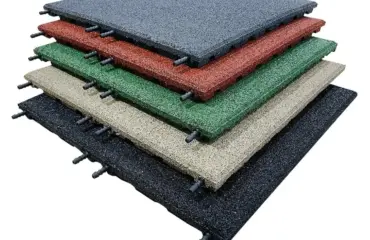
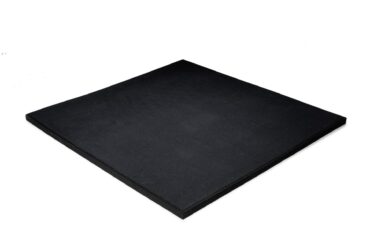
Which Sectors Use 25 mm Shock-Absorbing Rubber Tiles?
Une dalle caoutchouc de 25 mm couvre les usages où la charge est posée mais non lâchée : plateau machines, salle polyvalente, atelier, local technique et zone de circulation. En dessous de cette épaisseur, la protection du béton devient insuffisante sous matériel lourd ; au-dessus, l'épaisseur répond aux charges lâchées. Elle constitue le compromis le plus courant hors zone de levée.
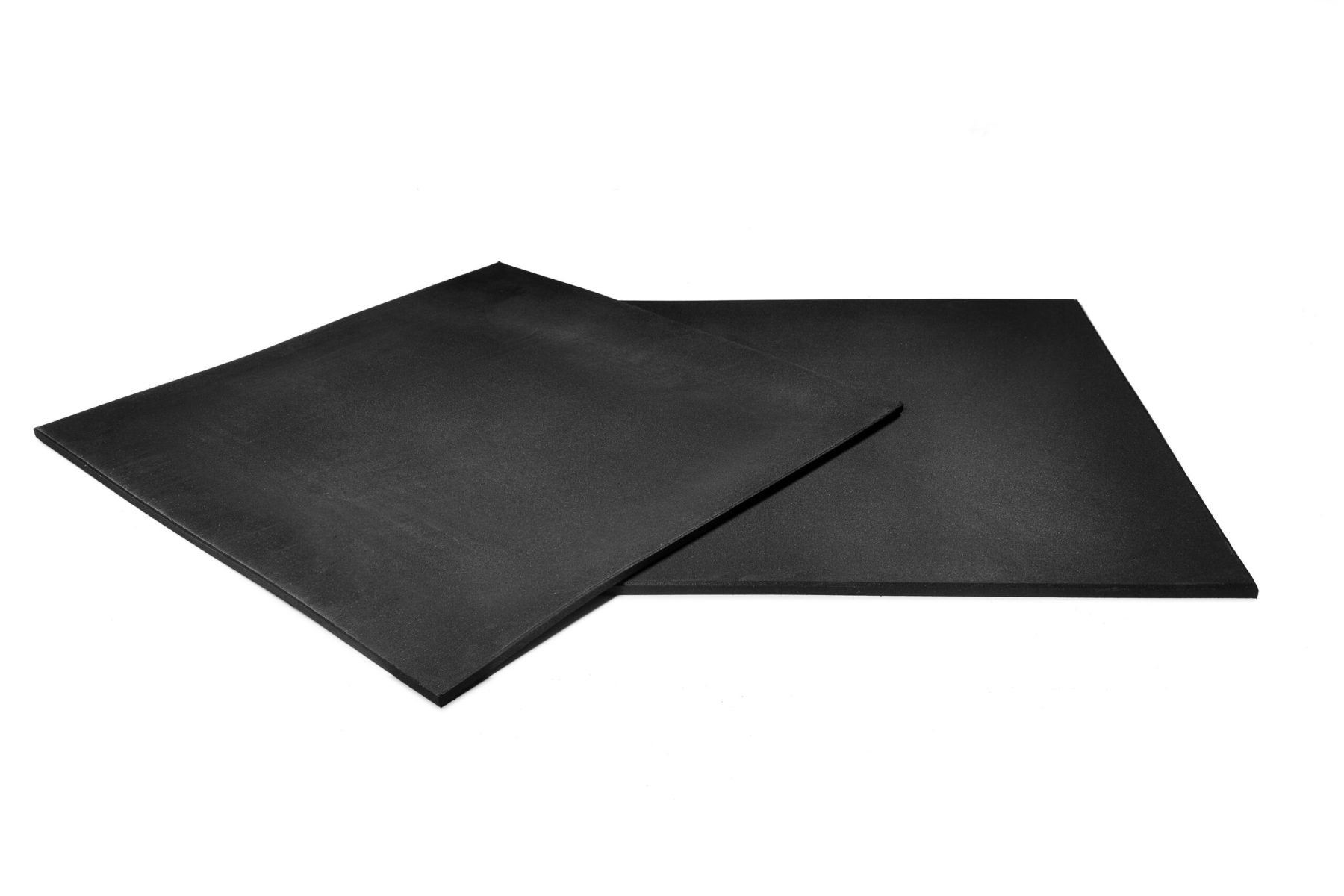
Wondering which sectors and activities actually call for a 25 mm shock-absorbing rubber tile? It is the most frequently specified thickness in our range, and not by accident: 25 mm covers every situation where a load is put down but not dropped. Below that thickness, protection of the concrete slab becomes insufficient under heavy equipment; above it, you are paying for the extra depth that dropped loads require. Outside a dedicated lifting platform, 25 mm is the usual compromise.
Our 25 mm rubber tile in 100 x 100 cm is built for that job. Below, sector by sector, is where it earns its place.
Choosing the thickness: where 25 mm sits
| Thickness | What it is for |
|---|---|
| Under 25 mm | Comfort and acoustic layers only. Protection of the concrete slab becomes insufficient once heavy equipment stands on it. |
| 25 mm | Loads that are placed but not dropped: machine floors, multipurpose rooms, workshops, plant rooms, circulation areas. |
| 40 to 60 mm and above | Heavier constraints: dropped loads, repeated impacts from weightlifting, more intense traffic, specific safety requirements. |
If you are unsure which zone needs what, our guide to rubber tile thickness zone by zone works through a full floor plan.
Sport and fitness, indoor
- Strength training rooms: dumbbell zones, racks, free weights – slab protection plus noise and vibration control.
- Functional and cross-training: WOD areas, kettlebells, medicine balls.
- Cardio: under treadmills, rowers and bikes, to cut noise and micro-vibration.
- Coaching studios: small studios, personal training rooms, training boxes.
- Club and association spaces: annexe dojos, sport-oriented multipurpose rooms.
Sport and fitness, outdoor and semi-outdoor
- Covered outdoor training areas: canopies, awnings, sports pergolas.
- Street workout and fitness trails, where a more comfortable and, depending on the installation, free-draining surface is wanted.
- Physical preparation areas in stadiums: sheltered spaces, service corridors.
Note that permanently installed outdoor fitness equipment is itself covered by EN 16630; the surface underneath is specified separately, against the use and the installation method.
Local authorities and public buildings
- Multipurpose halls: low-impact activity zones or localised protection.
- Primary and secondary schools: motor skills areas, light gymnastics, impact prevention zones.
- Town halls and community centres: multi-use rooms, clubs and workshops.
Early years and education
At 25 mm you are generally looking at comfort and moderate protection according to the use, not at a high fall height playground surface.
- Nurseries and day care: motor skills corners, quiet play areas.
- Pre-schools: movement workshops, indoor sports corners.
- After-school and holiday activity centres: activity zones, simple circuits, supervised games.
A word of caution here, because it is where specification goes wrong most often: a 25 mm tile is not a playground impact-attenuating surface. Playground surfacing is designed against EN 1177 and dimensioned by critical fall height, while the play equipment itself falls under EN 1176-1. Never carry an outdoor adult fitness specification across to children’s equipment.
Healthcare, rehabilitation and allied health
- Physiotherapy and rehabilitation: standing work, proprioception, light strengthening.
- Exercise-for-health practices: gentle circuits, fall prevention, joint comfort.
- Rehabilitation centres: exercise zones, balance workshops, according to protocol.
Wellbeing, yoga and dance: comfort and acoustics
- Yoga and Pilates studios: underfoot comfort and sound insulation, often beneath a finishing surface.
- Dance and floor barre: as a shock-absorbing underlay, depending on the top covering.
- Relaxation and meditation rooms: reduced resonance and noise.
Industry and workshops: protection and ergonomics
- Standing workstations: anti-fatigue comfort in the working zone.
- Workshops: light handling areas, benches, walkways.
- Concrete slab protection against impact and abrasion, under moderate mechanical use.
- Plant areas: machine rooms, maintenance corridors, with vibration reduction.
Logistics, storage and warehousing: targeted use
- Picking zones, where operators stand for long periods.
- Pedestrian aisles: comfort and slip resistance.
- Under machinery: vibration reduction.
- Under pallets and buffer zones, where traffic is light. Heavier traffic means adapting thickness, density and finish.
Construction sites and temporary protection
- Floor protection during works: corridors and access routes.
- Protection of fragile surfaces: tiling, parquet.
- Cutting and drilling zones: scratch protection and noise reduction.
- Equipment bases: compressors, light machinery, mobile benches.
Offices, retail and services: acoustics and comfort
- Under noisy equipment: industrial printers, machines.
- Back office and stockrooms: light handling zones.
- Behind the scenes in shops: standing comfort, noise control.
- Showrooms: a clean, robust technical floor, depending on the look you want.
Hotels, leisure and tourism
- Hotel fitness rooms: strength and cardio zones.
- Plant areas: laundry, machine rooms.
- Activity spaces: activity rooms, courses, clubs.
Events and staging: rigging and derigging
- Floor protection during events: trade fairs, exhibitions.
- Under structures: podiums, racks, flight cases.
- Backstage: noise reduction and protection.
Automotive, garages and detailing: targeted use
- Workshop zones: standing comfort, tool handling.
- Under jacks and axle stands: slab protection and stability, according to the tile and the installation.
- Interior cleaning bays, where the tile and the installation are compatible with water and drainage.
Residential and private premises
- Private training rooms: strength work, rower, bike, treadmill.
- Garages: DIY zone, bench, storage.
- Utility and plant rooms: appliance vibration and noise reduction.
- Under above-ground pools and spas: greater thicknesses are usually specified here depending on the constraints, but 25 mm can serve as a comfort layer.
Frequently asked questions
Which sectors use 25 mm shock-absorbing rubber tiles most often?
25 mm is used wherever a floor needs to be more comfortable, more protective and quieter: sport indoor and outdoor, local authorities, early years and education, healthcare and rehabilitation, wellbeing, industry and workshops, logistics, construction, offices and retail, hotels and leisure, events, garages, and private premises.
Why choose 25 mm rather than another thickness?
25 mm is usually the sound compromise: thick enough to improve comfort and absorb part of the impact and vibration, without moving up to the heavier 40 to 60 mm thicknesses reserved for the most demanding constraints.
What does a 25 mm tile do in an indoor gym?
It is used in strength rooms (dumbbell zones, racks, free weights) to protect the slab and cut noise and vibration, in functional and cross-training areas, under cardio machines to limit micro-vibration, and in coaching studios and multipurpose club rooms.
Does 25 mm make sense outdoors or semi-outdoors?
Yes, on sheltered or partly covered areas such as canopies, awnings and sports pergolas, and on street workout or fitness trail spaces where a more comfortable surface is wanted, depending on the installation and the drainage.
Do schools and multipurpose halls use 25 mm?
Yes: multipurpose halls, primary and secondary schools with motor skills and light gymnastics zones, town halls, community centres and multi-use rooms. The aim is usually localised protection and better comfort rather than a full sports surface.
Is 25 mm enough for early years settings?
25 mm is generally treated as comfort plus moderate protection: motor skills corners, quiet play areas, movement workshops. Playground zones with a real fall height are dimensioned differently, against EN 1177 and the critical fall height of the equipment.
What are the typical healthcare uses?
Physiotherapy and rehabilitation (proprioception, light strengthening, standing work), exercise-for-health practices (gentle circuits, fall prevention) and rehabilitation centres (exercise and balance zones, according to protocol).
Why put 25 mm rubber into an industrial workshop?
For comfort at standing workstations, in workshop and light handling zones, to protect a concrete slab against impact and abrasion under moderate use, and to reduce vibration in plant areas.
Does it work in logistics, offices, retail and events?
Yes, in targeted use: picking zones, pedestrian aisles and under machinery in logistics, depending on traffic; under noisy equipment, in stockrooms and behind the scenes in offices and retail; and for floor protection, under structures and backstage at events.
When should you move up to 40 to 60 mm or more?
When the constraints increase: heavy loads, repeated dropped weights in weightlifting, more intense traffic, or specific safety requirements. In those cases you adjust the thickness, the density and the finish to the real scenario rather than to a catalogue default.
Getting the specification right
The 25 mm tile is not a universal answer, it is a well defined one: it is what you install where the load is placed and not dropped. Everything else – a lifting platform, a playground, a heavy traffic aisle – is a different specification, and getting it wrong costs more than the tiles do. Browse the full range of rubber gym flooring tiles, or tell us the zone, the equipment and the surface area and we will specify it for you.
Request a free quote and our team will work through the floor plan with you.
Réalisations documentées
- Cage street workout ultime, Carcassonne – armée française
- Cage street workout ultime, Tahiti – armée française, Polynésie
- Cage SP Max, centre EPIDE de Combrée – établissement public d’insertion
- Cage SP Max, lycée Saint-Bénigne de Dijon – établissement scolaire
Sources et références
- Arrêté du 19 avril 2011 – étiquetage des produits de construction ou de revêtement de mur ou de sol sur leurs émissions de polluants volatils (Légifrance)
- Ministère de la Transition écologique – étiquetage des produits de construction : classes d’émission A+ à C
- Décret n° 96-1136 du 18 décembre 1996 – prescriptions de sécurité relatives aux aires collectives de jeux (Légifrance)
- NF EN 1176-1 – Équipements et sols d’aires de jeux, partie 1 : exigences de sécurité et méthodes d’essai générales (AFNOR)