Gym Acoustic Insulation: Anti-Noise Solutions for Shared Buildings
Noise is the number one problem for any gym installed inside a shared building. A hotel fitness suite above guest rooms, a residential facility with flats on the floor below, an office gym next to meeting rooms, a first-floor studio above retail tenants: in every one of those cases, the clatter of dropped dumbbells, the vibration of a treadmill and even footfall during an exercise turn into complaints, and complaints turn into restricted opening hours. This guide covers the solutions that make a strength area quiet enough to keep its lease.
Rubber tiles: the first acoustic barrier
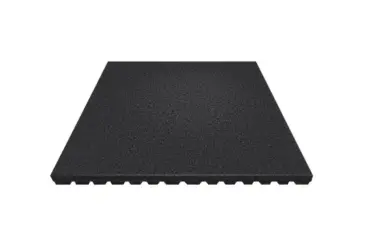
The floor is the starting point of any effective acoustic treatment. Rubber tiles are the most effective solution for attenuating impact noise, and no wall treatment compensates for getting them wrong.
Which thickness?
- 15 to 20 mm. Sufficient for light activity: yoga, stretching, cardio machines.
- 25 mm. The right choice for strength training with moderate loads.
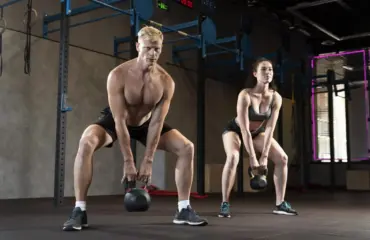
- 30 to 40 mm. Recommended for cross training, or wherever weights are dropped regularly.
Why density matters
The higher the density, the better the acoustic absorption. Professional tiles run at 950 to 980 kg per cubic metre. Entry-level tiles are frequently below 700 kg per cubic metre and deliver poor insulation, which is why two tiles of identical thickness can behave completely differently on the same slab.
Our rubber gym flooring tiles are supplied in professional densities, and the weightlifting rubber tiles cover the drop zones where the loads are highest. As a budget anchor, a 20 mm professional rubber tile in the 1 x 1 m format starts at 49.00 EUR excluding VAT.
Complementary techniques
Beyond the floor itself, several techniques improve the acoustic performance of a training space.
The multilayer build-up
For maximum insulation, layer materials: a rubber tile over a high-density foam mat. The combination absorbs impact noise and vibration at the same time, which a single layer rarely does. A dedicated acoustic underlay is the engineered version of the same principle and is the right answer where the structure below is sensitive.
Wall treatment
- Acoustic foam panels reduce reverberation inside the room.
- Heavy curtains absorb sound.
- Shelving carrying objects breaks up sound waves rather than reflecting them.
Anti-vibration pads
Place rubber or neoprene pads under machines: treadmills, cross trainers, racks. They isolate the equipment from the slab and considerably reduce the transmission of vibration into the structure, which is the part of the problem that travels furthest through a building.
Specifying by zone
| Zone | Activity | Recommended treatment |
|---|---|---|
| Studio and stretching area | Yoga, mobility, floor work | 15 to 20 mm rubber tile |
| Cardio row | Treadmills, bikes, cross trainers | 15 to 20 mm tile plus anti-vibration pads under each machine |
| Machine floor | Guided and plate-loaded strength | 25 mm tile |
| Free-weight and drop zone | Deadlift, Olympic lifts, cross training | 30 to 40 mm tile, multilayer build-up where the slab is shared |
| Perimeter walls | All | Acoustic panels and soft furnishings against reverberation |
Zoning the specification is what keeps the budget sensible. Laying 40 mm across an entire floor costs a great deal and solves nothing in the cardio row, while a uniform 20 mm leaves the drop zone unprotected, which is precisely where the complaint will come from. Where a continuous surface with fewer joints is preferable, rubber flooring rolls deliver the same acoustic function with a different installation logic.
Frequently asked questions
Can a strength area really operate in a shared building without disturbing the neighbours?
Yes, with an appropriate floor and a few precautions: a minimum of 25 mm under the machine floor, a rule against dropping weights outside the designated zone, and sensible operating hours agreed with the building.
Are rubber tiles enough on their own?
They are the essential base, but they can be completed with anti-vibration pads under the machines and an acoustic treatment of the walls for optimal insulation.
What budget should be allowed?
Allow in the region of 50 to 80 EUR per square metre for quality 25 mm rubber tiles, 50 to 150 EUR for anti-vibration pads and 100 to 300 EUR for wall acoustic panels where they are needed. Those are indicative planning figures; a quotation against your actual surface area and format will always be more precise.
Does density really change the result?
Yes, considerably. At equal thickness, a tile at 950 to 980 kg per cubic metre absorbs far better than one under 700 kg per cubic metre. Density is the specification line to check before thickness.
Conclusion
Acoustic insulation is an essential investment for any gym sharing a structure with other occupants. Rubber tiles are the base, but a multilayer approach combining floor, pads and wall treatment is what guarantees complete quiet for the facility and for its neighbours.
Light In Fitness supplies a full range of professional rubber tiles in 20, 25 and 30 mm at densities chosen for acoustic absorption. Send us the surface area, the activities planned per zone and the structure below: request a quote.
Réalisations documentées
- Dalles et sols sportifs : livraisons documentées – plusieurs chantiers
- Sol sportif extérieur, square Georges-Vallerey – Taverny (95)