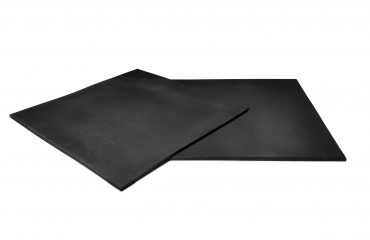
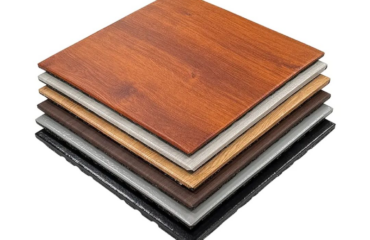
Rubber Gym Flooring Tiles: 2026 Buying Guide - Thickness, Density and Installation
Une dalle caoutchouc de salle de sport se choisit sur trois paramètres couplés : l'épaisseur, la densité et le mode de pose. Une dalle sous-dimensionnée génère vibrations, bruit de structure et dégradation accélérée du matériel posé dessus. Le sol conditionne la sécurité, l'acoustique et la durée de vie de l'ensemble du plateau.
By Michael Galy, Light In Fitness. Updated 27 July 2026. Reading time: 14 minutes.
The floor of a training facility is the foundation of everything above it: machines, sessions, safety, acoustics. An undersized tile produces vibration, noise, accelerated wear of the equipment standing on it and premature replacement. This guide covers what most content skips: choosing thickness zone by zone, the installation methods and what they mean five years later, the cleaning protocol that doubles service life, and the real budget at catalogue prices.
The short answer
Zone the floor instead of using one thickness everywhere: 15 mm in cardio, 20 mm in guided strength and circulation, 30 mm in the free weight area, 40 mm and above under barbell drops. Always glue in the weightlifting area; leave the rest floating if reversibility matters. Clean with a pH-neutral detergent, never with bleach and never with a pressure washer. Proper zoning costs around a quarter less than a single thickness across the whole floor, while protecting the critical areas better.
1. Thickness by zone, and the reasoning behind it
Most guides list thicknesses. Few explain what justifies them. The principle is simple: a tile absorbs because it deforms and then dissipates the energy, and its useful deformation capacity depends on its thickness and its density. A zone is therefore sized on the most severe impact that occurs in it, not on average use.
| Zone | Thickness | Dominant load | What happens if the tile is too thin |
|---|---|---|---|
| Cardio (treadmills, cross trainers, bikes) | 15 mm | Continuous vibration, running noise | Vibration transmitted into the concrete slab and the adjacent rooms. Impact noise being close to zero in cardio, oversizing brings no technical benefit. |
| Guided strength and circulation | 20 mm | Static loads, weight stack return, foot traffic | Permanent indentations under machine feet, stack return transmitted into the structure. |
| Free weights (benches, dumbbells, rowing) | 30 mm | Controlled setting down of dumbbells and bars | Chipped plate edges, marking of the concrete at repeated drop points, impact noise carrying to the floor above. |
| Drop zone and lifting platforms | 40 mm minimum | Loaded barbell released from the overhead position | The critical case: the concrete takes the hit directly, the bar bounces and rolls, the plates degrade. Move to 50 mm or more if loads regularly exceed 100 kg. |
| Functional and sled area | Artificial turf over an underlay | Horizontal traction, abrasion | Without an underlay the turf lifts and forms waves. |
| Mobility, stretching, floor work | 15-20 mm or tatami | Bodyweight, floor contact | A floor that is too hard discourages floor work; a tatami that is too soft flattens under the knees. |
| Outdoor (terrace, courtyard, apparatus) | According to the free height of fall | Free fall, water, UV, frost | As soon as a piece of equipment has a free height of fall above 60 cm, it is EN 1177 that governs the sizing, not comfort. |
The calculation that convinces a manager: over 60 m2 of weightlifting area, moving from 20 mm to 40 mm represents roughly 750.00 EUR excluding VAT of extra cost at catalogue prices. Repairing a cracked concrete slab runs into thousands, plus the closure of the area and the lost trading that goes with it. The trade-off is not a close call.
2. SBR, EPDM, dual-layer, vulcanised: the comparison with the real limits
| Material | Strengths | Real limitation | Ideal use |
|---|---|---|---|
| SBR recycled tyre granules bound with polyurethane |
Best absorption-to-price ratio, very good mechanical resistance, recycled material | A characteristic smell for a few weeks after installation, linked to volatile organic compounds. Black as standard. | Loaded areas, drop zones, circulation, anywhere technical performance outweighs appearance |
| EPDM synthetic rubber coloured throughout |
Multiple colours, neutral smell from day one, excellent UV resistance | Clearly more expensive at equal thickness. Bright colours show dust more than black does. | Visible areas, reception, premium cardio, outdoor |
| Dual-layer SBR and EPDM SBR base, EPDM wear layer |
The absorption of SBR with the finish of EPDM, reduced smell | The finish layer wears in high-traffic areas and the base starts to show through. Cosmetic rather than structural, but visible. | Well-presented commercial gyms, moderate traffic |
| Solid vulcanised rubber | Maximum durability, very quiet, superior absorption | Significantly higher price, heavy enough to require two people to lay, mechanical cutting required. | Premium studios, competition weightlifting, permanent installations |
The SBR smell: what to plan for
Recycled SBR gives off a new-rubber smell for a few weeks after installation. In a ventilated volume it is tolerable and fades quickly. In a small, poorly ventilated studio it can be unpleasant for the first few days. The remedy is simple: lay the floor at least ten days before opening, with continuous ventilation. If you are opening a premium space and the smell is unacceptable, go for a dual-layer EPDM or a vulcanised product. The extra cost is easier to absorb than a bad review in your opening month.
3. Density: the criterion that counts as much as thickness
Two 20 mm tiles can behave very differently. A tile with too little density crushes under machine feet, marks permanently and tears at the corners. In our catalogue the technical references sit at 1,000 kg/m3, which is the case for the 20 mm high-density tile, the 42 mm Premium and the whole fire-rated range. Entry-level tiles on the market often fall below 800 kg/m3: at identical stated thickness, the difference in how they hold up over time is obvious.
A useful project-stage figure: at 1,000 kg/m3 a rubber floor weighs about 10 kg per square metre for every centimetre of thickness. On an upper floor or a timber deck, the permissible load has to be checked before ordering.
4. The six most common installation mistakes
| Mistake | Consequence | How to avoid it |
|---|---|---|
| Laying on concrete that is still damp | Glued tiles lift, moisture is trapped under floating tiles, smells develop | Measure the residual moisture content before laying. Concrete poured less than two months ago should be treated as damp, whatever the surface looks like. |
| Floating installation in the weightlifting area | Tiles shift under impact, joints open, the bar ends up hitting the concrete and lifted edges create a trip hazard | In a drop zone, always glue. Loose laying suits cardio and temporary installations, not barbell drops. |
| One thickness across the whole gym | Either budget wasted in cardio or an undersized drop zone, and often both at once | Draw a zoning plan before ordering. Planning costs nothing extra; only the distribution of the order changes. |
| No perimeter gap on large surfaces | Tiles lift in hot weather, ridges form along walls and around columns | Leave a few millimetres of clearance along walls and fixed points, concealed by a trim profile. |
| Rough cuts around obstacles | Gaps where dust and cleaning water collect, an untidy result on a brand new floor | Make a card template for each obstacle, cut with a knife for thin tiles and a saw above that. Allow around 5 per cent for offcuts when ordering. |
| Cleaning with a pressure washer or bleach | The jet tears out surface granules, bleach attacks the polyurethane binder. Either way the tile breaks down well before its time. | pH-neutral detergent and gentle methods only. See the maintenance section below. |
5. Glued, floating or interlocking: the decision tree
| Method | Advantage | Drawback | Recommended for |
|---|---|---|---|
| Floating tiles laid loose, held by their own weight |
Removable, repositionable, no heavy substrate preparation | Joints open under intensive use, tiles migrate under impact | Small private gyms, temporary areas, events, cardio |
| Glued polyurethane adhesive, notched trowel |
Monolithic surface, zero migration, appreciably longer service life | Irreversible: removal destroys the tiles and requires stripping the concrete. Demands a dry, clean, flat substrate. | Any permanent commercial gym, and mandatory in drop zones |
| Interlocking puzzle-edge system |
Fast to lay without adhesive, solid joints, removable | The interlocks cope badly with heavy concentrated loads, and available thicknesses are limited | Light-duty areas, residential spaces, reconfigurable surfaces |
Decide in four questions
- Permanent gym with a strength or drop zone: glued, without hesitation.
- Permanent gym but gluing forbidden by the landlord: floating with the tiles jointed to each other. The tiles are not bonded to the floor, but they are bonded together.
- Temporary premises, uncertain lease: floating, recoverable when you leave.
- Cardio only, with no dropped loads: floating or interlocking is enough.
The operational advantage of the 100 x 100 cm format is the same whatever the method: a damaged tile is replaced individually, without redoing the zone. Browse the full range of rubber gym flooring tiles.
6. The floor protects your equipment
The floor is not just a covering: it is the interface that takes the vibration and the impact before they reach the equipment and the building. A treadmill whose vibration is not absorbed puts more strain on its bearings and its frame. A bar dropped on a floor that is too thin damages the plates long before it damages the concrete.
The order of magnitude that matters to anyone building a facility: in a 200 m2 gym the floor is a line item of a few thousand euros, against an equipment fleet running into tens of thousands. Saving on the first to protect the second is a trade-off in the wrong direction.
7. Budget per square metre, at catalogue prices
The prices below are those published in our shop, excluding VAT and excluding installation. They replace the indicative ranges that circulate widely and that clearly underestimate the professional market.
| Reference | Thickness | Reaction to fire | Price per m2 |
|---|---|---|---|
| Training tile | 10 mm | – | 17.00 EUR excluding VAT |
| Fine-grain black tile | 15 mm | – | 22.00 EUR excluding VAT |
| Speckled black tile | 15 mm | – | 27.00 EUR excluding VAT |
| 1,000 kg/m3 tile | 20 mm | – | 26.00 EUR excluding VAT |
| Fire-rated tile Cfl-s1 | 20 mm | Cfl-s1 | 42.00 EUR excluding VAT |
| Fire-rated tile Bfl-s1 | 20 mm | Bfl-s1 | 45.00 EUR excluding VAT |
| Wood-effect tile | 20 mm | Cfl-s1 | 49.00 EUR excluding VAT |
| High-density tile | 25 mm | – | 32.00 EUR excluding VAT |
| Training tile | 40 mm | Efl | 38.50 EUR excluding VAT |
| Fire-rated tile Dfl-s1 | 40 mm | Dfl-s1 | 58.00 EUR excluding VAT |
| Premium tile | 42 mm | Cfl-s1 | 64.00 EUR excluding VAT |
| Fine-grain SBR tile | 50 mm | Efl | 65.00 EUR excluding VAT |
| Fine-grain SBR tile | 60 mm | Efl | 78.00 EUR excluding VAT |
What zoning saves: a worked example over 180 m2
Two ways of covering the same gym.
Single thickness: 180 m2 in 40 mm at 38.50 EUR excluding VAT gives 6,930.00 EUR excluding VAT. Comfortable everywhere, but with budget tied up in cardio where 15 mm would do.
Zoned: 60 m2 of drop zone in 40 mm (2,310.00 EUR excluding VAT) plus 40 m2 of strength area in 20 mm (1,040.00 EUR excluding VAT) plus 50 m2 of cardio in 15 mm (1,100.00 EUR excluding VAT) plus 30 m2 of circulation in 10 mm (510.00 EUR excluding VAT) gives 4,960.00 EUR excluding VAT.
That is 1,970.00 EUR excluding VAT saved, around 28 per cent, with identical protection where it matters. Add installation and about 5 per cent for offcuts to get the real budget, and keep one or two spare tiles per thickness for future replacements.
For a project in premises open to the public, the reaction-to-fire classification changes the budget: allow 42.00 to 64.00 EUR excluding VAT per m2 depending on the level required by the fire safety authority for your building. See the fire-rated rubber tiles.
8. The maintenance plan that doubles service life
| Frequency | Action | With what | Never |
|---|---|---|---|
| Daily | Damp sweeping or vacuuming: dust, chalk, loose granules | Industrial vacuum or damp microfibre mop | – |
| Two to three times a week | Wet cleaning | Diluted pH-neutral detergent, or soft soap | Bleach, chlorinated solvents, acetone, ammonia |
| Monthly | Deep clean | A scrubber-drier suitable for rubber, or a steam cleaner without detergent | Pressure washer |
| Quarterly | Treat rust marks in the loaded areas, inspect joints and edges | A suitable rust remover and a non-abrasive sponge, following the manufacturer safety instructions | Wire brush, which scratches the surface permanently |
| Annually | Full inspection: flatness, perimeter joints, compression zones under machines, adhesion of the glued areas | – | – |
The three products that destroy a rubber tile: bleach, which attacks the polyurethane binder and makes the surface fluff up; the pressure washer, which mechanically tears out the granules and creates smooth, therefore slippery, patches; and chlorinated solvents and acetone, which dissolve the rubber. The annual cost of correct maintenance is trivial against the cost of an early replacement.
9. When rubber tiles are the wrong choice
- Dance studio, yoga, pilates. Rubber grips too much for sliding movements and causes friction burns on bare skin. Go for a resilient sports vinyl, a tatami depending on the discipline, or a tumbling mat for gymnastic floor work.
- Permanently wet areas, poolside. SBR holds moisture between its granules. Use a dedicated pool surfacing or an open drainage grid, with a slip resistance class suited to wet bare feet.
- Rooms with underfloor heating. Rubber is a good thermal insulator, so it strongly slows heat output. Keep the thickness to the strict minimum or change material family.
- Outdoors without drainage. A solid tile on a flat terrace with no run-off holds water: frost in winter, slipperiness in summer. Choose a draining solution, artificial turf, wood chips or polypropylene tiles depending on the use.
- Budget product below the professional threshold. Below a certain density and thickness a tile crushes permanently under the weight of the machines within months and no longer protects anything. A bad floor costs more than a good one.
For barbell areas specifically, see the weightlifting rubber tiles.
Frequently asked questions
Can rubber tiles be laid over existing ceramic tiling?
Yes, on three conditions: the tiling must be sound, with no loose tiles or active cracks, perfectly flat and dry. Over tiling, prefer a floating or interlocking installation rather than gluing, since polyurethane adhesive makes any removal destructive. Anticipate the level difference created with uncovered areas by planning a transition profile. If the tiling joints are hollow, fill them first, otherwise their pattern eventually shows through the soft tile.
What is the service life of a professional rubber tile?
Glued and correctly maintained, allow around ten years and often more for SBR at professional density, and longer still for EPDM or vulcanised rubber. Laid floating, the tile itself stays intact but the joints degrade faster. The causes of premature wear are always the same: aggressive products, pressure washing, UV exposure without a suitable formulation, and permanent compression under a very concentrated load.
How should rubber tiles be cleaned day to day?
Damp sweeping or vacuuming daily, wet cleaning with a pH-neutral detergent two to three times a week, a monthly deep clean with a suitable scrubber-drier or with steam and no detergent. Rust marks left by weights are treated with a suitable rust remover and a non-abrasive sponge. Three absolute prohibitions: bleach, the pressure washer and chlorinated solvents.
Which tile for a 200 m2 CrossFit box?
The typical zoning is 40 mm minimum in the weightlifting area and under the platforms, glued; 20 mm in the cardio area and around the stations; artificial turf over an underlay in the sled lane; a tatami in the mobility area; and 15 mm in the circulation. Allow around 5 per cent for offcuts when ordering and one or two spare tiles per thickness.
How long does it take to install a gym floor?
For around 200 m2 glued with zoning, allow two to three working days with two fitters: substrate preparation, laying and cutting, then trims. Polyurethane adhesive needs curing time before the floor is loaded, which has to be built into the programme. Floating installation is quicker and the room is usable immediately. One scheduling tip: lay the floor before the machines are delivered, not after.
Are the tiles compatible with adjustable machine feet?
Yes, with one precaution. A threaded adjustable foot concentrates the entire weight of the machine on a few square centimetres, which eventually creates a permanent indentation in the rubber. The fix costs a few euros per foot: place a rigid spreader plate of around 15 x 15 cm under each foot, which distributes the load over a much larger area.
A floor to specify?
Send us your floor plan and your use zones: we will produce a zoning plan with the thickness for each area, the reaction-to-fire classification appropriate to your building and a detailed quotation. Request a quote and a zoning plan.
About the author: Michael Galy runs Light In Fitness from Tours, France, a B2B manufacturer and distributor of professional fitness equipment since 2013, with more than 2,500 customers equipped in France: clubs, CrossFit boxes, hotels, care homes, rehabilitation centres and local authorities.
Réalisations documentées
- Dalles et sols sportifs : livraisons documentées – plusieurs chantiers
- Sol sportif extérieur, square Georges-Vallerey – Taverny (95)
Sources et références
- Arrêté du 19 avril 2011 – étiquetage des produits de construction ou de revêtement de mur ou de sol sur leurs émissions de polluants volatils (Légifrance)
- Ministère de la Transition écologique – étiquetage des produits de construction : classes d’émission A+ à C
- Code du sport, articles R322-4 à R322-43 – garanties d’hygiène et de sécurité applicables aux établissements d’activités physiques et sportives (Légifrance)