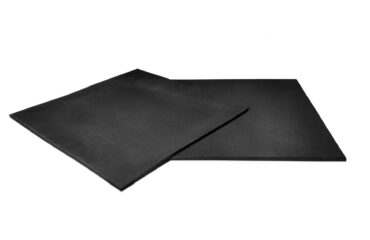
20 mm rubber gym tiles: exactly what they are for, and when to avoid them
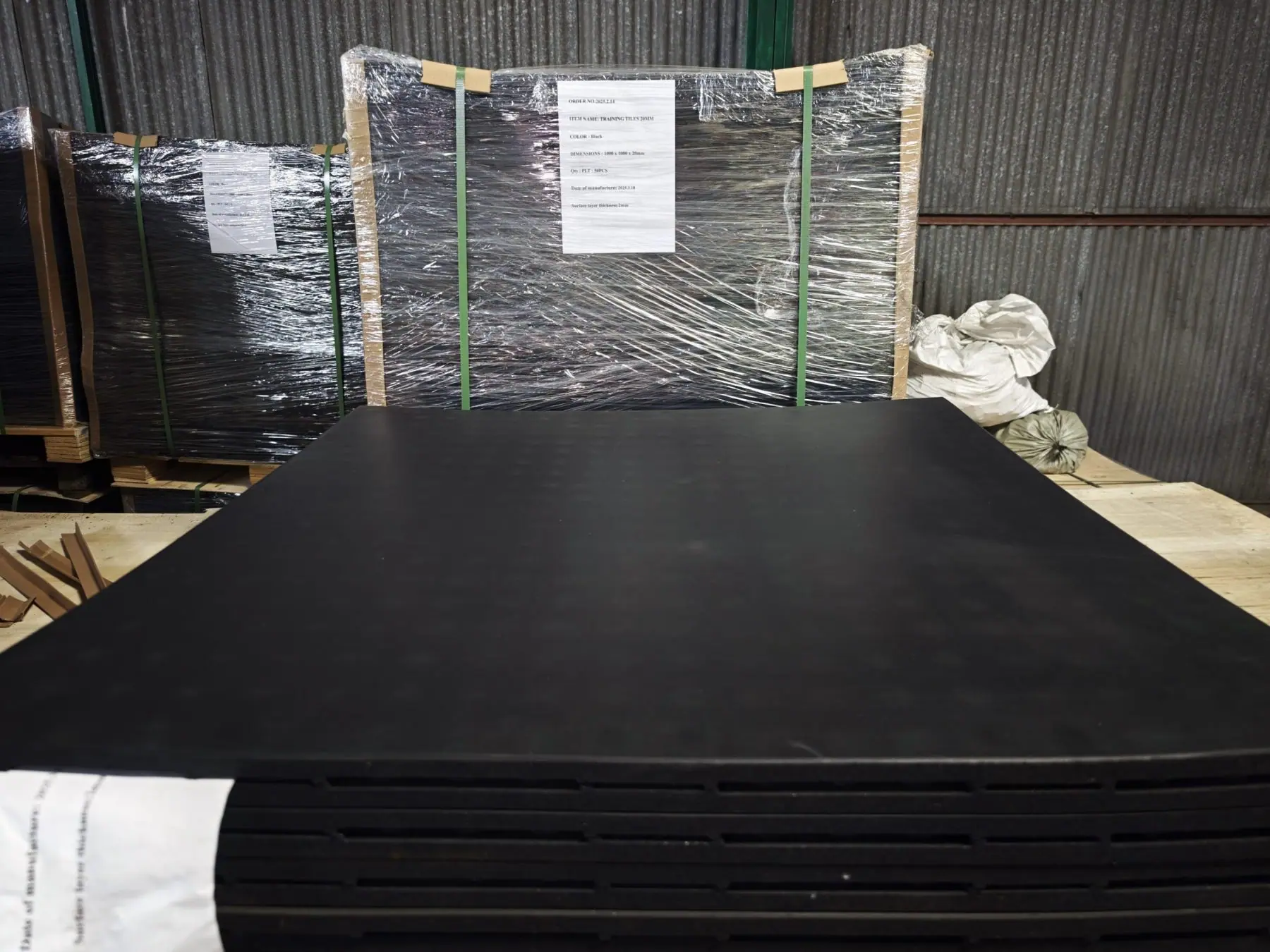
You want a clear answer, without the padding: what is a 20 mm rubber tile actually for in a gym? The honest reply is that 20 mm can be perfect, or completely inadequate, depending on the type of effort, the mass being moved, the drop height, the existing substrate and your constraints around noise, maintenance, safety and compliance.
This article gives you a simple, professional framework for deciding without dangerous approximations: where 20 mm excels, where it reaches its limits, and how to choose without overpaying or regretting the specification later.
What is a 20 mm rubber tile?
A 20 mm rubber tile is a resilient floor covering 2 cm thick, usually made from SBR (recycled rubber) and sometimes EPDM (coloured granules or a wear layer), designed to:
- protect the substrate (concrete, tiling, technical timber floors);
- reduce noise and vibration;
- improve grip (anti-slip);
- add comfort (less joint fatigue);
- define training zones (cardio, selectorised strength, functional training).
Key point: thickness is only one parameter. Density, hardness, granule size, the underlay and the flatness of the floor change everything.
Where 20 mm is really used
20 mm is most often installed in:
- commercial gyms (machine zones, circulation, moderate loads);
- coaching and personal training studios;
- functional areas without heavy drops;
- hotel, corporate and residential-scheme training rooms, provided any weightlifting zone is treated separately;
- physiotherapy and athletic preparation facilities (comfort, hygiene, stability).
How it works, technically
A rubber tile behaves as a mass-spring-damper system:
- it deforms slightly under load (spring);
- it dissipates part of the energy (damper);
- it spreads the pressure over a wider area (substrate protection).
But the higher the impact energy (a dropped bar, a falling dumbbell, a jump under load, a kettlebell drop), the more you have to either increase the thickness, increase the density, or add a dedicated solution such as platforms, thicker tiles or resilient underlays.
Common mistakes and received ideas
Received idea 1: 20 mm is fine for strength training. Yes, for selectorised machines, dumbbells set down under control, controlled loads. No, for weightlifting or repeated drops.
Received idea 2: thicker is always better. Not always. Too soft means instability, a spongy feel, a risk of shear and accelerated wear in zones with heavy rolling traffic (rowers, light sleds, trolleys).
Received idea 3: it is just a floor, standards do not apply. If you receive the public, if you have fire constraints, or if you are equipping a public authority, compliance and traceability become central: reaction to fire, VOC emissions and material documentation.
The real benefits of a well-chosen 20 mm
1) Protecting the floor and the building. It limits chipping of ceramic tiling and cracking of levelling screeds, protects the concrete slab from moderate impacts, and prevents premature wear in traffic zones.
2) Reducing noise. Rubber attenuates impact noise (dumbbells set down, machines) and vibration. In a building with occupied floors above or below, 20 mm is often the first serious level before moving to heavier solutions. Where structure-borne noise is the issue, an acoustic underlay for gym floors is usually the right addition rather than more thickness.
3) Safety and grip. A well-textured rubber floor reduces the risk of slipping, and slip resistance of pedestrian surfaces is measured by standardised methods described in EN 16165, which is what turns an anti-slip claim into a measurable performance.
4) Joint comfort and training quality. For circuit training, mobility, core work and general conditioning, 20 mm gives a comfort-to-stability compromise that users appreciate.
Performance and durability
- Stability under load: 20 mm generally stays firm enough for machines and circulation, provided the density is right.
- Resistance to point loads: better with a dense tile on a flat surface.
- Maintenance and hygiene: the right granule size and finish reduce ingrained chalk, dust and sweat.
The safety point never to skip: fall impact
If your use includes a risk of falling from height (trails, apparatus, playground-type areas), the logic changes completely. You are then talking about measurable impact attenuation, tested using the methods of EN 1177, which determine impact attenuation and the critical fall height of a surface.
In practice: 20 mm can be excellent for training while being insufficient for high-energy fall scenarios. In those cases, test reports matched to the actual use are required.
The simple rule: decide by impact energy
Ask five questions. The answers give you the right thickness bracket.
- Will loads be dropped? (yes or no)
- Typical drop height? (kettlebell, dumbbell, barbell)
- Frequency? (occasional, daily, intensive)
- Type of plates? (bumper, cast iron, mixed)
- Substrate? (bare concrete, floating slab, ceramic tiling, timber, upper floor)
Where 20 mm is exactly right
These are the scenarios where 20 mm is coherent and often optimal on cost and effectiveness:
- selectorised machine zones (leg press, pulldown, leg extension and so on);
- cardio (treadmills, bikes, rowers) if the substrate is stable and flat;
- functional areas without heavy drops (mobility, core work, suspension trainers, bands, soft to moderate group classes);
- conditioning with dumbbells set down under control rather than dropped;
- circulation routes and corridors;
- general strength areas outside a dedicated weightlifting zone.
Our rubber gym flooring tiles range covers these uses in several densities and finishes.
When 20 mm is marginal or simply wrong
20 mm becomes risky if you have:
- weightlifting or powerlifting with drops, even with bumper plates;
- repeated kettlebell drops;
- strongman (heavy yoke, heavy farmers, stones);
- intensive deadlift zones;
- an upper floor or sensitive neighbours without a suitable anti-vibration system.
In those cases the specification usually moves to thicker tiles (30, 40 or 50 mm depending on the scenario), to platforms combining timber and rubber, or to multi-layer systems with a resilient underlay and a wear layer. Our weightlifting rubber tiles are specified for exactly these zones.
Decision table
| Zone or use | 20 mm suitable? | Why | Alternative if needed |
|---|---|---|---|
| Selectorised machines | Yes | Controlled loads, low impact | – |
| Cardio (treadmill, rower, bike) | Yes | Comfort, protection, grip | Underlay if vibration is high |
| Functional without drops | Yes | Good stability and comfort balance | 25 to 30 mm if very intensive |
| Dumbbells set down under control | Yes | Moderate impact when set down | 30 mm if drops are frequent |
| Intensive deadlift or drops | Often no | Impact energy too high | 30 to 50 mm or a platform |
| Weightlifting zone (bar dropped) | No | Substrate, noise and wear risk | Platform plus thick tiles |
| Upper floor or sensitive neighbours | Sometimes | Depends on the structure | Complete anti-vibration system |
Installation good practice
20 mm is less forgiving of a badly prepared substrate. The professional checklist:
- a flat, clean, dry substrate (otherwise, level it first);
- staggered laying wherever possible;
- controlled joints: avoid any step between tiles;
- in zones with heavy rolling traffic, check stability and that no tile can tip;
- allow for ramps or chamfers at transitions.
Bonded or loose laid? Loose laying is quick, reversible and often sufficient with heavy tiles. Bonded installation is useful in public-access buildings, in heavily used zones, or wherever zero movement is required.
What most online content leaves out
Look at what ranks for this subject and you find a lot of pages talking about shock absorption without ever defining which shock, very little on the link between real use and impact energy, almost never a method for choosing according to the building (upper floor, slab, neighbours), and frequent omissions on compliance, which is decisive in a professional context.
We reason as installers and equipment suppliers: use, then constraints, then risks, then evidence, then solution.
The normative references worth knowing
You do not need to be a lawyer, but you do need to know what to ask for.
1) Indoor air quality: VOC emissions. Several European markets require or expect labelling or declaration of volatile organic compound emissions for interior floor coverings. The exact obligation depends on national regulations in the country of installation, so ask your supplier for the emissions documentation valid in your market.
2) Reaction to fire (Euroclasses). For projects that receive the public, a reaction-to-fire class to EN 13501-1 is commonly required, for example Bfl-s1 or Cfl-s1. Note that the smoke index is part of the class and must never be dropped from a specification. See our fire-rated rubber tiles where a class is required.
3) Substances and chemical safety (PAH and recycled content). In the EU, REACH governs certain substances. As an example, a restriction set a limit of 20 mg/kg (0.002 %) for the sum of eight PAHs in granules and mulches used as loose infill in sports applications, applicable from 10 August 2022. Even though a tile is not loose infill, this illustrates a professional point: insist on traceability, technical data sheets and material compliance.
4) Slip resistance. Slip resistance of pedestrian surfaces is measured using the methods described in EN 16165, which is what allows an anti-slip performance to be stated objectively.
The site test we use to validate 20 mm or more
Before a specification is fixed, we check:
- the most demanding zone (deadlift? sled? drops?);
- the real noise (impact and vibration);
- stability (machines and footing);
- transitions (doors, thresholds, skirtings);
- maintenance (chalk, sweat, daily cleaning).
It is simple: a gym floor is an item of equipment, not decoration.
Why the quality of the tile changes everything at 20 mm
Two tiles both described as 20 mm can behave like two different products. What separates a professional solution from a purchase you regret:
- density and manufacturing consistency (no soft patches);
- clean cutting (tight joints, less edge tearing);
- a durable anti-slip surface, not only when new;
- low odour and controlled emissions, especially indoors;
- documentation: technical data sheet, traceability, compliance, installation recommendations;
- layout advice: where to use 20 mm and where to reinforce.
How we approach it
Our objective is not to sell 20 mm to everyone. It is to specify with a professional logic: intelligent zoning, with 20 mm where it is optimal; targeted reinforcement, with platforms or greater thicknesses where they are needed; a durable project covering noise, maintenance, compliance and the long term; and support through selection, setting out, installation and use.
The result is that you avoid the classic outcome: 20 mm everywhere, and the weightlifting zone redone a year later.
The fastest way to be sure
To tell you whether 20 mm is the right choice, six pieces of information are enough: total area in square metres; type of substrate (concrete, ceramic tiling, upper floor); planned zones (machines, cardio, functional, free weights); maximum loads and practice (drops or not); noise and neighbour constraints; and the level of requirement (public-access building, hotel, public authority, private facility).
Conclusion
The 20 mm rubber tile is an excellent solution for the majority of controlled fitness uses: machines, cardio, circulation, functional work without heavy drops, and standard conditioning.
But as soon as dropped loads, weightlifting, intensive deadlifting or a sensitive upper floor enter the picture, 20 mm can turn into a false economy: noise, wear, a damaged substrate, discomfort, and a bill that doubles in the end.
The right strategy is simple: 20 mm where it is optimal, plus targeted reinforcement where the impact energy demands it.
FAQ
Is a 20 mm rubber tile enough for strength training?
Yes for selectorised machines and dumbbells set down without dropping. For intensive deadlifting or a dropped bar, reinforce with a platform or thicker tiles.
What thickness for a free-weights area?
If loads are controlled, 20 mm can work. If loads are frequently dropped, aim for a dedicated solution, often 30 to 50 mm or a platform, depending on the practice and the substrate.
Is 20 mm suitable under a treadmill?
Yes in most cases: comfort, protection, reduced noise. On an upper floor, an anti-vibration solution may be needed beyond 20 mm alone.
How do you reduce dumbbell noise with a 20 mm tile?
20 mm helps, but the real gain comes from the installation method, the substrate, reinforcement under the impact zone and, where needed, a platform. Noise is usually a system problem, not a thickness problem.
Should 20 mm tiles be bonded?
Not always. In a commercial gym or in heavily used zones, bonding can stabilise the floor. Elsewhere, loose laying often works if the substrate is flat and the tiles are heavy.
Which compliance documents should you ask for on an indoor rubber floor?
Depending on the context: VOC emissions documentation valid in the country of installation, a reaction-to-fire class to EN 13501-1, and material and traceability documents, particularly where recycled content is used.
Is 20 mm suitable for a multi-purpose room?
Yes if you want a robust, non-slip, comfortable floor. Watch out for heavy rolling loads and staining: choose the finish and the maintenance regime accordingly.
Get the zoning right first time
Send us the six pieces of information above and we will come back with a structured recommendation: where to use 20 mm, where to reinforce, and how to install it properly. Request a quote to start.
Réalisations documentées
- Dalles et sols sportifs : livraisons documentées – plusieurs chantiers
- Sol sportif extérieur, square Georges-Vallerey – Taverny (95)
Sources et références
- Arrêté du 19 avril 2011 – étiquetage des produits de construction ou de revêtement de mur ou de sol sur leurs émissions de polluants volatils (Légifrance)
- Ministère de la Transition écologique – étiquetage des produits de construction : classes d’émission A+ à C
- Décret n° 96-1136 du 18 décembre 1996 – prescriptions de sécurité relatives aux aires collectives de jeux (Légifrance)
- NF EN 1176-1 – Équipements et sols d’aires de jeux, partie 1 : exigences de sécurité et méthodes d’essai générales (AFNOR)