Professional Sports Flooring: How to Choose the Right Surface Without Costly Mistakes
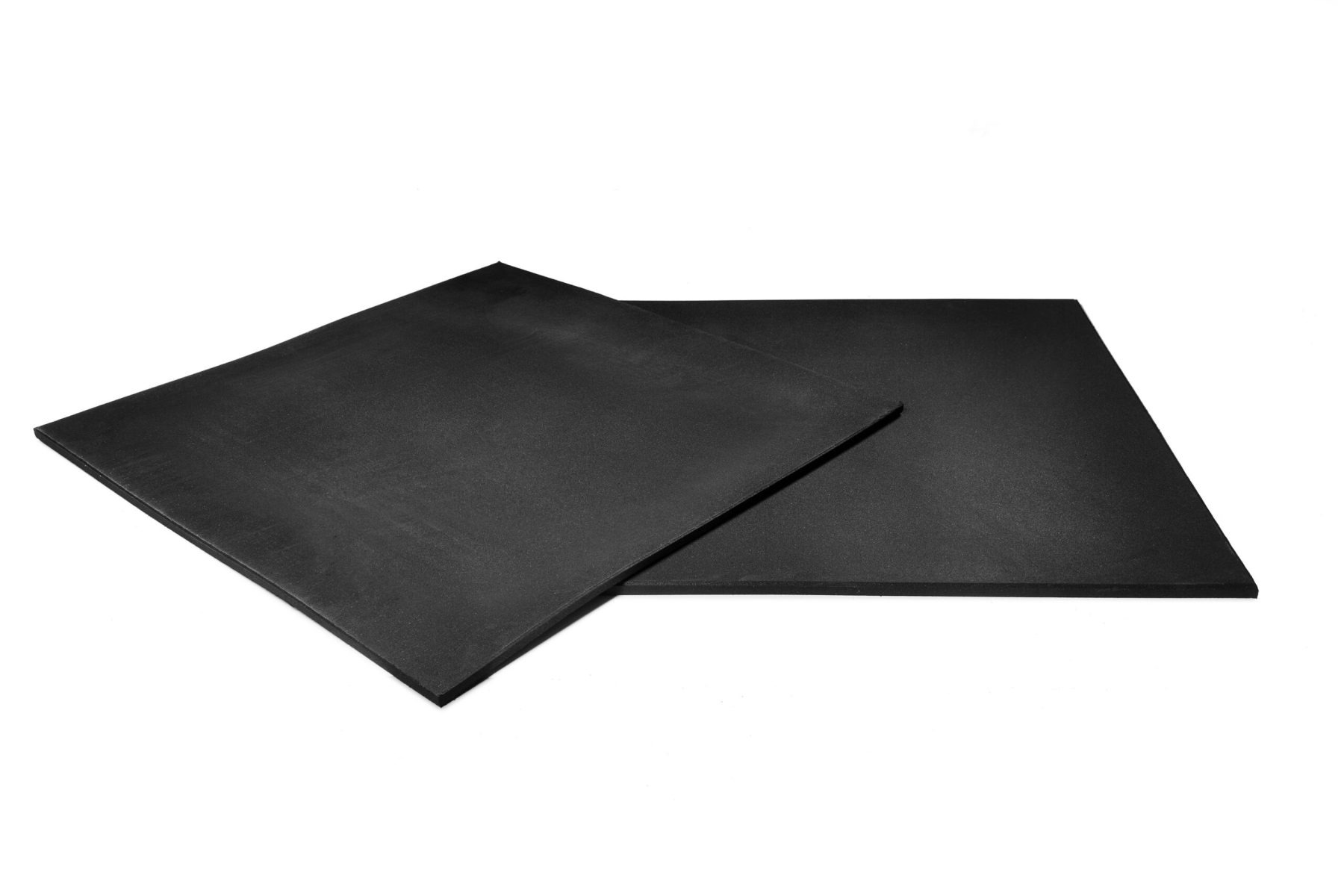
A sports floor is not an accessory. It is a piece of protective equipment: it keeps users safe, protects the substrate beneath it, reduces noise and vibration, and determines whether your space holds up over time under real footfall, real loads, real impacts and real cleaning regimes.
This guide is technical. It covers thickness, density and weight, actual use, acoustics and building constraints including fire classification, so that a specification decision is made once and made correctly.
The seven technical criteria that actually matter
1. Real use: machines, free weights, functional, fall zones
The first question is not how thick the floor should be. It is what happens on the floor, and how often.
- Footfall plus machines: limited impact, distributed loads
- Free weights: impact plus point loading plus repeated micro-shocks
- Drops, weightlifting, intensive functional: far more violent impacts plus structure-borne noise
2. Thickness: the right order of magnitude
- approx. 8-10 mm: light protection, comfort, low-impact zones
- approx. 15-20 mm: the professional standard for machine floors and moderate strength training
- approx. 25-40 mm: serious absorption for free weights and regular impacts
- approx. 40-60 mm and above: noise and vibration, heavy drops, sensitive constraints such as an upper floor, close neighbours or high-risk areas
The more real the impact, meaning drop height plus mass plus frequency, the more thickness and mass matter.
3. Weight per square metre: the practical stability indicator
Two floors both described as 20 mm can behave very differently. In professional use, weight per square metre is often one of the best indicators of:
- stability, meaning a floor that does not shift or open up at the joints
- durability over time, with less compression set
- perceived absorption, depending on the formulation
4. Density: mechanical performance and resistance to crushing
Where density is stated, it is a useful signal about:
- resistance to point loading from machine feet, racks and weights
- durability in heavily used areas
- dimensional stability
5. Material and formulation: slip resistance, absorption, ageing
Rubber is not a single material. Formulation, granule size and finish, whether fine grain, flecked or otherwise, all change:
- grip
- ease of cleaning
- wear resistance
- acoustic comfort
The rubber range is grouped under rubber gym flooring tiles.
6. Acoustics and vibration, routinely underestimated
On an upper floor, in a hotel, in a shared building or in an urban setting, the question is not only how to protect the floor. It is how to protect the building. A good decision rests on:
- thickness plus mass
- a combination of layers where the project calls for it
- intelligent zoning, because a drop zone is not a machine zone
7. Building constraints: fire classification and documentation
On some projects, in buildings open to the public, in public areas, or where an insurer or an inspection body is involved, you may be asked for supporting documentation such as a fire classification. Requirements here are set by the national building regulations applicable at the site, so confirm them with the party responsible for the project before selection rather than after.
If that applies to you, the floor has to be selected for that use from the outset. Otherwise you risk delays, product changes and additional cost. Fire-rated references are listed under fire-rated rubber tiles, and the classification must always be reproduced exactly as the manufacturer declares it, including the smoke index.
Which floor for which zone
Zone 1: machine floor and cardio
Objective: stability, durability, protection of the substrate, simple maintenance.
Typically dense tiles in a professional format such as large formats, with a standard thickness of approx. 15-20 mm depending on use.
Zone 2: strength training and free weights
Objective: absorb impacts, preserve the substrate, limit noise.
Typically a greater thickness of approx. 25-40 mm, heavy tiles, and zoning with a dedicated heavy area. See weightlifting rubber tiles.
Zone 3: drops, weightlifting, intensive functional
Objective: maximum absorption and reduction of structure-borne noise.
Typically approx. 40-60 mm, with the space organised around platforms and dedicated drop zones according to volume and constraints.
Zone 4: outdoor and exposed areas
Objective: weather resistance, drainage and grip, UV resistance depending on the material.
Choose a product intended for outdoor use and check the substrate preparation. See outdoor sports flooring.
Installation, substrate and maintenance
- Substrate: the flatter it is, the more stable and durable the result
- Cutting: take care with the edges around columns, corners and thresholds
- Cleaning: vacuum plus damp mop, or a scrubber-drier depending on the area
- Professional judgement: avoid aggressive cleaning products and plan a simple maintenance routine
Frequently asked questions
What floor thickness for a professional gym?
It depends on the zone: machine floor often approx. 15-20 mm, free weights approx. 25-40 mm, drops or an upper floor approx. 40-60 mm and above depending on constraints.
Is a thicker floor always better?
No. The right floor is the one matched to the real impact. Over-thick can be unnecessary, and expensive, in some zones.
How do I reduce noise and vibration on an upper floor?
By combining mass and thickness, and by creating a genuine free-weight zone specified for it. Zoning is usually more effective than using the same floor everywhere.
Do the tiles need to be bonded?
It depends on the substrate, the area, the use and the configuration. On many projects loose-lay is possible, but constraints such as traffic, edges and slopes can point towards fixing.
Does it smell of rubber?
Some floors can give off an odour when unpacked. Adequate ventilation generally settles the matter.
Can it be laid over tiles, resin or concrete?
Yes, provided the substrate is clean, dry and sufficiently flat. A levelling compound may be advisable on irregular substrates.
Does the floor really protect the substrate during a drop?
Yes, if the thickness and mass are dimensioned for the drop height plus load plus frequency. That is precisely where the technical choice makes the difference.
Can this type of floor be used outdoors?
Yes, if the product is intended for that use, covering weather and UV exposure depending on the material, and if the substrate preparation is appropriate.
Do you have solutions for fire and public-building constraints?
On some projects it makes sense to steer towards references designed to meet the building requirements, including documentation and fire classification.
How do I get an accurate quotation?
The simplest route is to send the area, the type of use per zone, the existing substrate, whether the space is on an upper floor or has close neighbours, and any constraints such as public-building requirements, fire or deadlines.
Three questions that lead to the right recommendation
To avoid both over-specifying, which is needlessly expensive, and under-specifying, which destroys everything, the effective approach is to choose the floor zone by zone and impact level by impact level. Three questions get you there.
Question 1: where will the floor be installed?
- Ground floor or standalone building, not noise sensitive
- Upper floor or sensitive neighbours, where noise and vibration are critical
- Outdoor or semi-outdoor
- Wet area or intensive cleaning
Question 2: what is the main use?
- Machine floor, cardio, circulation
- Strength training and free weights
- Functional and intensive cross training
- Fall zone and safety areas, for public authorities and public spaces
Question 3: what is the real impact level?
- Light: few impacts, no dropped loads
- Moderate: occasional free weights, controlled impacts
- High: frequent free weights, regular impacts
- Very high: drops and weightlifting, heavy and repeated impacts
The resulting recommendations
Machine floor or cardio
- Light to moderate impact: aim for a stable, durable, easy-to-clean solution, often approx. 15-20 mm
- Heavy traffic: prioritise stability through weight per square metre, with a finish suited to the cleaning regime
Strength training and free weights
- Moderate impact: often approx. 20-30 mm depending on load and frequency
- High impact: often approx. 25-40 mm plus zoning of the heavy areas
Intensive functional, drops or weightlifting
- High to very high impact: often approx. 40-60 mm and above, particularly on an upper floor or with sensitive neighbours
- Professional advice: create a dedicated free-weight and drop zone, which is more effective than making everything uniform
Upper floor or sensitive neighbours
- Increase thickness and mass, and think in terms of structure-borne noise, combining zoning with solutions matched to the impact
Outdoor
- Choose a solution intended for outdoor use with an appropriate substrate covering drainage and flatness
Recommendations by type of establishment
Every professional project has its own constraints: footfall, noise, building requirements, maintenance, premium image. Here is a reading by sector, so you can choose the right solution without either extra cost or compromise.
Gyms and fitness clubs
Objective: durability, image, safety, maintenance.
- a stable, dense machine floor
- reinforced free-weight zones through zoning
- finishes matched to the use, covering slip resistance and cleaning
Coaching studios and premium training
Objective: comfort, appearance, noise reduction, client experience.
- a floor that is pleasant to look at and to touch
- acoustic specification where there are neighbours
- discreet zoning with a well-considered heavy area
Boxes, functional and cross training
Objective: absorption, stability, impact resistance.
- drop zones dimensioned for the real intensity
- circulation and technical zones kept distinct
- structure-borne noise as the priority on an upper floor
Hotels, residences and corporate gyms
Objective: quiet, cleanliness, durability, image.
- solutions that are easy to clean
- noise and vibration reduction as the priority
- zoning, with a free-weight area that is often limited in size and reinforced
Physiotherapy, medical centres and athletic preparation
Objective: safety, comfort, stability, hygiene.
- a stable, slip-resistant surface
- walking comfort and cushioning matched to the exercise stations
- simple maintenance and a clean finish
Public authorities and public areas
Objective: robustness, safety, compliance with the requirements applying to the site.
- specification according to the uses and the risks
- products suited to the constraints, covering outdoor exposure and fall height where applicable
Buildings open to the public and building constraints
Objective: avoid the project being held up.
- select references compatible with the requirements of the file from the outset
- prepare the necessary elements: the project, the areas, the zones and the constraints
Projects on an upper floor or with sensitive neighbours
Objective: reduce noise and vibration, the genuinely critical point.
- reinforce the impact zones covering free weights and drops
- increase thickness and mass
- organise the zones so that circulation, machines and drops are kept separate
A ten-line project brief
Fill this in and send it to us and we can respond precisely:
- Address and type of site
- Total area in square metres
- Zones in square metres: machines, cardio, free weights, drops, circulation
- Intensity: low, medium or high
- Maximum loads and type of drops
- Existing substrate
- Ground floor or upper floor
- Constraints: public-building requirements, fire, deadlines, working hours
- Acoustic objective
- Photographs or a plan
Send it through and we will come back with a specification zone by zone: request a quote.
Réalisations documentées
- Dalles et sols sportifs : livraisons documentées – plusieurs chantiers
- Sol sportif extérieur, square Georges-Vallerey – Taverny (95)
À lire aussi sur le même thème
- Eco-Friendly Gym Flooring Tiles: Brand Comparison 2026
- Rubber Gym Flooring and Sports Floors: Thickness, Density and Finish Explained
- Gym Flooring and Impact Absorption: Choosing the Right Thickness, Zone by Zone
- Comparing professional gym equipment brands on specification
- Vélo RPM Bodytone MT6 vs BODY BIKE (Les Mills) : la comparaison technique (vraiment)