Professional Elliptical Cross Trainer: The Complete Guide
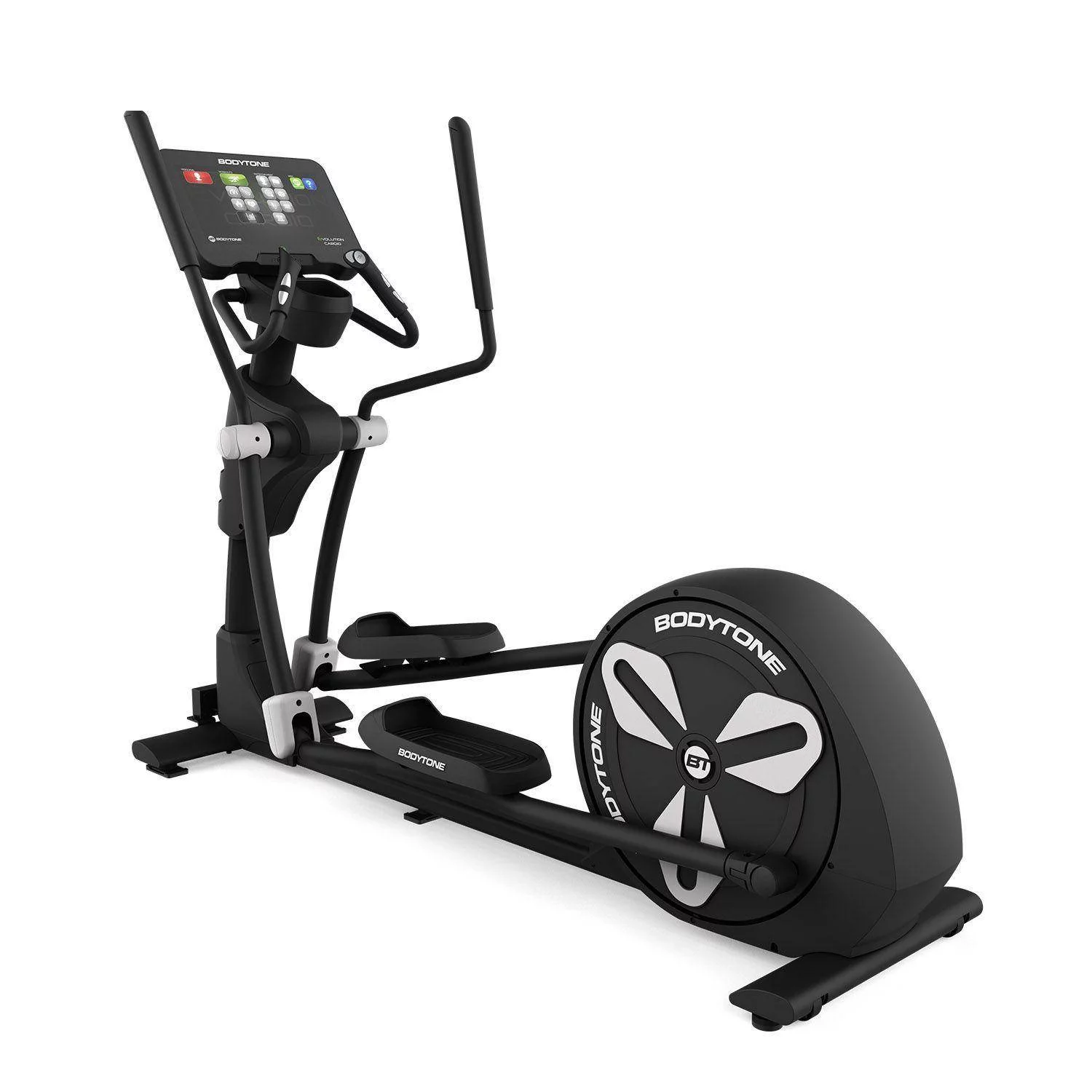
A professional elliptical cross trainer is recognised by four specifications: a heavy flywheel of 18 to 30 kg, a long stride of 50 to 60 cm, a reinforced steel frame and a rated user weight of 160 to 200 kg. Those numbers are what separate a machine built for a staffed facility from one built for occasional use. In the Light In Fitness catalogue, professional cross trainers start at 2,215.00 EUR excluding VAT and run to 8,660.40 EUR excluding VAT at the top of the range.
What makes a cross trainer professional
The elliptical motion holds the foot in contact with the pedal throughout the cycle, so the joint never takes the landing shock a running stride produces. That is the whole point of the machine, and it is also why it is the cardio station that gets used hardest in mixed-membership facilities: deconditioned members, older members and members returning from injury can all use it at their own intensity on the same unit.
What makes a given unit professional is not the movement but the duty cycle it is built for. A club-grade cross trainer is designed for continuous operation across opening hours, several users an hour, every day, for years. That shows up in the frame gauge, in the bearings, in the drive system and in the availability of spare parts years after purchase.
The four specifications that matter
Flywheel mass
Between 18 and 30 kg on professional units. Flywheel mass is what produces the smooth, continuous feel of the stride; a light flywheel produces a movement that stutters at low cadence and feels cheap to the member within the first minute.
Stride length
Between 50 and 60 cm. Stride length has to suit the tallest member you expect, not the average one: a stride that is too short forces a cramped, unnatural gait and is the single most common reason a cross trainer sits unused on a floor. Some machines offer adjustable stride, which is worth the premium in facilities serving a wide range of statures.
Frame and rated user weight
A reinforced steel frame and a rated user weight of 160 to 200 kg. Both are stability specifications as much as safety ones: a frame that flexes under a heavy user at high cadence will be a maintenance problem long before it is a safety problem.
Console and connectivity
A readable display with time, distance, calories and heart rate is the minimum. Beyond that, programme variety and app connectivity are retention tools rather than training tools – they matter for how often members come back, not for how well the session works.
What a professional cross trainer costs
| Model | Positioning | Price excluding VAT |
|---|---|---|
| E-PRO | Club entry level | 2,215.00 EUR |
| DE-PRO Multimedia | Club, touchscreen console | 2,815.00 EUR |
| Bodytone Nexion E80L | Club, LED console | 3,935.00 EUR |
| Gold Line EXE | Commercial gym | 4,460.00 EUR |
| Lexco LE7 | Commercial gym | 4,515.00 EUR |
| Bodytone Nexion E80T | Club, 15.6 inch touchscreen | 5,285.00 EUR |
| Lexco LE8A | Heavy-duty commercial | 6,567.00 EUR |
| Bodytone Evoe1+ | Premium club | 8,660.40 EUR |
Prices exclude VAT, delivery and installation. The spread between the entry and the top of the range is mostly console technology, stride adjustability and frame specification, not the quality of the movement itself.
Which muscles the cross trainer works
The stride recruits quadriceps, hamstrings, glutes and calves in the lower body, while the moving handles bring in chest, back, shoulders and arms. Trunk stabilisers work throughout to hold the posture. It is a genuine full-body cardio station, which is what justifies its footprint against a bike on a floor where space is contested.
Frequently asked questions
How do I recognise a professional cross trainer?
Flywheel of 18 to 30 kg, stride of 50 to 60 cm, reinforced steel frame, rated user weight of 160 to 200 kg and a console with developed programmes. Manufacturers of club-grade equipment also publish a commercial-use warranty, typically in the three to five year range.
What does a professional elliptical cost?
From 2,215.00 EUR excluding VAT for club entry level up to 8,660.40 EUR excluding VAT for premium models with touchscreen consoles.
Is the cross trainer suitable for older members?
Yes. The absence of landing impact makes it one of the most accessible cardio stations for older members and for anyone with joint limitations, which is why it is standard equipment in rehabilitation settings. Members with a medical condition should be referred to their own healthcare professional before starting.
How many cross trainers should a cardio floor plan for?
Sizing follows peak-hour occupancy. A common ratio on a general fitness floor is one cross trainer for every two treadmills, adjusted upward where the membership skews towards low-impact training.
Browse the professional cross trainer range and the Lexco cross trainers, or request a quote for your cardio floor.
À lire aussi sur le même thème
- Comment faire de l’exercice sur un vélo elliptique ? Plan de formation pour débutants
- The Professional Cross Trainer: A Complete Guide for Operators
- Bodytone EVOE1+ Professional Cross Trainer: an Elite Choice for Clubs
- Professional Spin Bike: Everything You Need to Know
- Professional Stair Climber: The Cardio Machine That Earns Its Floor Space