Professional Spin Bike: Everything You Need to Know
Un vélo de spinning professionnel se distingue par sa transmission renforcée, sa résistance progressive et sa conception prévue pour les cours collectifs enchaînés. Le freinage magnétique supprime l'usure des patins et le bruit de frottement. La masse du volant d'inertie conditionne la fluidité du pédalage.
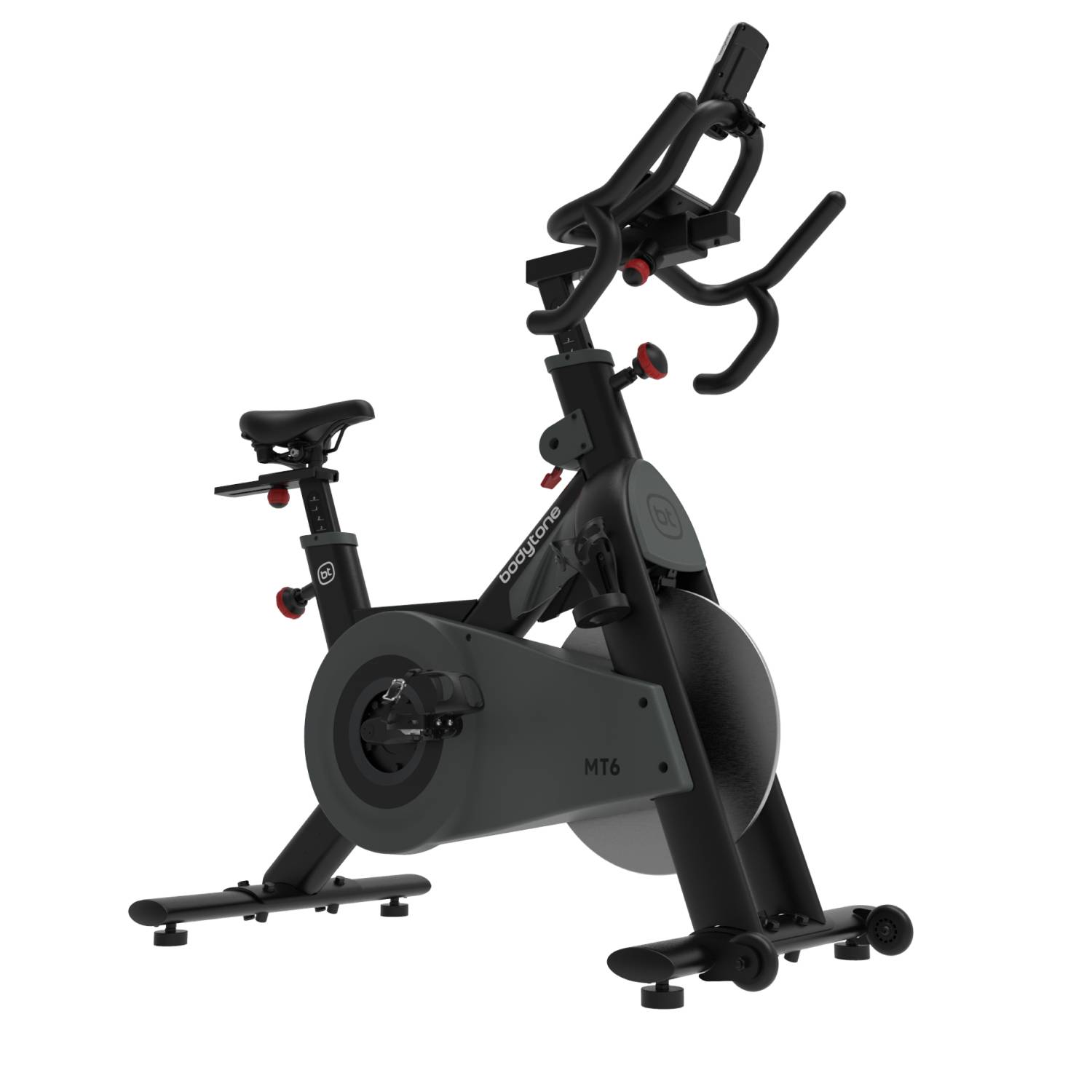
A professional spin bike is defined by a reinforced drivetrain, progressive resistance and a build designed for back-to-back group classes. Magnetic braking removes pad wear and friction noise; flywheel mass and bearing quality determine how smooth the pedal stroke feels. Everything else on the spec sheet is secondary to those three points, because they are what decides whether a fleet survives forty classes a week for five years.
What separates a studio bike from the rest
An indoor cycling bike in a studio does not have one owner riding it three times a week. It has thirty riders a day, most of them out of the saddle at some point, many of them heavier or more powerful than the machine was ever demonstrated with, and none of them responsible for its maintenance. That is the load case a professional spin bike is engineered around, and it is why the components that matter are not the ones on the marketing page.
The three specifications that decide the purchase
Braking system
Friction braking uses pads pressed against the flywheel. It is simple and cheap, but the pads wear, the wear is uneven, and the resulting noise is audible over class music within months. Magnetic braking applies resistance without contact: nothing wears, nothing squeals, and the resistance curve stays identical from the first class to the thousandth. For a studio running a full timetable, magnetic braking is the specification that pays for itself in consumables and in instructor complaints avoided.
Flywheel mass and drivetrain
Flywheel mass governs the smoothness and the inertia of the stroke. Too light and the pedalling feels dead and jerky at low cadence; heavier flywheels carry the rider through the dead spot in the stroke and give the ride its road-like feel. The drivetrain – belt or chain – has to be matched to it: belt drives are quieter and need no lubrication, which is why they dominate studio fleets.
Bearings and adjustment
Sealed bearings in the bottom bracket and flywheel are what determine service life under sweat exposure, which is the real enemy in a cycling studio. Adjustment matters just as much: four-way adjustable saddle and handlebar, with clear numbered markings so a rider can set the same position in ten seconds at the start of a class rather than two minutes into it.
What indoor cycling delivers for members
The session is cardiovascular work at an intensity the rider controls, with no landing impact at any point. That combination is why indoor cycling fills timetables: it suits members who cannot run, it scales from recovery pace to maximal interval work on the same bike, and the group format supplies the pacing and motivation that keep attendance up.
The stroke works quadriceps, hamstrings, glutes and calves, with the trunk stabilising throughout, particularly out of the saddle. It is a lower-body and cardiovascular session; the upper body is not meaningfully trained on a spin bike, and framing it otherwise sets member expectations you cannot meet.
Specifying a fleet
- Build standard: for indoor commercial use, specify EN ISO 20957-1 class S equipment.
- Consistency: buy one model for the whole room. Mixed fleets make it impossible for an instructor to call a resistance level that means the same thing on every bike.
- Consumables: pedals, saddles, bearings and belts are what you will reorder. Confirm the parts list and its availability before you sign.
- Sweat protection: ask specifically how the frame and the bottom bracket are protected. It is the single most common cause of premature failure in cycling studios.
- Metrics: if you intend to run performance-based classes, power measurement has to be specified at purchase; it cannot be added convincingly afterwards.
Frequently asked questions
Is indoor cycling suitable for beginners?
Yes, because the rider sets the resistance. What beginners need is a correct bike setup on their first visit; a badly positioned saddle is the reason most first-time riders do not come back.
Does a spin bike train the upper body?
No. It is a lower-body and cardiovascular station. Upper-body work belongs on the strength floor, not in the cycling studio.
Is indoor cycling appropriate for members with joint problems?
The absence of impact makes it one of the more accessible cardio formats, but knee position under load still matters, so setup should be supervised. Members with a diagnosed condition should be referred to their own healthcare professional.
Browse the professional indoor cycling bikes and the Bodytone MT6 spin bike, or request a quote for a complete studio fleet.