Professional Cardio Machines for Your Facility
Giving members the chance to train on a proper cardio floor is a major advantage, and for a great many people it is what turns an intention into an actual habit. But to get the most out of new equipment, it is worth thinking carefully about what you actually need before you buy it.
This guide sets out the main types of cardio machine used in professional installations, and the practical factors that decide which model belongs in your facility.
Types of cardio machine
Several types of cardio equipment are available for professional use. If you are not sure whether one machine is better than another for your needs, the points below will help narrow the options. Bear in mind that these are the most common types of cardio machine. If none of them fits, you may find that other, less common machines correspond more closely to what you are looking for.
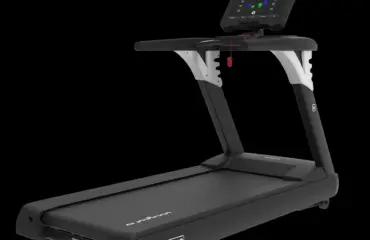
Treadmill
Treadmills are a good choice for users who want to walk, jog or run. Experts generally recommend motorised treadmills, which have a machine-driven belt allowing the user to move at a set speed.
You can also choose a non-motorised treadmill, which moves at the user’s own pace, requires more effort to drive, and generally does not have the additional features of motorised treadmills such as applications and built-in workouts.
Features such as adjustable incline, an emergency stop and a digital display make treadmills safer and more useful. For users with joint pain or other mobility issues, a treadmill may not be the best choice. The range is listed under professional treadmills.
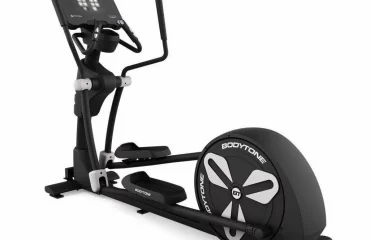
Cross trainer
If you need a lower-impact exercise option than a treadmill, a cross trainer may be the right choice. These machines generally have handles, which means the upper body can be worked as well as the legs.
Cross trainers with adjustable resistance and incline settings offer the most versatile workout, and that versatility is what lets a single machine serve a wide range of member profiles. See professional cross trainers.
Exercise bike
Exercise bikes, whether recumbent or upright, can be a good option for users who want effective cardio work with the upper body supported. They deliver an efficient cardio session and can be the better choice for users who struggle to keep their balance standing up.
That makes the bike the machine most often specified for older members, for rehabilitation work and for anyone returning to training after an interruption. Both formats are listed under professional exercise bikes.
Stair climber
Stair climbers can provide a good cardiovascular and lower-body workout, but they put considerable pressure on the leg joints, including the knees. If the idea of climbing stairs seems tedious, this is probably not the right machine.
In a facility, that makes it a machine to specify deliberately rather than by default: it earns its floor space with a membership that wants it, and stands idle with one that does not. See stair climbers.
Other considerations
Deciding which type of machine to buy is only the first step towards a good purchasing decision. Weigh the following factors to make sure you choose the right model.
Available space
Some cardio machines are fairly bulky, so where space is limited, measure the space you actually have and check the overall dimensions of the machines you are considering.
Certain cardio machines are designed for use in a reduced footprint and carry more basic functions, which can be a good option where floor area is the binding constraint.
Take delivery dimensions into account as well. Measure corridors and door frames to make sure the machine can physically be delivered to the room it is destined for. This is the check most often skipped, and the one that most often stops a delivery at the door.
Fitness objectives
Thinking about the objectives the equipment has to serve makes it easier to identify the specific machine you need.
For example, if members want to train for a cycling event from time to time, look for an exercise bike with a configuration similar to a road bike, such as an indoor cycling bike. If you want a versatile machine, a treadmill or a cross trainer with built-in programmes and features such as a television screen may be the better answer.
Personal preference
In the end, it is not strictly necessary to exercise in a perfect way. As long as users are attentive and avoid injury, any type of exercise that safely raises the heart rate can be effective. Any exercise is better than no exercise.
In other words, if your members dislike running, do not buy a treadmill simply for the sake of it. Choose a machine that lets people do an exercise they find enjoyable, because that is the machine that will actually be used.
User weight capacity and dimensions
Cardio machines can have a weight capacity, which means that heavier users need to be considered against those limits at the point of purchase. For particularly tall users, you also need to make sure the machine is designed for people of that height.
In practice, that means checking whether exercise bikes have adjustable seats, and looking at the belt dimensions of a treadmill to make sure the fit is right. In a facility serving the general public, these two checks decide whether part of your membership can use a machine at all.
Frequently asked questions
Motorised or non-motorised treadmill?
Experts generally recommend motorised treadmills for their set-speed belt and their additional features. A non-motorised treadmill moves at the user’s own pace and requires more effort to drive.
Which machine is best for joint pain?
A cross trainer is the lower-impact option compared with a treadmill, and an exercise bike suits users who struggle to keep their balance standing. A treadmill may not be the best choice where joint pain or mobility issues are present.
How do I check a machine will fit?
Measure the available floor space and compare it with the overall dimensions of the machine, then measure corridors and door frames along the delivery route. Both checks are needed; the second is the one usually forgotten.
How many machines does a facility need?
That depends on your peak attendance and your opening hours, which only you can measure. We size the quantities from your floor plan and your expected attendance during the quotation rather than applying a generic ratio.
Specifying your cardio floor
The right cardio mix is the one built around the members you actually serve, the space you actually have and the delivery route the machines actually have to travel. Send us your floor plan and the profiles you receive and we will size the mix with you: request a quote.