Professional Treadmills: The Criteria That Really Matter in 2026
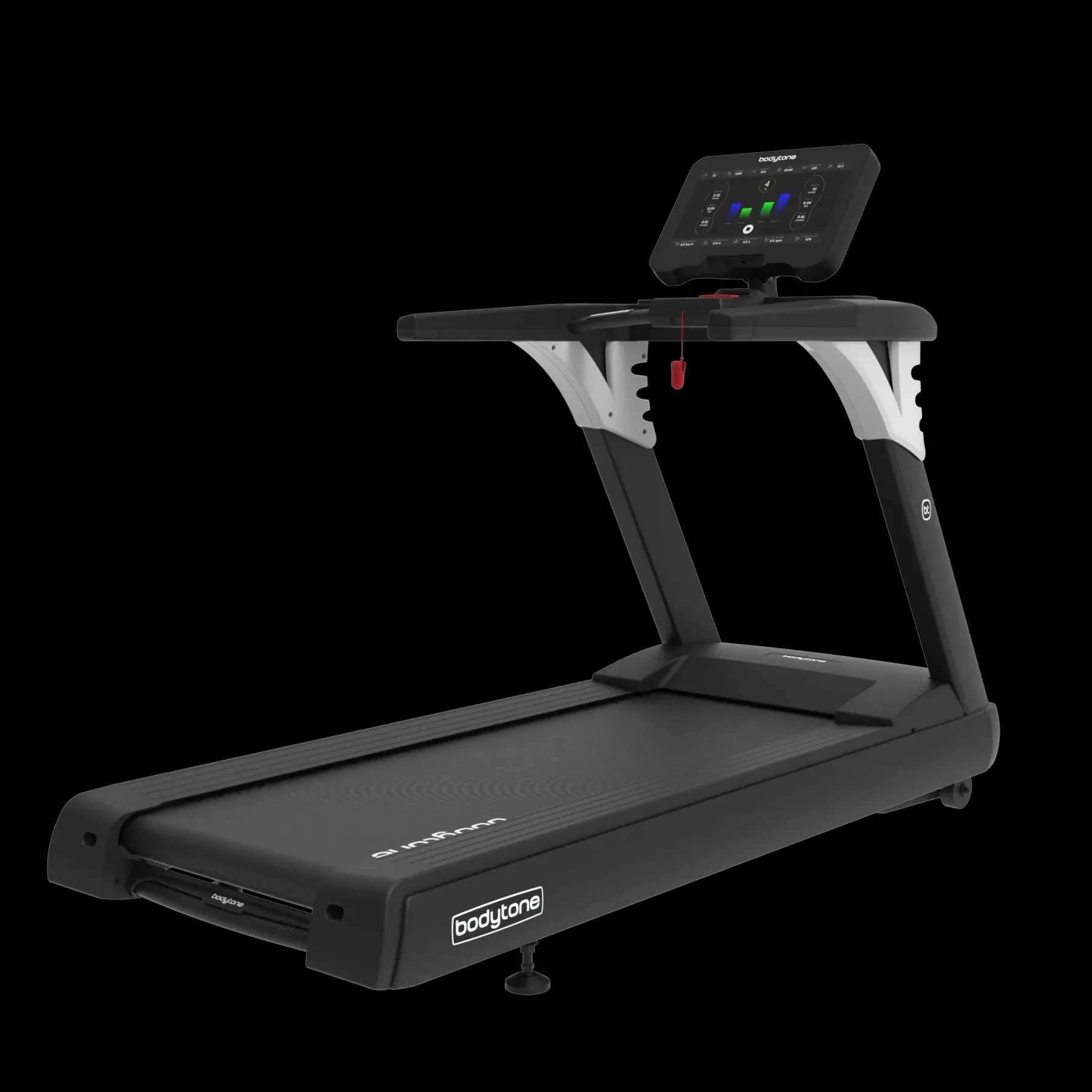
A professional treadmill is not a scaled-up consumer machine. It has to absorb hours of walking and running every day, from users of every build, including interval work, without turning your cardio floor into a repair workshop. For a gym, a hotel or a public authority, the decisive criteria in 2026 come down to a short list of very concrete points: cushioning, motor, belt and deck, stability, maintenance and after-sales support.
1. Cushioning: comfort, safety and service life
Cushioning does not cure anything, but it changes comfort, tolerance and the perceived quality of the machine. On a professional treadmill it is a central criterion, both for health-oriented programmes and for heavier runners.
What actually matters:
- Quality of the cushioning system, whether elastomer pads, inserts or a sprung deck: it should reduce the felt impact without turning the stride into a soft bounce.
- Platform stability: even with good cushioning, the deck must stay stable at 10, 16 and 20 km/h without parasitic vibration.
- Durability: deck and pad quality determine whether the machine softens or deforms after a few months of intensive use.
Light In Fitness specifies its professional treadmills on exactly that balance: impact reduction while keeping a stable base for performance and interval work.
2. Motor: real continuous power, consistency and heat management
For professional use, a headline motor rating is not enough. What you need is real continuous power and proper thermal management.
Key points to check:
- Continuous power rather than peak output. For gym use, 3 to 4 continuous horsepower is a solid baseline.
- Consistency at speed: the belt should stay smooth and stable at 16 to 20 km/h, without surging or dropping off.
- Thermal management: motor, controller and rollers capable of running for hours without overheating or cutting out.
3. Belt, deck and running surface: everyday comfort and safety
The quality of the belt and deck feeds directly into comfort, noise, wear and how safe your members feel.
What to look at:
- Running surface: wide and long enough for hesitant walkers and confident runners alike, typically around 50 to 60 cm wide and 150 to 160 cm long in professional use.
- Multi-layer belt and a robust deck: better glide, less friction, less heat build-up and therefore a longer service life.
- Accessibility: a reasonable step-up height for less agile users, which matters in hotels and in health-oriented programmes.
It is also worth confirming the running surface dimensions, whether the belt is self-lubricating, and how straightforward routine maintenance is for the type of facility you operate.
4. Stability, frame and noise: the premium feel of a cardio floor
Beyond the numbers, the user experience comes down to how stable the machine feels and how loud it is under full load.
Experience criteria:
- A rigid frame, sufficient mass and an anti-vibration design: a professional treadmill should stay planted on the floor even with a heavy user sprinting.
- Noise: the quieter the machine across motor, belt and structure, the more premium the cardio floor feels, particularly in a hotel or a corporate facility.
- Safety: a wide side rail, a well-placed emergency stop, a legible console and a suitable handrail.
On a commercial floor the treadmill is an image asset as much as a working machine.
5. Maintenance, standards and after-sales: the things that decide the outcome
A treadmill in a gym, a hotel or a public facility is only worth anything while it is running. The hidden criteria are usually the ones that make the difference over five to ten years.
Do not overlook:
- Simplified maintenance: access to belt and deck, tension adjustment, lubrication whether manual or automatic, and access to filters and electronics.
- Standards: compliance with EN ISO 20957-1 class S, the reference for stationary training equipment intended for supervised commercial use, covering safety requirements and test methods.
- After-sales and parts: parts availability, lead times, and the quality of support you get from a manufacturer-distributor rather than a pure reseller.
That is precisely where Light In Fitness positions itself: treadmills selected to withstand professional use, plus the support around them, from model selection for the project through to maintenance and after-sales, so you avoid a machine out of service in the middle of your busiest period.
Frequently asked questions
How much continuous motor power does a commercial treadmill need?
Three to four continuous horsepower is a solid baseline for gym use. Read the continuous figure, not the peak figure, because peak output tells you nothing about what the machine sustains over an eight-hour day.
How wide should the running surface be?
Typically around 50 to 60 cm wide and 150 to 160 cm long for professional use. Narrower belts save floor space but restrict who can use the machine comfortably.
Which standard applies to professional treadmills?
EN ISO 20957-1 class S covers stationary training equipment intended for supervised commercial use, including safety requirements and test methods. Ask for documentation model by model.
How many treadmills does a cardio floor need?
Work back from peak attendance rather than total membership, and compare across the rest of your cardio equipment so you are not over-weighting one format at the expense of bikes, rowers and cross-trainers.
Choosing your machines
Browse our professional treadmills or work through the treadmill comparison to see how the ranges differ. Then send us your floor area, expected daily attendance and user profile, and we will come back with a specified, itemised proposal. Request a quote.