How to Choose the Right Cross Trainer for a Commercial Gym
Un elliptique se choisit sur la longueur de foulée, la masse du volant d'inertie et la position du volant, avant ou arrière. Une foulée inadaptée à la taille de l'utilisateur dégrade le confort et la posture. En usage collectif, la classe d'usage et la disponibilité des pièces s'ajoutent à ces critères.
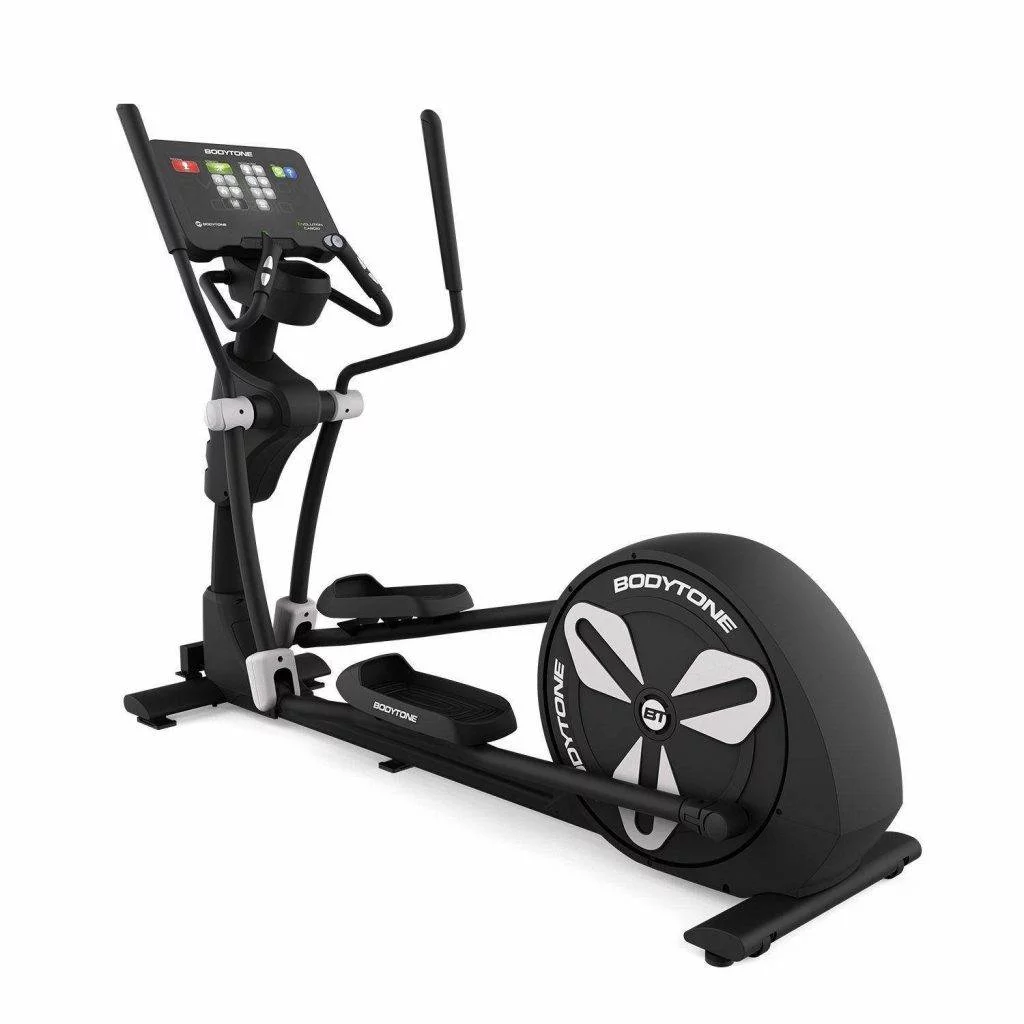
A cross trainer is chosen on three things before anything else: stride length, flywheel mass and flywheel position. Everything a specification sheet lists after that matters, but those three decide whether the machine suits the people who will actually stand on it. A stride that does not match the height of the user degrades comfort and posture, and a member who is uncomfortable on the machine stops using it, which is the only outcome a gym operator genuinely cannot afford.
This guide is written for the buyer specifying cross trainers for a commercial floor: a club, a hotel, a municipal facility, a residential development, a corporate gym or a rehabilitation centre. The criteria are different from a private purchase, because the machine will be used by dozens of different bodies every day, for years, without anyone adjusting it in between.
Why the cross trainer earns its floor space
The cross trainer delivers effective cardiovascular work while recruiting a large number of muscle groups at once. It is valued above all for its low impact on the joints, which makes it the natural choice for members carrying pain or recovering from injury, and for older members who will not tolerate a treadmill. On a mixed floor it is often the machine with the widest usable audience, which is why it is rarely the one to cut when budget is tight.
It also combines cardiovascular and muscular work in a single station, so it serves general conditioning better than most alternatives. The full range of professional cross trainers covers the different build types described below.
The three decisive criteria
Stride length
Stride length is the distance the pedal travels through one cycle, and it is the single criterion most often ignored. A stride that is too short forces a cramped, choppy movement. A stride that is too long forces the hips to rock and the user to overreach. Neither is a comfort detail: both change posture, and posture is what determines whether the session is useful or merely tolerated.
For a commercial floor the relevant question is not what suits one person, but what range of heights the machine has to serve. Facilities with a broad membership are better served by models offering an adjustable stride, or by installing two references with different fixed strides rather than a single compromise. Check the manufacturer figure for each reference before ordering, and check it against the population you actually have.
Flywheel mass
The mass of the flywheel governs how smooth the movement feels. A heavier flywheel carries the pedal through the dead points of the cycle and produces the continuous, fluid stride that users describe as a quality machine, without ever using that word. A light flywheel produces a jerky motion at low cadence, which is exactly the cadence a beginner or a rehabilitation user will work at. Manufacturer data sheets state the figure for each reference; ask for it in writing where it is missing.
Flywheel position: front or rear
Where the flywheel sits changes the geometry of the machine and the shape of the movement. Front-drive and rear-drive layouts each have their advocates, they occupy floor space differently, and they suit different room shapes. Neither is universally better. What matters is that the buyer knows which layout is being quoted, tests both if possible, and does not discover the difference after installation.
Build quality for shared use
Make sure the machine is genuinely robust and stable, with a maximum user weight appropriate to the population it will serve. Check the quality of the materials, particularly at the handles and the pedals, because those are the two contact points that get worn, sweated on and cleaned every day, and they are what a member notices first.
Indoor equipment for supervised commercial use falls under EN ISO 20957-1 class S. That classification, and not a general durability claim, is the specification to require on a commercial floor. Ask suppliers for the conformity documentation covering the exact reference being quoted rather than a company-level statement.
Stability under load deserves a physical test rather than a paper one. Stand on the machine, work at a high cadence, and watch whether the frame moves. A frame that shifts on a showroom floor will shift more once it has been used for two years.
Resistance and braking
Choose a model with a wide range of resistance levels so the same machine serves a beginner and a trained member without frustrating either. On a commercial floor this range is what stops you having to buy separate machines for separate populations.
Magnetic braking is generally quieter and gentler on the joints than the alternatives, and quietness is not a cosmetic concern in a facility where the cardio zone sits next to a studio, a reception desk or a hotel bedroom. Where the machine is self-generating and needs no mains supply, that also removes a socket from the floor plan, which is worth knowing before the electrical layout is fixed.
Console and data
Check what the display actually gives you: heart rate monitoring, calorie estimate, distance and time as a minimum, on a screen that can be read by someone who has not brought their glasses. Beyond that, the question for a commercial buyer is whether the console connects to anything. A machine that records a session against a member account is useful; a machine that stores a personal programme locally is generally not, because the next user clears it.
Resist paying for functions that only a small proportion of members will ever use. On a floor where nobody is guaranteed the same machine twice, elaborate on-board programming rarely justifies its price. Reliability, readability and a console that survives being cleaned with disinfectant are worth more.
Footprint, layout and installation
Measure the space available and check the dimensions of the reference you are considering, including the free space the manufacturer requires around the machine, not just the frame footprint. Cross trainers are tall, so ceiling height matters as much as floor area: the highest point of the user head during the stride, not the height of the machine, is the figure to check against the ceiling.
Weight matters for installation on an upper floor, and access matters for delivery. Ask about the assembled dimensions and the route into the room before ordering, because a machine that cannot get through the door is a problem no discount solves.
Total cost, warranty and spare parts
Budget is a real constraint and there is a range of options at different price points. Set the budget before you start comparing, then look for the balance between build quality and the functions the machine actually offers.
For a commercial buyer, though, purchase price is the smaller half of the decision. Check the warranty offered by the manufacturer, and check it line by line: frame, moving parts, console and labour are often covered for different periods. Then check parts availability, because a cardio machine out of service for six weeks waiting for a component costs more in member goodwill than the part will ever cost in money. Ask how long spares are guaranteed to remain available for the reference you are buying.
Delivery, installation and commissioning charges belong in the comparison too, alongside the servicing regime the manufacturer specifies. A machine that needs a scheduled service twice a year is not the same total cost as one that needs it once, whatever the price tags say.
Frequently asked questions
What stride length should I specify?
It depends on the range of user heights the machine has to serve, and the correct figure is the one the manufacturer states for that reference. Where the membership spans a wide range of heights, an adjustable stride, or two references with different strides, works better than a single compromise. Do not choose the figure from a general rule; check it against the specific model.
Front-drive or rear-drive?
Both are used on commercial floors and neither is universally better. They differ in movement geometry and in how they occupy the room. Try both if you can, and make sure you know which one is being quoted.
Which standard applies to a commercial cross trainer?
Indoor equipment for supervised commercial use falls under EN ISO 20957-1 class S. Request the conformity documentation for the specific reference and keep it with the facility records.
How many cross trainers does a floor need?
Count simultaneous users at your busiest hour rather than total membership, and specify so that nobody waits. In most mixed facilities the cross trainer is the cardio station with the broadest audience, so it is usually the one to duplicate first when the cardio zone is expanded. Explore the wider professional cardio equipment ranges to balance the zone as a whole.
Are there cross trainers designed for heavier duty cycles?
Yes. Ranges differ in frame construction, bearing specification and the duty cycle they are built for. The Lexco cross trainer range is one of the options available for facilities with long opening hours and high daily use; compare duty specification rather than appearance.
Specifying with confidence
Start with stride length, flywheel mass and flywheel position, confirm the usage class, then compare warranty and parts availability before you compare prices. That order produces a cardio zone that still works in year five. Detailed equipment quotations, including a layout for the cardio zone and the manufacturer figures for each reference, are available for any professional project.