Non-Slip Rubber Tiles: What to Specify Before You Buy
Une dalle antidérapante se caractérise par un coefficient d'adhérence mesuré, en surface sèche comme humide. L'épaisseur, le format et la finition, lisse, grain fin ou pastillée, se choisissent ensuite selon la zone d'usage. La question utile n'est pas où acheter mais quelles caractéristiques exiger avant commande.
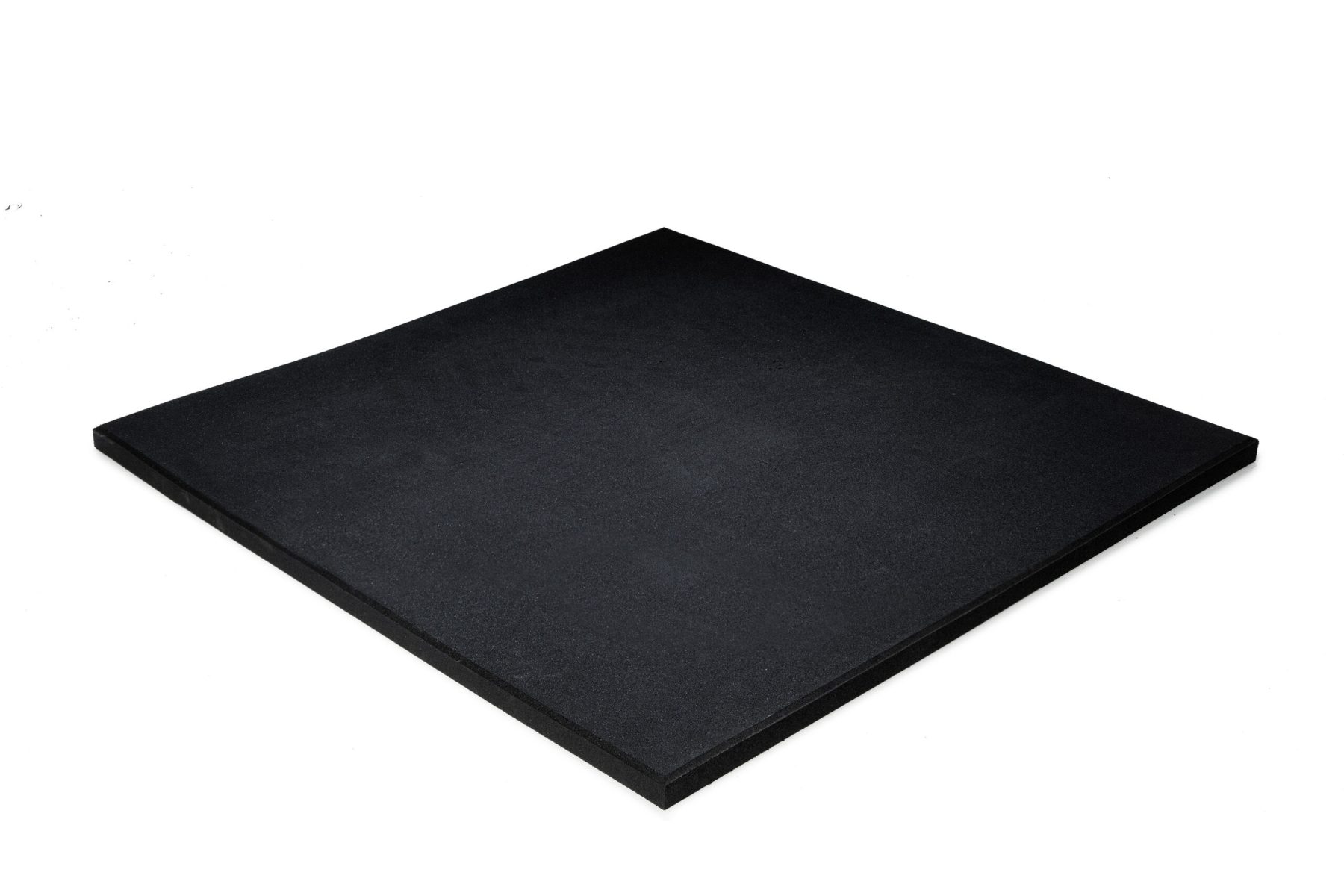
When a buyer starts looking for non-slip rubber tiles, the first question is usually where to buy them. It is the wrong question. A non-slip tile is defined by a measured slip resistance, dry and wet, and everything else follows from the zone it has to serve: thickness, format and surface finish. Get the specification right and the supplier question answers itself; get it wrong and the cheapest pallet on the market becomes an expensive mistake the first time somebody slips on it. This guide sets out what to demand before you order.
Why non-slip rubber tiles
- Safety. Better grip, which matters most in wet areas and in circulation routes where users move quickly and carry equipment.
- Durability. Good resistance to wear, abrasion and impact, with the level depending on the range you specify.
- Comfort. A more forgiving surface underfoot, particularly once the thickness is matched to the use.
- Acoustic performance. Rubber attenuates impact noise, to a degree that depends on thickness and density; on an upper floor or above occupied rooms this often becomes the deciding factor.
- Simple maintenance. Daily cleaning is straightforward, which is what keeps a floor looking specified rather than tolerated.
Buying without getting it wrong
Rather than collecting quotations from as many sources as possible, start from suppliers who give you the information you need to choose, not just a photograph and a price. A product page that tells you the thickness, the surface pattern, the format and the intended application lets you compare properly. One that shows a price alone does not.
Buy from a specialist
A specialist supplier saves time because the comparison is already structured around the things that matter: thickness, surface type, format and application. Our rubber gym flooring tiles are organised on exactly that logic, so you can move from the zone you are covering to the products that suit it instead of working backwards from a catalogue.
Choosing the right tile: a short checklist
1. Define the zone
- Free weight and lifting areas: thickness, impact absorption and reduction of vibration and noise.
- Wet areas and changing rooms: grip is the priority, and the surface has to be specified for use in the wet.
- Outdoor and terraces: grip, drainage depending on the model, and resistance over time.
- Technical rooms and workshops: resistance, easy maintenance and protection of the substrate.
2. Choose the thickness
Thickness is the first real decision. A thicker tile improves comfort, protects the slab underneath and generally does more for impact noise; a thinner tile can be entirely sufficient where the use is light and the tile is there as a protective covering. The mistake is choosing a thickness for the whole site: a lifting platform and a circulation corridor have no reason to share a specification.
3. Check the surface
Look at the texture, the relief and the pattern, and read what the technical data sheet says about slip resistance. For any area that will be wet, this is not negotiable, and a supplier who cannot tell you how the surface performs when wet has not answered the question.
4. Format and installation
- Interlocking puzzle tiles: quick to install and easy to reconfigure, which suits rectangular areas and zones that may change. Our interlocking puzzle tiles cover this need.
- Loose-laid tiles: modular and simple to replace individually if one is damaged.
- Rolls: efficient over large uninterrupted areas and give the most continuous appearance. See our rubber flooring rolls.
5. Maintenance
Before ordering, check the maintenance instructions. A good floor has to stay easy to live with: a brush, water and a mild product, without a specialist procedure. If the cleaning regime is complicated, it will not be followed.
Installation and upkeep: good practice
Before installation
- The substrate must be clean, dry and as flat as you can reasonably get it.
- Outdoors, plan for water: falls, drainage and any point where water could stand.
Installation
- Loose laying is practical when you want to be able to lift, adjust or replace tiles without a contractor.
- Fixed installation is worth it in heavily used areas, under load, or where the floor is subject to horizontal forces. Follow the recommendation on the product data sheet rather than a general rule.
Upkeep
- Regular cleaning with a brush or soft broom.
- Periodic washing with water and a mild product where needed.
- Avoid aggressive products where the data sheet advises against them.
Frequently asked questions
What thickness should I choose for a technical or storage area?
It depends on what happens there: circulation only, workbenches, loads, storage. To protect the substrate and improve comfort, a thicker tile is usually preferable. Decide from the use first, then compare the thicknesses available in that range.
Are rubber tiles suitable for wet areas?
Yes, provided you select a surface specified for grip in the wet and follow the installation and maintenance recommendations. Always check the product data sheet rather than assuming that all rubber behaves the same way.
Can we install them ourselves?
Often yes, particularly with modular formats such as interlocking or loose-laid tiles. What matters is a clean, stable substrate. For large areas, rolls, or floors that will be fixed down, an experienced installer is the safer route.
Where should we buy?
From whoever can state the slip resistance, the thickness, the format and the intended application, and back it with a data sheet. That is the real filter, and it removes most of the market before price is even discussed.
Specifying your floor
Buying non-slip rubber tiles is straightforward once you arrive with the right criteria: zone, thickness, grip, format and maintenance. Tell us the areas to cover, their surface area and what happens in each one, and we will propose the matching products and quantities. Request a quote to receive a costed proposal for your project.
Réalisations documentées
- Dalles et sols sportifs : livraisons documentées – plusieurs chantiers
- Sol sportif extérieur, square Georges-Vallerey – Taverny (95)
Sources et références
- Arrêté du 19 avril 2011 – étiquetage des produits de construction ou de revêtement de mur ou de sol sur leurs émissions de polluants volatils (Légifrance)
- Ministère de la Transition écologique – étiquetage des produits de construction : classes d’émission A+ à C