How to Open a Gym in Your Town: A Complete Guide
Créer une salle de fitness suppose de vérifier la conformité ERP du local avant tout choix de matériel. Viennent ensuite le zoning, le sol sportif, puis l'équipement, dans cet ordre. La zone de chalandise conditionne le dimensionnement du projet et sa rentabilité.
Fitness has kept growing for years, and more people than ever are looking for a place to train close to home. If you know the sector and want to open a gym in your own town, the project is realistic – but it is a property and equipment project before it is a fitness project. This guide runs through it in order: the business plan, the site, the equipment, the team, and the compliance questions that decide whether the doors open on time.
Before anything else: the building
The first check is not the equipment list. It is whether the premises can legally receive the public at the occupancy you have in mind, under the national rules that apply to buildings open to the public in your country. Fire behaviour of finishes, exits, accessible routes and sanitary provision are all decided at that stage, and they constrain the floor plan you can draw. Committing to a lease before that check is the most expensive mistake in the sector.
Once the building is cleared, the order of work is zoning, then sports flooring, then equipment. Doing it the other way round means moving machines that have already been delivered.
Step 1: Build a solid business plan
Before you launch, a solid business plan clarifies the vision, sets the objectives and tests whether the business is viable at all. Four elements matter most.
1. Define your target audience. Identify the demographic you want to reach. Young professionals, older members, families? Understand what they actually want from a gym, because it decides the equipment mix more than any catalogue does.
2. Study the competition. Research the other gyms already operating in your town. Identify their strengths and weaknesses and work out how you will stand apart.
3. Set a budget. Decide how much you are prepared to invest. That includes the rent, the equipment, the marketing spend and the fit-out.
4. Define your services. What classes and activities will you run? Distinctive programming is what pulls members in when three gyms in the same town all have treadmills.
The catchment area drives the sizing of the whole project and, with it, the payback. A club dimensioned for a population that is not there does not become profitable by adding equipment.
Step 2: Find the right location
Location is decisive for attracting members. Three factors carry most of the weight.
Accessibility. Make sure the gym is easy to reach by car and by public transport. A central, well-served location is far more attractive to potential members.
Visibility. Choose somewhere the gym will be seen. Busy locations such as retail areas or dense residential neighbourhoods work well.
Space. Look for a floor area large enough for all the equipment and all the members at peak hour. Check that it is well ventilated and has enough natural light – both are far harder to add later than they are to specify at the start.
Step 3: Buy the equipment
Once the site is settled, it is time to buy. Three families cover the essentials.
1. Cardio. Treadmills, cross trainers and rowing machines are the popular cardio pieces in any gym. Make sure you have enough of them to absorb peak demand, because a queue at 7pm is a cancellation three weeks later. Start from the professional cardio equipment range rather than from consumer models.
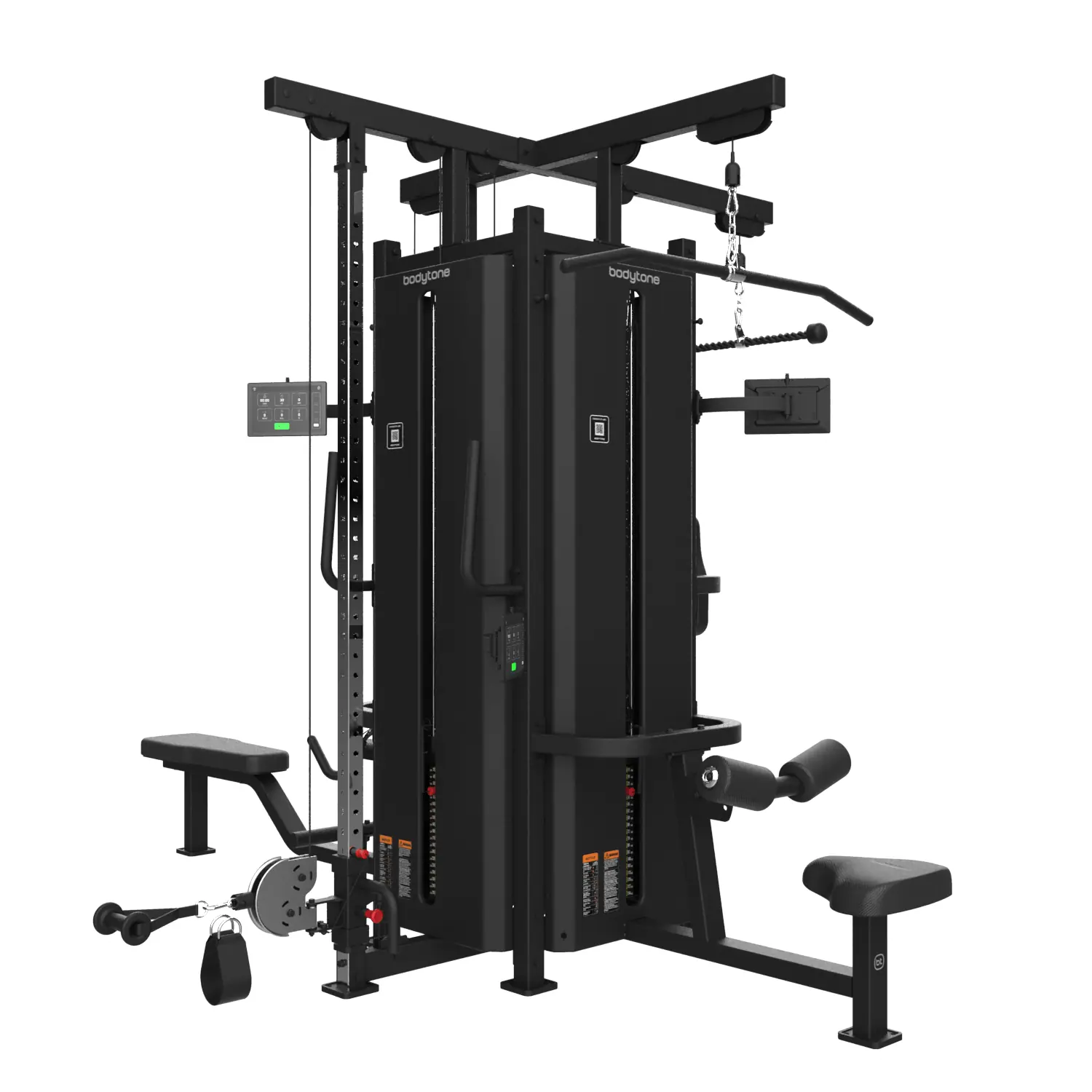
2. Strength machines. Weight benches, selectorised machines and plate-loaded stations are essential for the strength-training members. The strength training machines line is where most of the capital goes, and where under-buying is most visible.
3. Accessories. Do not forget dumbbells, kettlebells, exercise balls and the rest. They serve group classes and members who prefer to train on their own.
One specification point applies to all three: equipment installed in a facility open to the public must be professional grade, EN ISO 20957-1 class S. Class S is the commercial classification; anything sold for domestic use has no place on a paying gym floor, whatever the marketing says about its build quality.
Budget the rubber gym flooring at the same time. It is not a finishing touch: it protects the slab, controls noise for the neighbours and is specified per zone, with the fire classification of the product read exactly as it appears on the technical sheet.
Step 4: Hire qualified staff
To deliver a quality experience you need qualified people. Three roles matter from the start.
Fitness instructors. Hire certified instructors who can run a range of classes such as yoga, Pilates and indoor cycling.
Personal trainers. Personal trainers help members reach their goals with individual programmes, and they are also a revenue line rather than only a cost.
Front desk. Hire a friendly, competent receptionist to welcome members, manage bookings and answer questions. In a local gym this is the role that members remember.
Frequently asked questions
What permits do I need to open a gym?
You will need the operating licences your local authority requires, and the premises must comply with the national safety and health rules that apply to buildings receiving the public. Check both before signing a lease.
How do I promote a gym locally?
Use social media to share training content, offer introductory rates for new members and work with local influencers and businesses. Local visibility beats broad advertising for a single-site club.
Which equipment is most popular?
Cardio equipment such as treadmills and cross trainers is consistently the most used. Group classes such as yoga and Pilates are also in high demand.
How long does a gym take to become profitable?
It depends on member numbers, monthly costs and membership pricing. In general it takes between one and three years.
How do I keep members?
Loyalty schemes, special events, rewards for long-standing members and consistently good service. Retention is cheaper than acquisition in every club that has measured it.
How do I stay competitive?
Follow the trends, offer classes the others do not, keep the equipment current and maintain service quality. Ageing equipment is the most common reason members give for leaving.
Conclusion
Opening a gym in your town can be a genuinely rewarding project. Follow the steps above and you will be in a position to build a club that answers a real local need, provided the building is cleared first and the equipment is specified for commercial use rather than bought on price. Request a quote with your floor area, ceiling height and member target, and the cardio, strength and flooring packages can be costed as one project.