How to Choose the Right Professional Strength Machine
The equipment list is the single decision that shapes everything else in a gym project: the layout, the membership you can attract, the maintenance budget and, ultimately, the profitability of the site. Choosing professional strength equipment is therefore less about picking favourite machines than about matching a defined user base to a defined floor area. This guide walks through the decisions in the order an operator actually has to take them.
Start from your target membership
Before any specification, describe who will use the room. A club recruiting mainly beginners and returning exercisers has different needs from a strength-focused facility serving experienced lifters. Beginners benefit from guided equipment that supports the movement and limits technique errors during unsupervised hours. Experienced users want free-weight and plate-loaded stations that allow a natural movement path and heavy loading.
Most commercial sites are somewhere in between, and the honest answer is usually a mix: a core of selectorised machines to carry the general membership, complemented by plate-loaded machines, benches and racks for the stronger users. Deciding the ratio between the two is the single most useful thing you can do before requesting quotations.
Measure the space honestly
Measure the room, then subtract. Subtract the circulation routes, the emergency exits, the entry to each station and the space a user needs behind and beside a machine to work safely. What remains is the area actually available for equipment, and it is always smaller than the gross floor area.
An overcrowded floor damages the member experience more than a short equipment list does. If the calculation shows fewer stations than you hoped, reduce the number of stations rather than the space between them: a room where people queue but can move is more pleasant than a room packed wall to wall.
The essential strength equipment
- Barbells and dumbbells: the most versatile items on the floor, covering a very wide range of exercises and muscle groups for a small footprint.
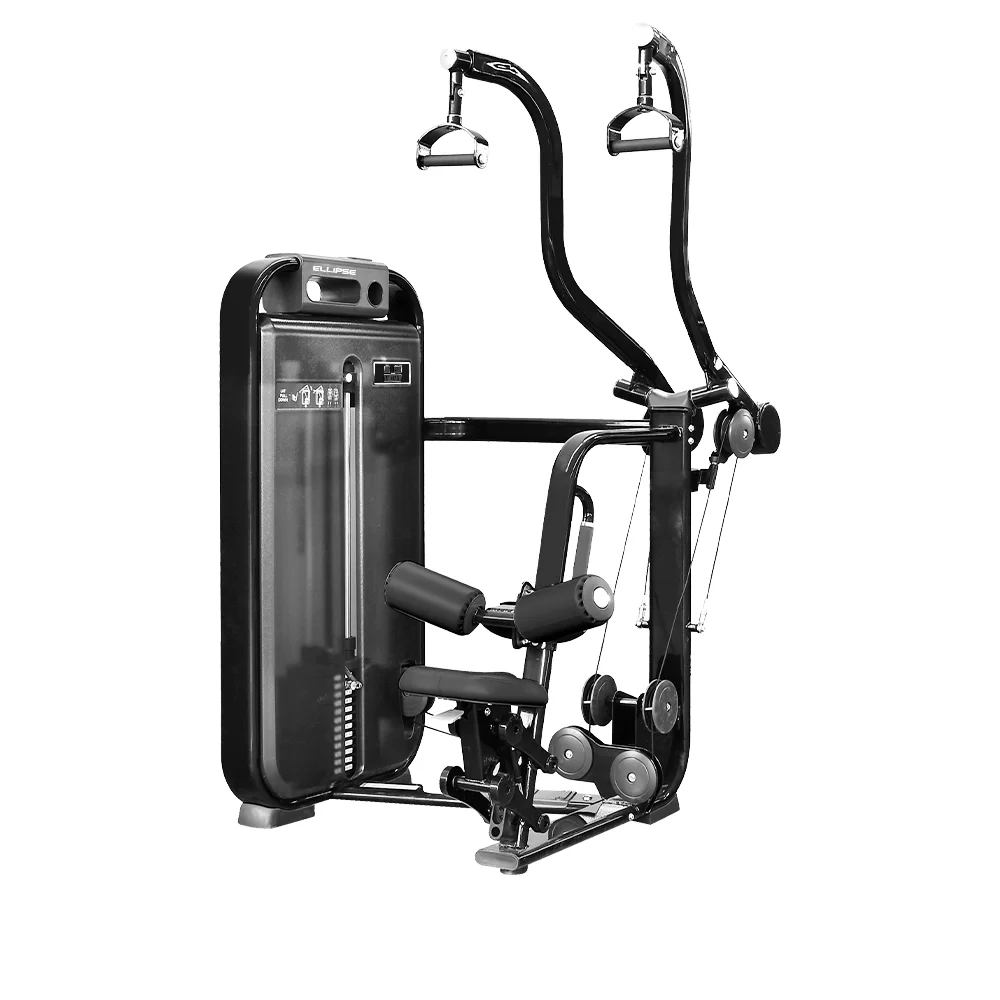
- Selectorised machines: guided load and a defined movement path, ideal for beginners, for circuits and for any period when the floor is not supervised.
- Weight benches: essential for flat, incline and decline pressing, and used as an accessory station for many other exercises.
- Plate-loaded machines and racks: greater freedom of movement and heavy loading for experienced users, and the backbone of a strength-oriented area.
Together these four families give a coherent offer. Our professional strength machines and weight benches are built for continuous multi-user duty under EN ISO 20957-1 class S, which is the reference class for any facility open to the public.
Choosing the right cardio machines
A strength floor still needs cardio. Treadmills, cross-trainers, bikes and rowing machines remain the entry point for a large part of the membership and the warm-up area for everyone else. Match the specification to the profile: an older or beginner-heavy membership needs machines that are easy to start and forgiving at low intensity, while an athletic membership expects adjustable resistance and structured programmes. Our professional cardio equipment range covers both cases.
Connectivity and progress tracking
Many professional machines now offer connectivity and tracking. Used well, these features help members record sessions, follow progress and stay engaged between visits, which is a retention argument as much as a technical one. Check compatibility with the applications your members already use, and check what happens if the connectivity is not configured: a machine whose core function depends on a working connection is a fragile choice for a commercial floor.
Build quality and durability
Commercial equipment is used all day, every day, by users of every size and every level of care. Frame construction, weld quality, bearing and bushing specification, upholstery resistance and cable rating are what separate a machine that lasts from one that becomes a maintenance line item. Look for established manufacturers, read what other operators say and ask to see a machine in service rather than only in a catalogue.
Set a budget and compare properly
Prices vary widely by brand, by machine type and by option level, so fix a budget before you start comparing. More importantly, compare on the same basis: delivery, unloading, assembly, installation, and the cost of maintenance and consumables over the life of the equipment all belong in the comparison. A cheaper machine with no available spare parts is not cheaper.
Ask people who already operate
Specialist advice shortens the process. Suppliers who work only with professional operators see hundreds of floor plans a year and know which combinations fail. Other gym owners will tell you what broke, what members ignored and what they would specify differently. Both perspectives are worth more than a specification sheet.
Installation and after-sales support
Installation is part of the purchase, not an afterthought. Confirm who unloads, who assembles, who levels and anchors the equipment and who signs it off. Then confirm the after-sales terms: response time on a breakdown, availability of wear parts such as cables, pads and pulleys, and the duration of the warranty on the frame and on the moving parts. These commitments determine what the equipment costs you over ten years.
FAQ
How many stations should a commercial gym install? There is no universal figure. It depends on your usable area, your peak attendance and the ratio of strength to cardio you have chosen. Size it from your own numbers, not from a benchmark.
Selectorised or plate-loaded? Selectorised for general membership, circuits and unsupervised hours; plate-loaded for strength-oriented users and heavy loading. Most floors need both.
What equipment class does a commercial facility need? EN ISO 20957-1 class S, the professional class for continuous multi-user duty.
Build your equipment list with us
Send us your floor plan, your ceiling height and a description of your membership, and we will propose a complete configuration. Request a quote and you receive a costed equipment list rather than a catalogue.