Professional Strength Equipment: Plate-Loaded vs Selectorised Machines
Once a facility is serving experienced trainers rather than occasional users, the equipment stops being interchangeable. Deadlifts that build genuine strength and long endurance sessions on a cross trainer make very different demands on a frame, and the difference shows within months rather than years. Professional strength equipment exists to meet those demands: built from materials such as stainless steel and reinforced rubber, engineered to let a user target specific muscle groups precisely, and specified to survive the traffic a serious training floor generates.
Two families of professional strength equipment
Choosing correctly matters most when the training goal is precise. For facilities serving demanding users, single-station machines and professional strength equipment fall into two families that behave quite differently, and a well-composed floor uses both.
Free-weight and plate-loaded stations
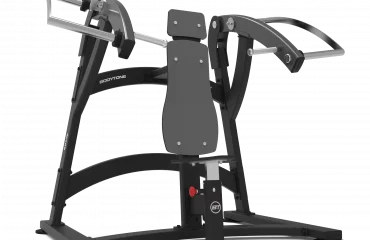
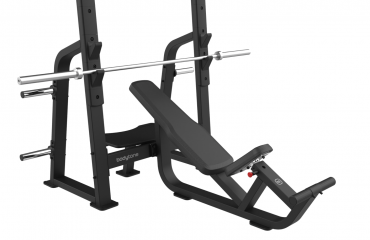
Free-weight and plate-loaded equipment offers a freedom of movement that guided machines cannot reproduce. Because the user has to control the path, several muscle groups work together to hold balance and posture through the repetition. The movement follows the natural mechanics of the body, which supports more even development across the chain rather than isolated growth in one place.
Dumbbells, barbells and kettlebells in steel or rubber also let training be adapted to the individual body. The same movement can be loaded and positioned differently for two users of different proportions, which makes the work both more effective and safer for each of them. Bench presses, pull-ups and deadlifts all recruit the intended muscles intensely — the triceps brachii or the deltoid, for instance — while the trunk works throughout to hold the position.
Selectorised machines with weight stacks
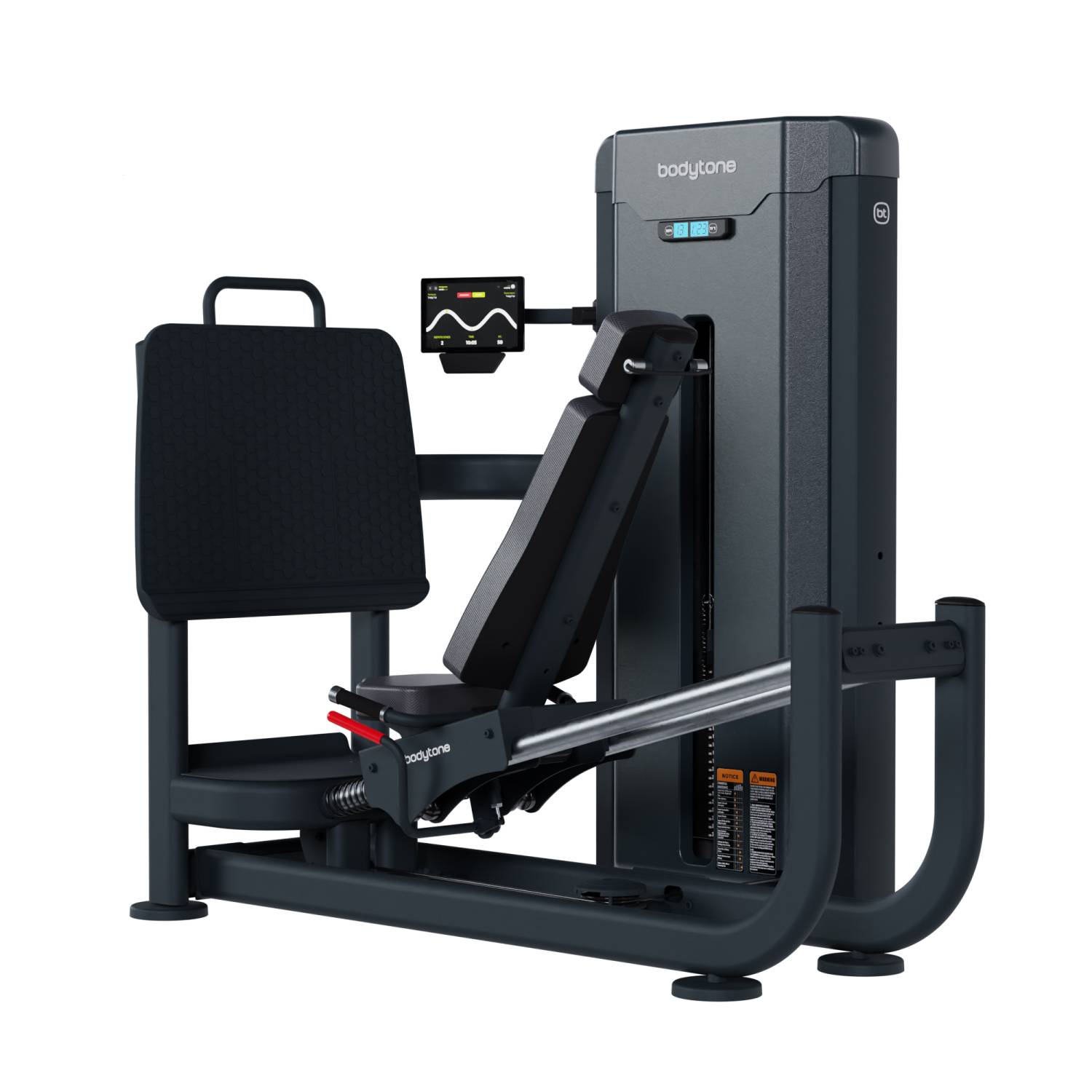
Selectorised machines take the opposite approach and are what make precise, efficient work possible. The mechanism isolates the targeted muscle group closely, giving a level of control over each repetition that free weights cannot match. That precision is what allows an experienced user to build symmetry deliberately and to correct the imbalances that otherwise stall progress.
Safety is the other advantage. By controlling the path of the movement, these machines reduce the risk of injury and let the user concentrate on intensity rather than on stabilising the load. Whether the station is a leg press, an ergometer or a leg curl, each repetition happens under consistent conditions — which is exactly what makes the training measurable from one session to the next.
Materials and construction
What separates professional equipment from the rest is largely what it is made of and how it is assembled. Stainless steel and reinforced rubber resist the corrosion, impact and continuous friction that a busy floor produces, and they keep their appearance long after cheaper finishes have worn through.
For a buyer, the questions worth asking are practical: how the frame is welded and coated, whether cables, pulleys and upholstery are serviceable items or sealed assemblies, and how long spare parts remain available. A station that can be re-covered and re-cabled stays on the floor for years; one that cannot becomes a disposal problem.
Composing the two families on one floor
The two families are complementary rather than competing, and the sequencing is usually the same. Selectorised stations carry beginners and high-turnover work, because they are quick to set up and forgiving of imperfect technique. Plate-loaded machines and free weights carry the heavier, more technical training that experienced users come for.
A floor that offers only one family serves half its membership well and the other half poorly. Combining selectorised machines, plate-loaded stations and the professional accessories that go with them is what lets one room support a beginner and a competitive lifter in the same hour.
Frequently asked questions
Are guided machines risk-free?
No. Controlling the path of the movement reduces the risk of injury substantially, particularly for users training alone or without much technical background, but it does not remove it. Correct adjustment, sensible loading and progressive increases still matter on a selectorised machine.
Which family should a facility invest in first?
It depends on who is training. A floor whose users are mostly newcomers gets more value per euro from selectorised stations; a facility serving experienced strength athletes needs plate-loaded equipment and free weights from the outset. Most operators build a core of selectorised machines and add plate-loaded stations as the membership matures.
Does professional equipment justify its cost?
Over the life of the installation, generally yes. The purchase price is only part of the total: downtime, replacement parts, re-upholstery and early replacement all fall on equipment that was not specified for continuous use. Professional-grade construction moves cost from the operating budget back into the capital one, where it can be planned.
Specifying your strength floor
Professional strength equipment earns its place by delivering precise, safe training adapted to each user, and by staying serviceable while it does so. Free-weight and plate-loaded stations give the freedom of movement that drives balanced development; selectorised machines give the control and the reproducibility that make progress measurable. Facilities that want both are the ones that keep experienced users. Tell us who trains with you and what floor area you have, and we will propose a strength configuration for it — request a quote.
Réalisations documentées
- Functional Rig inox – installations sur trois continents
- iGreenMill, tapis de course extérieur – installations sur trois continents