Which Equipment Brands Suit a Personal Training Studio?
Un studio de personal training exige trois qualités de ses équipements : biomécanique précise, robustesse et compacité, chaque mètre carré devant être exploité. Les machines mono-poste encombrantes y sont moins pertinentes que les postes polyvalents et les charges libres. Cet article compare les gammes sur ces trois critères.
A personal training studio built around strength and functional work is a space where every square metre has to earn its keep. That single constraint decides almost everything about the equipment. You are not filling a floor, you are choosing the smallest set of stations that lets a coach run any session for any client without moving anything.
Which means the brands worth considering are the ones that answer three questions at once: biomechanics, durability and versatility, while still looking like somewhere a client pays a premium to train. This guide sets out the ranges that fit that brief, how to use each of them, and three worked configurations by floor area.
What a personal training studio actually needs
Biomechanics and fast adjustment
In personal training the session is adapted to the client in real time. That puts a premium on adjustments that move quickly and cleanly, on honest ranges of motion, and on stable movement paths where guidance is needed. A machine that takes thirty seconds to set up costs you thirty seconds of a paid hour, every time.
Versatility and floor efficiency
Prioritise multi-use stations: racks, cable stations, well-organised accessories. A good studio is little clutter and many possibilities, which is a very different specification from a club floor built on single-purpose machines.
Free weights and safety
Free weights carry a large part of the strength value of a studio. They need a floor that can take them, a protected zone and storage that actually holds. This is the part of the specification most often underfunded and the part that causes the most problems later.
A premium experience
A studio sells a feeling as much as a service: order, cleanliness, visual coherence, a clear path through the space. Finish and consistency are not vanity items here, they are part of what the client is paying for.
One compliance point applies throughout: indoor equipment installed in a supervised commercial facility falls under EN ISO 20957-1 class S, the class written for professional use with unrestricted access. Ask for the declaration of conformity in writing before ordering.
Practical note. A studio that works usually has four things: a strength station with a rack and a bench, a cable station, a free-weight and accessory zone, and a floor that absorbs noise and vibration. If you have neighbours, or occupied rooms below you, the floor is the first line of the budget rather than the last.
The ranges that suit this format
Bodytone: the reliable base for strength and cardio
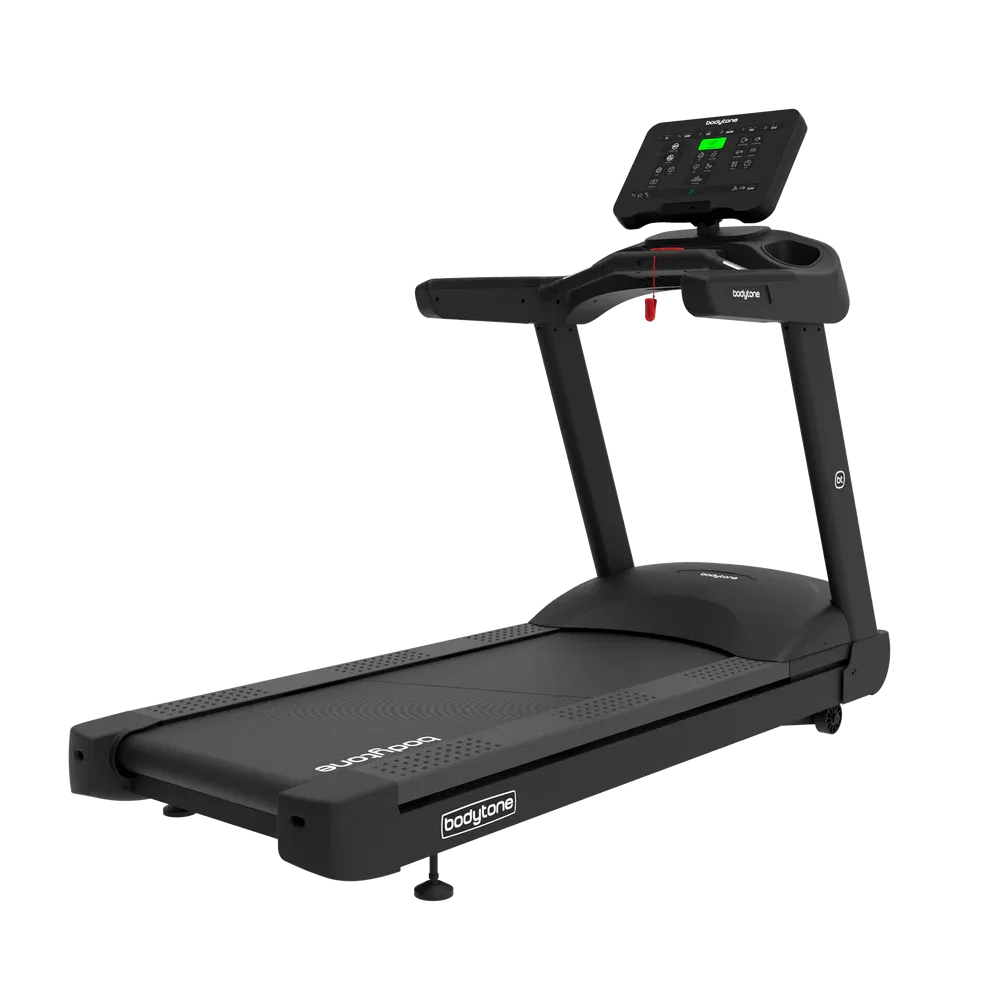
Bodytone is the useful answer when you want a solid, coherent foundation: strength machines built on an intensive-use logic, with cardio available from the same range if you need it. For a studio that wants equipment that is robust and safe day after day without a bespoke specification exercise, it is the straightforward starting point. See the professional strength machine range.
Lexco: comfort and coherence for a premium positioning
Lexco is the choice when the studio is selling a club-premium feel: biomechanics, the sensation of use, finish quality, and a clear, consistent line across the selectorised machines. If your positioning is high-end and you want the room to read as one designed space rather than an assembly of purchases, this is where to look.
ZIVA: free weights and premium accessories
In a personal training studio the free-weight and accessory zone is both the most photographed part of the room and the most used. ZIVA suits it well: kettlebells, dumbbells, bumpers, medicine balls, sandbags and the storage that goes with them, with a strong visual signature. See the ZIVA rig and rack range and the wider professional accessory selection.
Etenon: strength stations and structures
Etenon is where to look for a genuine heavy strength station: racks with platforms, and targeted machines that give progression, safety and stability under load. If your studio sells performance and physical transformation rather than general wellbeing, it makes sense. See the squat rack and power rack range and the Etenon plate-loaded machine range.
Xebex: a compact conditioning block
Even in a studio built primarily on strength, a small conditioning block earns its place for finishers and short metabolic work. An air bike and a rower cover it, they take almost no floor and they need no supervision. Xebex is designed for intensive environments, which is what a studio conditioning corner is. See the Xebex air cardio range.
Three configurations by floor area
| Configuration | Who it suits | Suggested brand mix | The detail that changes everything |
|---|---|---|---|
| PT Compact, 20 to 40 sq m | Solo coach, one client at a time, maximum variety | Bodytone base plus ZIVA accessories, flooring and storage | One cable station and one well-organised free-weight zone |
| PT Premium, 40 to 80 sq m | High-end positioning, a studio experience | Lexco for coherence, ZIVA for free weights, an Etenon strength station | Clear zoning, circulation and a consistent visual identity |
| PT Performance, 80 to 150 sq m | Strength, functional work and short finishers | Etenon for strength, Bodytone or Lexco as the base, ZIVA and Xebex | Flooring for noise and vibration, plus a minimal but real conditioning station |
Purchase and layout checklist
- Strength station: rack, bench, bars and plates, for safety, stability and progression.
- Cable station: enormous versatility and the easiest way to adapt to any client profile.
- Free-weight zone: dumbbells, kettlebells, medicine balls, sandbags and storage that holds them properly.
- Functional zone: pull-up bars, band anchors, accessories and clear floor space.
- Flooring: absorption, grip and noise reduction, particularly under deadlifts and dropped load. See the rubber gym flooring range.
- Storage: this is what turns a cluttered room into a premium studio. See the gym storage range.
The highest-return shortcut. If you are choosing between one more piece of equipment and one more storage unit, take the storage. In personal training, order, safety and speed of setup buy back time, which buys session quality, which is what the client is paying for.
Frequently asked questions
Should I buy everything from one brand?
Not necessarily. A coherent mix usually works better: a base from Bodytone or Lexco, a free-weight signature from ZIVA, a strength station from Etenon, and optionally a small conditioning block from Xebex. What matters is compatibility, after-sales support and consistency of use.
Which range is most premium for the free-weight zone?
ZIVA is a strong option if you want a zone that is robust, attractive and studio-ready at the same time.
Beyond the machines, what matters most for safety?
The floor and the management of loading zones. A specified floor improves grip and absorption, protects the equipment and reduces noise and vibration.
What is the minimum viable setup to open?
A strength station with a rack and a bench, a cable station, a free-weight selection with storage, and a proper floor. You then build out according to your specialism, whether that is strength, hypertrophy, return to sport or conditioning.
How do I get a recommendation for my own space?
Send the floor area, the ceiling height, the budget and the type of client you are targeting, and we will come back with a coherent selection and a simple zoning plan.
Getting a proposal
Tell us the surface area, the ceiling height, the budget and the positioning you are aiming for, whether that is performance, premium or return to sport, and we will put a brand mix, a zoning plan and a costed proposal in front of you: request a quote.
Light In Fitness has equipped professional sites since 2013, from personal training studios to clubs, hotels and municipal facilities.
Réalisations documentées
- Dalles et sols sportifs : livraisons documentées – plusieurs chantiers
- Sol sportif extérieur, square Georges-Vallerey – Taverny (95)